

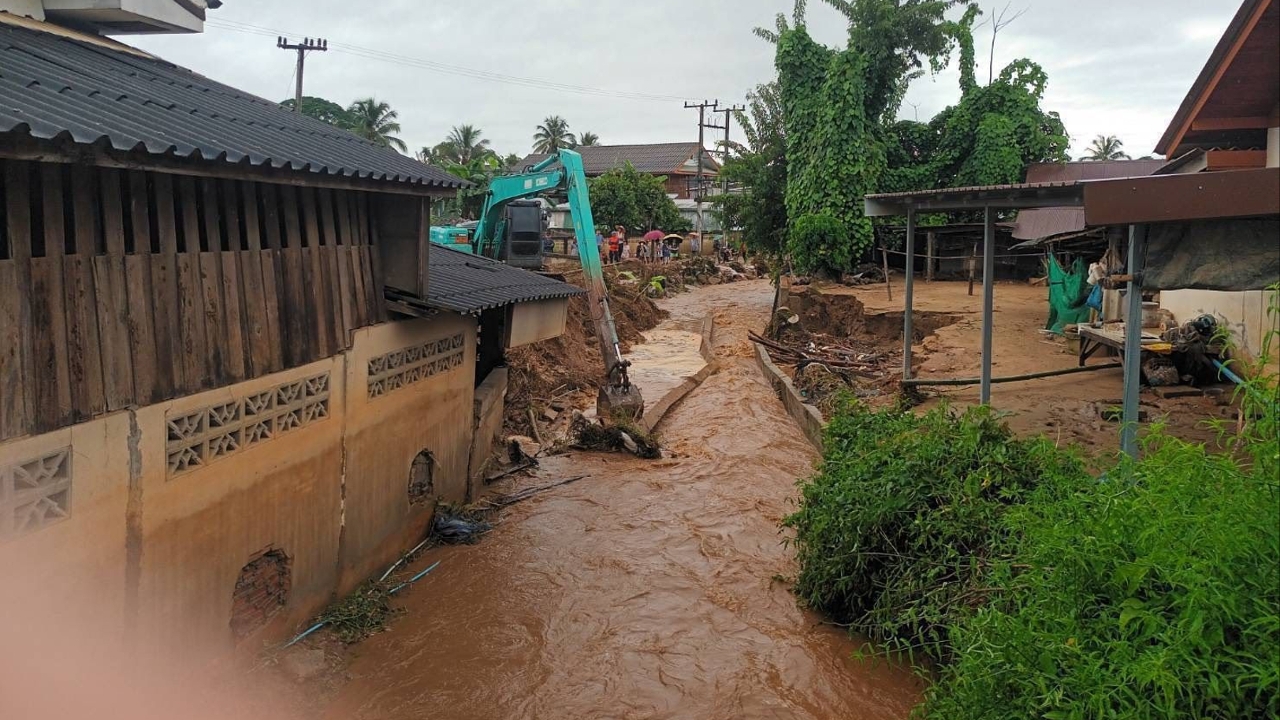
Je Set has ordered the Department of Disaster Prevention and Mitigation (DDPM) to respond to disasters faster than the disasters themselves, closely monitor the heavy rain situation, and urge risk-prone provinces to prepare, issue warnings, and assist citizens around the clock.
At 6:00 p.m. on 30 July 2026, Je Set Thaiset, Deputy Minister of the Interior, announced that following the Meteorological Department's warning for several provinces to watch for heavy to very heavy rain and potential flash floods, flash floods, and landslides from 30 July to 2 August 2026, he has instructed the Department of Disaster Prevention and Mitigation to coordinate with provincial governors, relevant agencies, and local administrative organizations in vulnerable areas to fully prepare for the situation. He emphasized the principle that "disaster response must be faster than the disaster" to ensure rapid warnings and assistance to reduce impacts on life and property as much as possible.
Je Set said he has urged provinces in risk areas to integrate efforts with relevant agencies, local administrative organizations, village heads, and community leaders to promptly inform and warn residents to monitor the situation closely, including water levels in rivers, streams, and canals. They should be ready to move belongings to higher ground if water levels reach critical stages. Citizens are also advised to continuously follow official announcements. Meanwhile, local authorities must prepare disaster prevention tools, machinery, and personnel to be able to assist residents 24 hours a day if situations arise.
Most recently, the Department of Disaster Prevention and Mitigation reported the disaster situation at 6:00 p.m. on 30 July 2026, stating that continuous heavy rain has caused flash floods in three provinces: Chiang Rai, Chiang Mai, and Phayao. Authorities in all affected areas have mobilized personnel to assist residents, manage traffic, move belongings to higher ground, and expedite water drainage. So far, there have been no reports of injuries or deaths.
In Chiang Rai province, flash floods occurred in two districts, affecting seven subdistricts and seven villages, including Mae Chan and Mueang Chiang Rai districts. Officials have been overseeing the areas, managing traffic, and accelerating water drainage. Currently, water levels have decreased, and damage assessments are underway.
In Chiang Mai province, flash floods affected Mae Ai district, covering four subdistricts and five villages, impacting four households. Authorities have been assisting by moving belongings to higher ground and draining water from the areas. Water levels have now receded, and no injuries or fatalities have been reported.
In Phayao province, flash floods occurred in Mueang Phayao district, covering six subdistricts and six villages: Ban Sang, Mae Sai, Ban Tun, San Pa Muang, Cham Pa Wai, and Ban Tom. The floods affected 86 households. Local agencies have accelerated assistance efforts, moving belongings to higher ground and continuously draining water. The situation is improving with water levels falling.
Je Set added that although many affected areas are beginning to recover, heavy rain is still expected in several locations according to the Meteorological Department's warnings. He has urged provinces in risk zones not to be complacent, to closely monitor the situation, prepare personnel, disaster machinery, warning systems, and emergency response plans to be ready for immediate action. Special care should be given to vulnerable groups such as the elderly, bedridden patients, and residents in risk areas to effectively reduce disaster impacts.
"The most important thing is preparation and the fastest possible warning, because if we respond faster than the disaster, losses will be greatly reduced. All agencies must take proactive measures, integrate all sectors, and reach out to the public quickly to assure citizens that when disasters occur, the government will stand by and provide full assistance," he said. Je Set concluded.


