

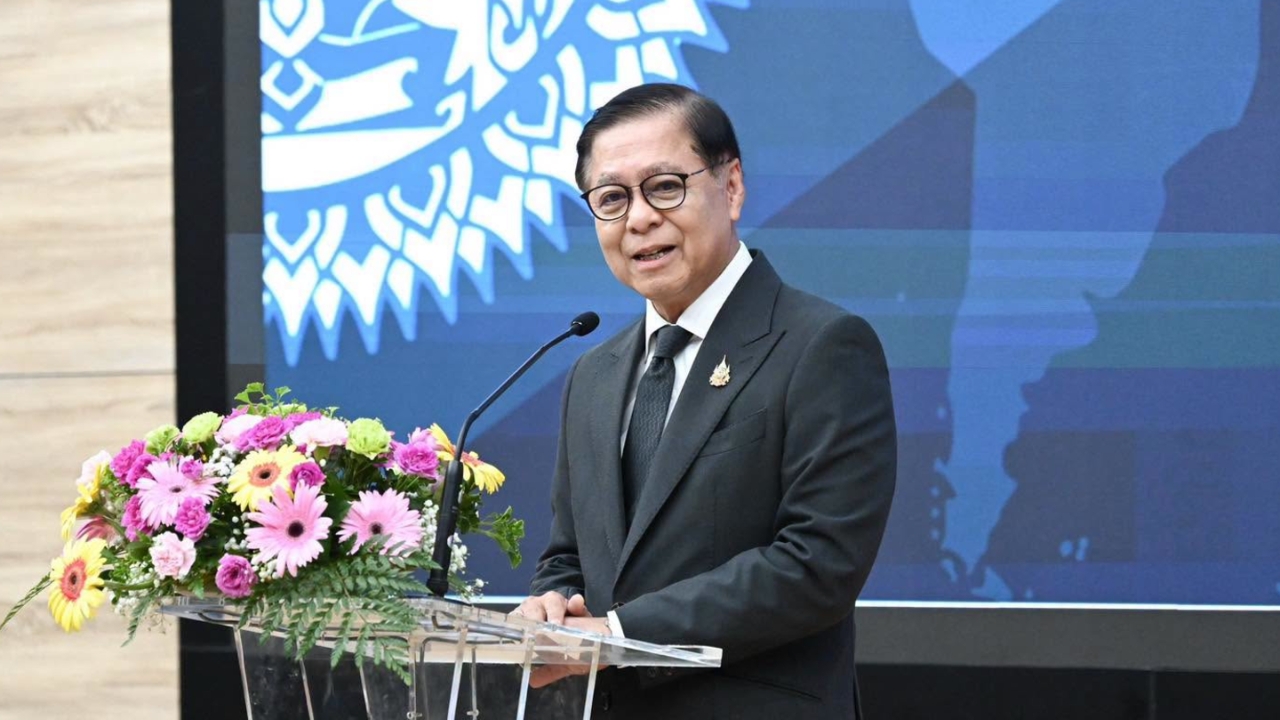
Sihasak revealed that Min Aung Hlaing will visit Thailand on 6-7 August to discuss border security, crackdown on scammers, and resolving river pollution. He confirmed the talks will not affect Thailand’s image despite sanctions by other countries, and expressed hope that Aung San Suu Kyi will receive proper care.
On 31 July 2026 at the National Security Council Office, Sihasak Puangketkaew, Deputy Prime Minister and Foreign Minister, spoke about Senior General Min Aung Hlaing, Myanmar’s president, officially visiting Thailand on 6-7 August. He said discussions will cover several issues, including border security and the undesired violent conflicts that impact Thailand. They will also address combating scam syndicates along the border and resolving river pollution problems. A joint working group between Thailand and Myanmar will be established to monitor water quality to prevent pollution. Additionally, they will discuss cross-border trade; although Mae Sot border checkpoint is open, permit conditions and regulations currently delay Thai exports and imports excessively.
Sihasak said that regarding Myanmar’s internal situation, he hopes the peace process and dialogue will continue. Currently, Myanmar is doing so, and Thailand is willing to coordinate and facilitate where possible.
Asked about the significance of Min Aung Hlaing’s visit, Sihasak said it is important to accept the reality that Myanmar is a neighbor sharing a long border, so border problems require dialogue. Myanmar recently held elections, so requesting new elections is not feasible. However, Thailand urges Myanmar to advance reconciliation talks to achieve genuine peace. He affirmed that Thailand does not abandon its duty and continues to adhere to ASEAN’s five-point consensus. The discussion will be based on this consensus, urging Myanmar to expand humanitarian aid access, hold talks with ethnic minorities, and assure the international community that Aung San Suu Kyi will be well cared for. Thailand shares the hope for progress in peace and dialogue processes.
Sihasak added that during the visit, Thailand will raise its own concerns about border issues, which naturally involve national interests. Regarding Myanmar’s internal situation, as a neighboring country, Thailand wishes for sustainable peace there. Thailand will facilitate matters on its side and, if possible, ask Myanmar to reduce violence along the border to avoid harm to civilians, especially women and children. Importantly, Thailand wants ongoing dialogue processes to find ways to coexist peacefully.
On whether other ASEAN countries will understand this approach, Sihasak said many have begun to recognize Myanmar remains an ASEAN member. If progress is desired, meeting halfway is necessary. Therefore, Thailand must engage Myanmar. Refusing to talk ignores that Myanmar is part of the region, and Thailand does not want Myanmar to become a stage for great power competition. Being in ASEAN provides Myanmar with confidence.
Regarding whether the visit might affect Thailand’s image since other countries boycott Myanmar and do not recognize Min Aung Hlaing’s government, Sihasak said neighbors must accept realities. It will not harm Thailand. With border problems, solutions require dialogue. Without talks, problems cannot be solved. Myanmar has already held elections, and calling for new ones is unrealistic. Thailand asks Myanmar to advance peace, reconciliation, and dialogue with various groups. The reality is Thailand is here and cannot act like other ASEAN countries unaffected by Myanmar’s internal issues.