

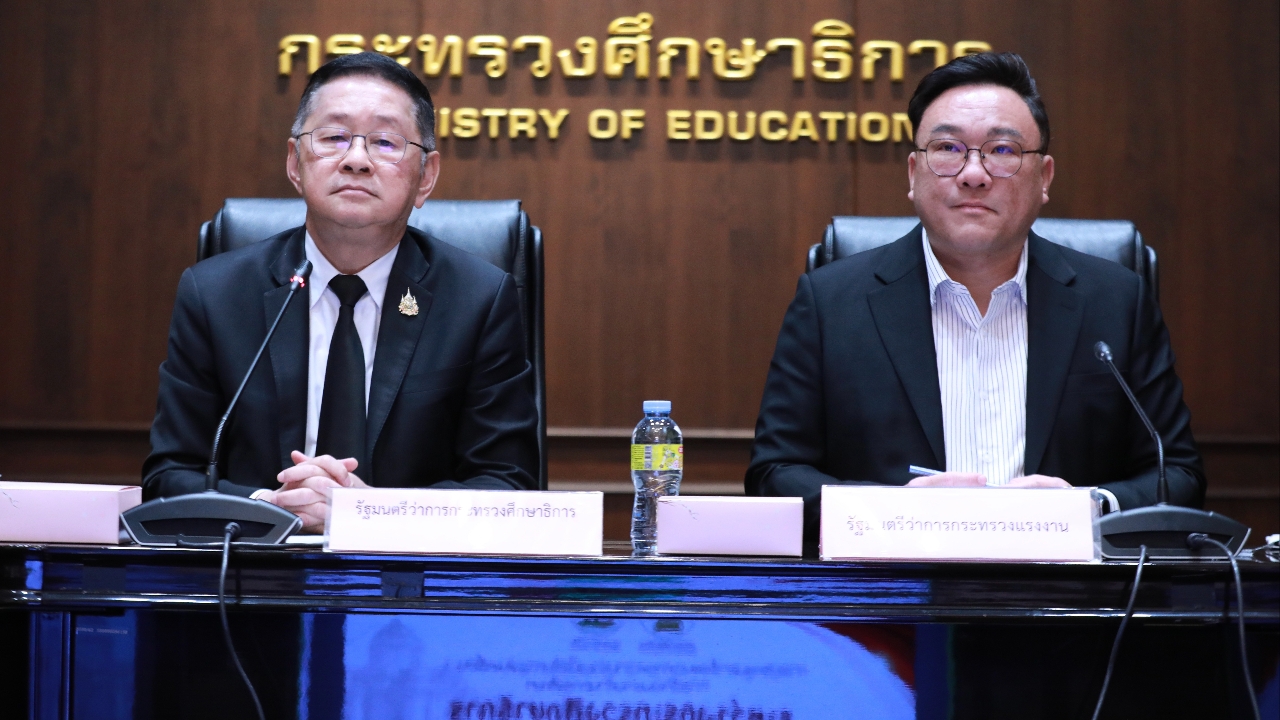
The Ministry of Education collaborates with the Ministry of Labor to connect "classroom to career," highlighting the innovation "Jobs, Income, Credentials" to secure the future of Thai children and youth.
At 1:30 p.m. on 31 July 2026, Prasert Chanruangthong, Minister of Education, together with Julphan Amornwiwat, Minister of Labor, and their executive teams held a meeting to discuss seamless cooperation aimed at linking education, skills development, and employment. The goal is to equip Thai youth with skills that meet actual labor market demands, held at the Rajvallop Room, Ministry of Education.
The Minister of Education stated that the Ministry of Education and Ministry of Labor have joined forces in a historic move to reform Thailand’s education structure, shifting from a "graduate then find a job" system to "career planning from the classroom." This will be implemented through six strategic agendas to develop human capital suited to the modern world and ensure security for youth nationwide: learning skills directly linked to employment, leaving no child behind, safe and practical internships, preventing and combating illegal child labor, enhancing Thai education with quality foreign personnel, and reforming education toward earning income.
"A main topic discussed was the 'E-Work Permit' system for foreign teachers, where the Ministry of Labor has reduced the steps and processing time for work permit applications and renewals for foreign teachers and staff. They are also preparing to review legal details concerning the Foreign Teachers Assistance Fund under the Ministry of Education. Additionally, linking vocational curricula to the Credit Bank system is underway, with the Office of the Vocational Education Commission (OVEC) producing and supplying personnel to the labor market in collaboration with factories to tailor curricula to real needs and establish a credit accumulation system for skills and experience transfer," the Minister of Education explained.
Regarding the issue of school dropouts under the Thailand Zero Dropout policy, the two ministries have outlined ways to support youth transitioning through education phases. The Ministry of Education will expedite identifying target groups seeking employment and coordinate with the Ministry of Labor to promote a model of "learning while working and earning income." They will also integrate their databases to monitor youth aged 15 to under 18 working in compliance with labor laws, ensuring safety protections and continued study until graduation.
"This collaboration connects data and fosters close cooperation between the Ministry of Education and the Ministry of Labor to address structural issues, including easing procedures for foreign personnel, supplying skilled workers aligned with job demands, and preventing Thai youth from dropping out of the education system. Importantly, we will jointly reform education toward learning that generates income by advancing the new National Education Act, focusing on real income generation and teacher professional development to align education with learners’ lives and the country’s economic direction," he added. .