

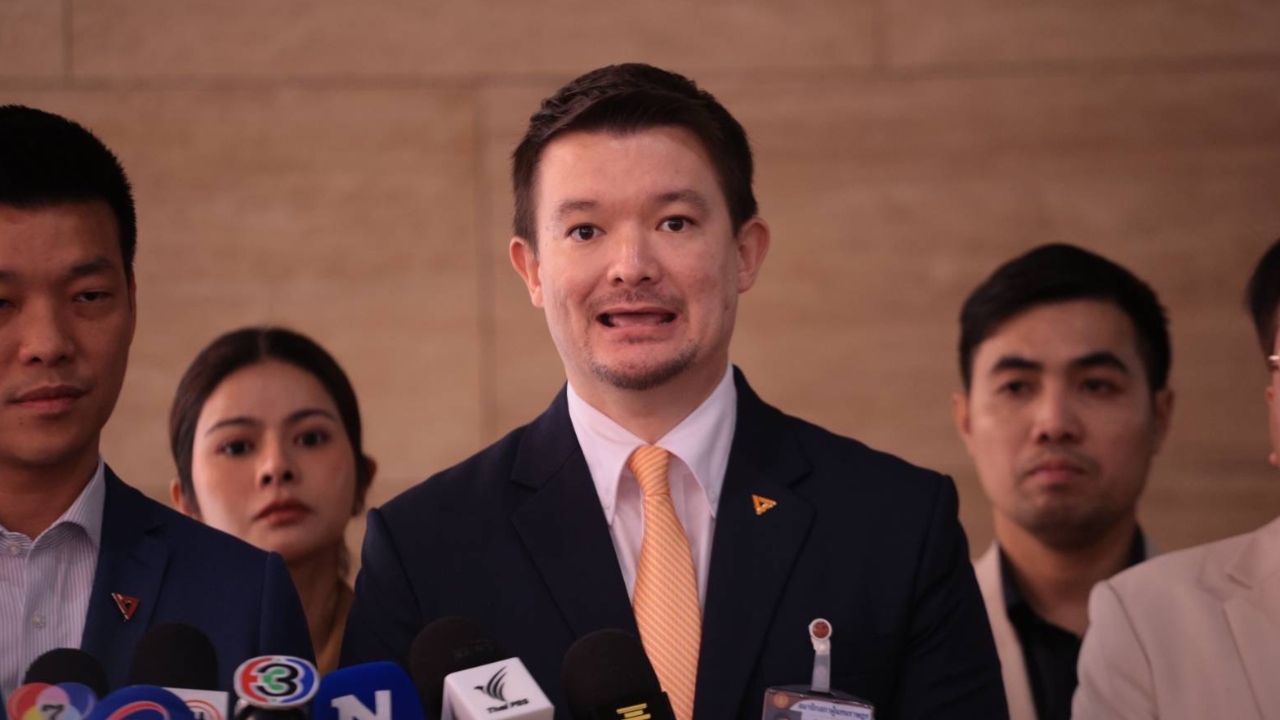
Phattharaphong, MP from Chiang Mai representing the People’s Party, urges close attention to the toxic river agreement between Thailand and Myanmar scheduled for Cabinet discussion tomorrow. He highlights that local residents along the Kok River have endured a full year living with arsenic contamination and hopes the government will stop being overly considerate of Myanmar.
On 3 August 2026, Phattharaphong Leelaphat, MP for Chiang Mai’s 8th district from the People’s Party, issued a warning regarding the draft Terms of Reference (TOR) for addressing cross-border river pollution between Thailand and Myanmar. He stated that this draft not only fails to tackle the root causes but could harm Thailand by restricting the government’s ability to disclose toxin information to the public, since any release of such data requires written consent from both Thailand and Myanmar.
“I hope the government recognizes the importance of genuinely resolving this issue and does not allow a draft agreement that limits citizens’ rights like this to pass the Cabinet’s approval.”
Phattharaphong said it has been a full year that communities along the Kok, Sai, Ruak, Mekong, Salween, and Kra Buri rivers have awaited progress from the government’s negotiations with Myanmar. They have endured arsenic, lead, and cadmium levels in the water exceeding standards, stopped fishing, and prevented their children from swimming, all while hoping for positive news from this Thailand-Myanmar draft agreement. However, the draft itself contains several major problems the government must resolve before signing.
1. The draft silences the Thai government from telling the truth to its own people.
The draft includes provisions on confidentiality and public communication that require written approval from both countries before any information or test results can be disclosed to the public.
“Simply put, if we adhere to this agreement, then if Thailand detects toxins in our own rivers at designated monitoring points, but Myanmar refuses to consent to disclose the results, the Thai government cannot inform Thai citizens. This means the public’s right to know if their water is contaminated depends on joint approval by both governments.”
2. The draft focuses only on monitoring, not pollution control.
This agreement was drafted by the Pollution Control Department but only addresses measurement without a single line about stopping the problem at its source. There is no management of the mineral supply chain for traceability and no mention of import-export controls on minerals from the source mines. It only covers monitoring, with results that cannot be publicly disclosed, and lacks content on stopping arsenic from mines from flowing into the water.
3. The draft limits Thailand’s role to monitoring water only in Chiang Rai and excludes a task force on mining management, which is the root of the problem.
The Thai task force includes only Chiang Rai province, excluding Mae Hong Son along the Salween River, Ranong by the Kra Buri River, and Chiang Mai near the Kok River. Critically, it excludes agencies specializing in minerals, such as the Department of Primary Industries and Mines and the Department of Mineral Resources. There is no mention of fish monitoring or agricultural land assessments—making this a very narrowly framed start.
4. This water-monitoring-only draft has each country testing independently according to their own plans, which is a major problem. Having Thailand and Myanmar separately monitor water does not require a year-long agreement to arrange.
“Discussions with Myanmar last year should have already produced a preliminary conclusion because monitoring is each country’s responsibility anyway. So why have an agreement? It should facilitate joint sampling at points closest to suspected pollution sources to identify exact release points. This draft lacks that essential content.”
Phattharaphong made four proposals to the government before the Cabinet meeting on Tuesday, 4 August, confident that if the government truly wants to work for the people, it will agree with these suggestions:
1. The government must be able to disclose toxin test results from this agreement to the Thai public without needing permission from anyone and should expand the agreement to include other tests such as fish, agricultural land, and health.
2. The toxin monitoring mechanism must be paired with measures to stop pollution at the source, including joint sampling near suspected origins to connect with controlling the import-export of toxic minerals and to identify the actual polluters.
3. The Thai government must not limit itself to Chiang Rai province but include all other affected provinces.
4. The Cabinet should instruct the Ministry of Industry or Ministry of Commerce to draft ministerial regulations requiring importers and exporters of minerals to specify the source mines and provide related supply chain information to ensure no environmental pollution, allowing Thailand to urgently stop being a transit route for toxic minerals.
“I emphasize again, Thai people did not cause this problem but suffer its full impact. I hope the Thai government values the people more than showing excessive consideration toward Myanmar, as reflected by the year-long drafting process of this problematic agreement.”