

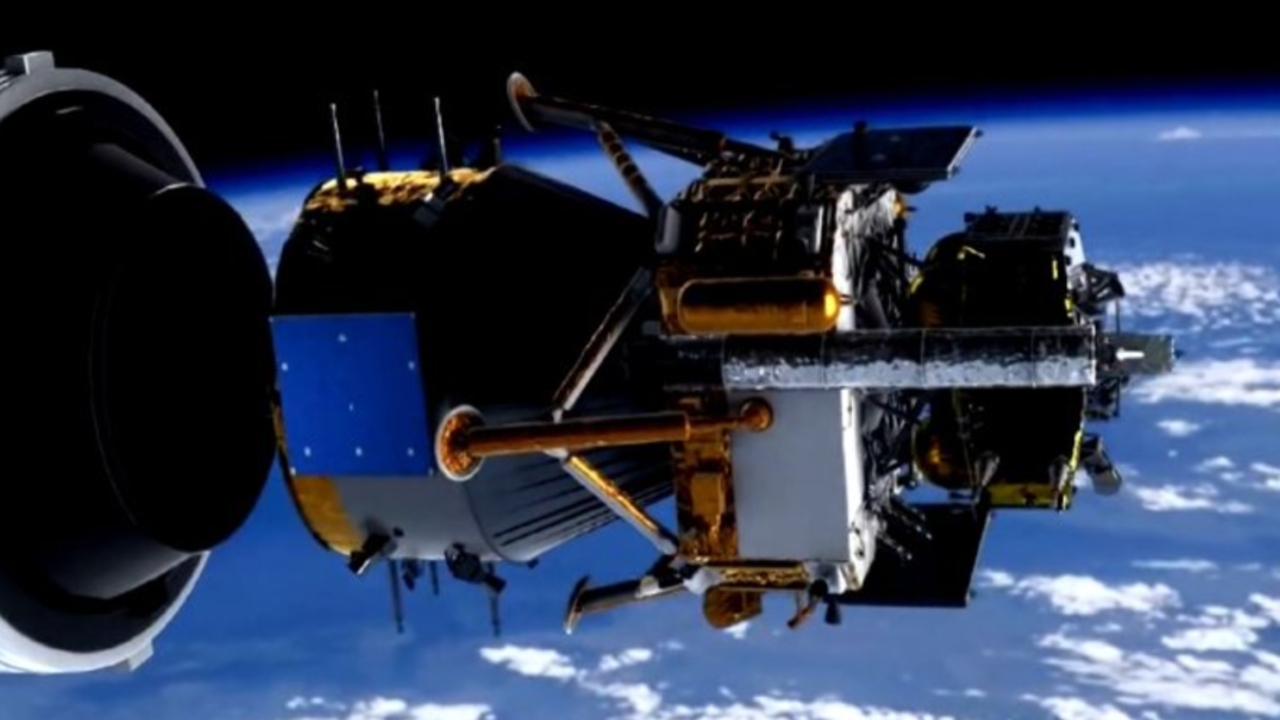
The Ministry of Higher Education, Science, Research and Innovation (MHESI) and the National Astronomical Research Institute of Thailand (NARIT) have joined forces with the China National Space Administration to send Thai-made scientific equipment into lunar orbit aboard the "Chang'e 7" spacecraft.
On 4 August 2026 GMT+7, the National Astronomical Research Institute of Thailand (NARIT), a public organization under MHESI, held a press conference titled “Thailand's First Lunar Exploration Mission” together with higher education partners and the Ministry of Education. They announced cooperation with the China National Space Administration to develop and send a research payload into lunar orbit as part of the "CE-7 MATCH" mission (Chang'e 7). This scientific equipment was jointly developed by NARIT and Mahidol University under the International Lunar Research Station project.
Yotsanan Wongsawat, Minister of Higher Education, disclosed that sending the scientific payload into a 200-kilometer lunar orbit is a significant step in establishing the country's foundational technology. This involves close collaboration between Thai and Chinese engineers to produce space-grade components that must pass rigorous tests for extreme heat resistance, friction, and long-distance communication systems.
The deep tech knowledge gained from this research can be applied in diverse ways, or as dual-use technology. For example, developing medical-grade sensors adapted from astronaut gear. A single payload launched into space could spark over 100 subsequent innovations. Countries with rapidly growing economies emphasize space research because deep research branches into fundamental science and many new innovations.
Yotsanan added that beyond the Chang'e 7 mission, Thailand plans to continue with the 'Chang'e 8' mission aiming for a lunar surface landing. NARIT is accelerating development of supporting equipment, targeting around 2029 CE. Additionally, studies are underway to assess the feasibility of establishing a spaceport in Thailand to serve as a launch base for high-demand international research. The goal is to attract private sector and startup investment in space technology to reduce public budget burdens and sustainably grow Thailand's space industry.
Yotsanan further noted that an important objective is human capital development. Led by Dr. Wipoo Rujiprapawat, the team plans to livestream rocket launches and space mission operations, alongside producing documentaries tracking the process. This will allow Thai youth nationwide to learn the real steps involved, advancing STEM (Science, Technology, Engineering, and Mathematics) education in schools.
Akkaranan Khankittinan, Deputy Minister of Education, stated that the Ministry of Education prioritizes STEM learning and is ready to collaborate with MHESI to organize workshops and follow-up activities in schools. The aim is to prepare Thai children to learn from real events, with the hope that investment in human capital will be a vital foundation driving Thailand's sustainable future.