

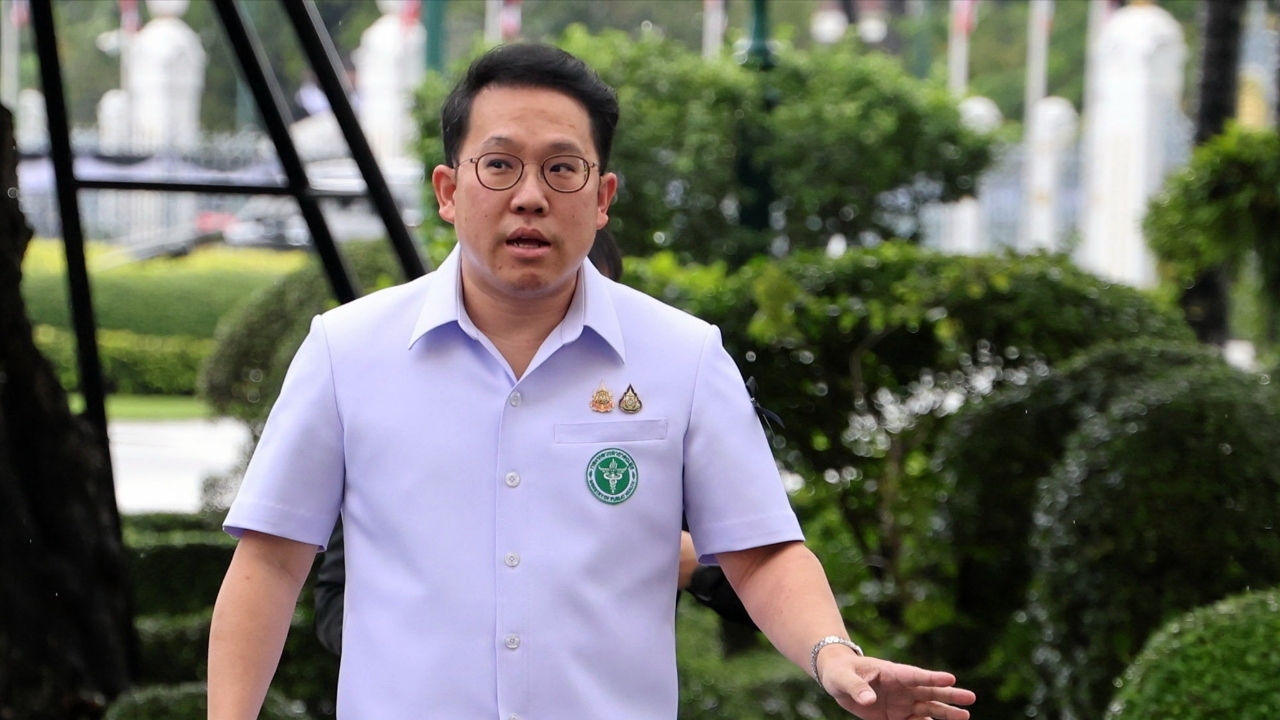
Pattana, the Minister of Public Health, stressed that the 60 billion baht gold card budget has not disappeared but is allocated and dispersed among various service units caring for about 80% of the country's population. He instructed the National Health Security Office (NHSO) to clarify the details clearly, affirming that every baht must be used cost-effectively and with full accountability.
5 Aug 2026 GMT+7 Mr. Pattana Promphat, Minister of Public Health, spoke at the Government House to clarify the issue regarding the allocation of the gold card fund budget for the year 2025, amounting to 60 billion baht. He explained that the budget received by the National Health Security Office (NHSO) in 2025, excluding salaries, is about 170 billion baht. Within the Ministry of Public Health's hospital system, revenue recorded from this budget is approximately 110 billion baht.
Last week, he questioned where the 60 billion baht had gone. The NHSO's financial subcommittee clarified that this amount is outside the Ministry of Public Health's system. Additionally, over 10 billion baht are used by the NHSO through the Ministry of Public Health via Rajavithi Hospital as a channel to purchase medicines, and there may be 3 to 4 billion baht not used for medicines but allocated to hospitals outside the Ministry of Public Health. For example, those under the Ministry of Defense and the Bangkok Metropolitan Administration,
and about half of the funds are allocated to clinics and private service units registered with the NHSO. This is a point where we must review whether the services are efficient and meet standards. If adjustments are needed, discussions should be held in the National Health Security Board. Overall, the Ministry of Public Health handles about 120 billion baht in funds.
. Therefore, the 60 billion baht budget is allocated to hospitals under the Ministry of Public Health that care for roughly 80% of the population. These are factual findings. The remaining approximately 50 billion baht must be accounted for transparently as per the policy of myself and the government. Taxpayers’ money must have clear financial pathways, and the NHSO must disclose these details clearly.
Whether these agencies have the legal conditions to receive these funds is another issue to monitor. In the National Health Security Board meeting on 3 August 2026, the financial subcommittee chair was tasked with providing detailed explanations within seven days, including recipient units, activities, and the distribution of funds. Documentation and audits must verify whether these funds are actually used for their intended purposes. Furthermore, the Ministry of Public Health has the 2019 Primary Care Act setting service standards for prevention and health promotion. The ministry is accelerating implementation of these standards across NHSO-affiliated and other units to ensure that budget use for public care meets these standards.
Regarding concerns that the Ministry of Public Health spends a significant portion of the budget on various activities, Mr. Pattana explained that the ministry has a broad and deep mandate to serve the entire country with numerous responsibilities. Since taking office two to three months ago, he has extensively visited regions, discussed hospital administration, and promoted policy implementation including AI innovations. He thanked hospitals for illustrating the broad scope of policy advancement. Budget use is managed by individual hospitals based on necessity to ensure cost-effectiveness.