

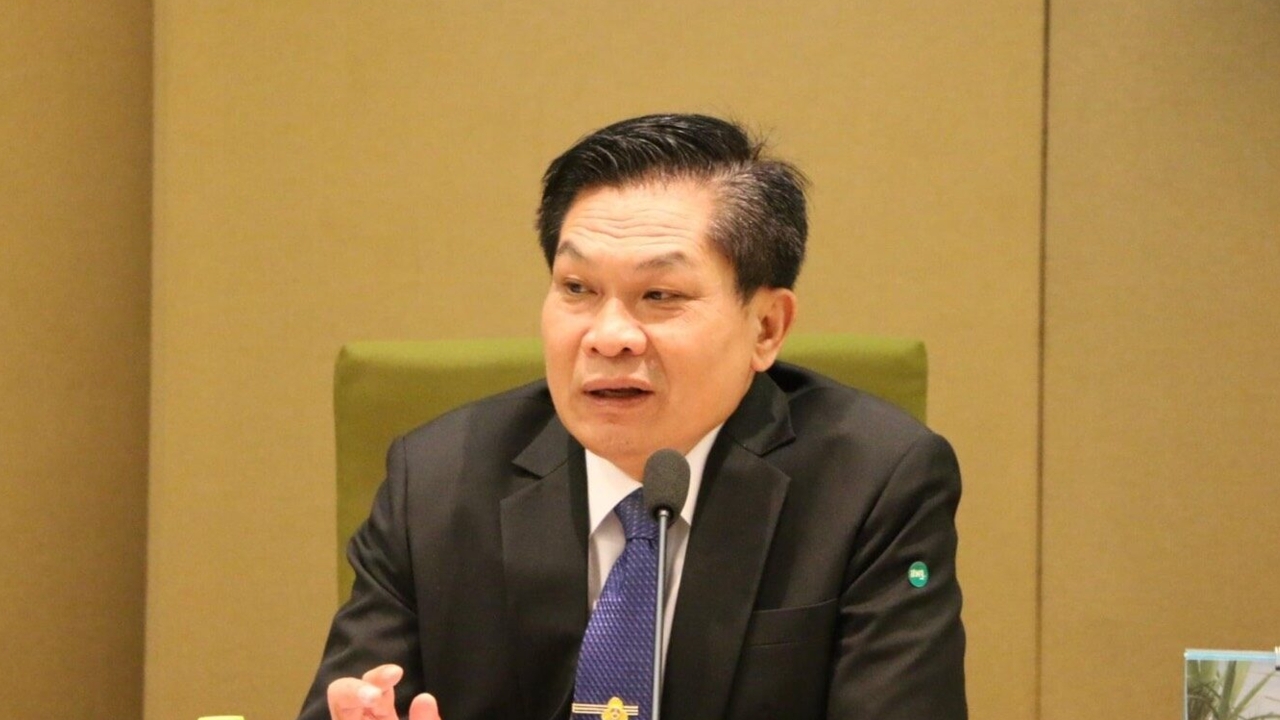
The Deputy Leader of the Democrat Party urged the Ministry of Education's leadership to expedite reforms of the education structure, focusing on creating quality schools instead of closing them. He pointed out that the free education budget is misleading and noted that the “1 School 3 Systems” model cannot truly resolve the problem of 500,000 children dropping out of the system.
On 5 August 2026, reporters reported that during the 20th session of the Special Committee on the Draft Budget Appropriation Act for Fiscal Year 2027, Section 24, Ministry of Education, at the Parliament on 4 August 2026, Amphon Pinasah, party-list MP and Deputy Leader of the Democrat Party, serving as a committee member, addressed senior Ministry of Education officials on inequalities and the overall quality of Thai education. Although Thailand currently operates over 28,000 schools with 500,000 teachers and 6 million students, it was found that 76% of the budget is spent on personnel expenses, and including recurring costs, 96% is allocated, leaving only 4% for development. He questioned the Office of Basic Education Commission (OBEC) on why the 2027 plan lacks sustainable solutions for small schools, despite the original goal of School Mapping to reduce primary schools to 7,000 nationwide, focusing on quality schools per Cabinet resolutions instead of school closures. He warned of overlapping schools, such as extended opportunity schools with fewer than 20 students in grades 7–9, risking restricting children's opportunities, and the issue of highly competitive urban schools competing for building budgets to the detriment of sports facilities. Meanwhile, the budget for constructing quality schools in provinces was allocated to only one school.
Mr. Amphon continued, stating that as a former Secretary-General of the Teachers’ Civil Service and Educational Personnel Commission (TCSPEC),
he inquired about the appointment and transfer of school administrators, questioning whether the special selection criteria from TCSPEC were truly used to promote quality schools. He proposed focusing on work agreements (Performance Agreements, PA) between school principals and education area directors, with three clear indicators to be used as fair and transparent criteria for evaluation and transfers to prevent corruption accusations. Another key issue is the free 15-year education project budget during the economic crisis with high prices and low wages. Upon reviewing five budget items, he found that at certain grade levels, the allocated funds for textbooks cover only a quarter of the required books for the eight core subjects, forcing parents to bear additional costs for books and supplies. He urged OBEC to promptly investigate and resolve these issues.
Additionally, Mr. Amphon questioned the Department of Learning Promotion (DLP) regarding its organizational restructure from the Non-Formal and Informal Education (NFE) Bureau to a department, asking whether this has led to efficient management and how it has addressed the unemployment crisis. He also noted that both OBEC and the Equitable Education Fund use a zero dropout data tracking system under the “1 School 3 Systems” model, which aims to expand to one school per province but is insufficient to reintegrate over 500,000 out-of-school children. He proposed that the Compulsory Education Act be enforced across all three education systems simultaneously nationwide. He also raised questions for the Office of the Vocational Education Commission (OVEC) on the strategy and statistics for adjusting the ratio of vocational to general education students to 60:40 to supply labor markets and support the aging society. Meanwhile, the Ministry of Education's Permanent Secretary must urgently review the new National Education Act structure to enhance administrative efficiency and unlock educational opportunities for Thai children.