

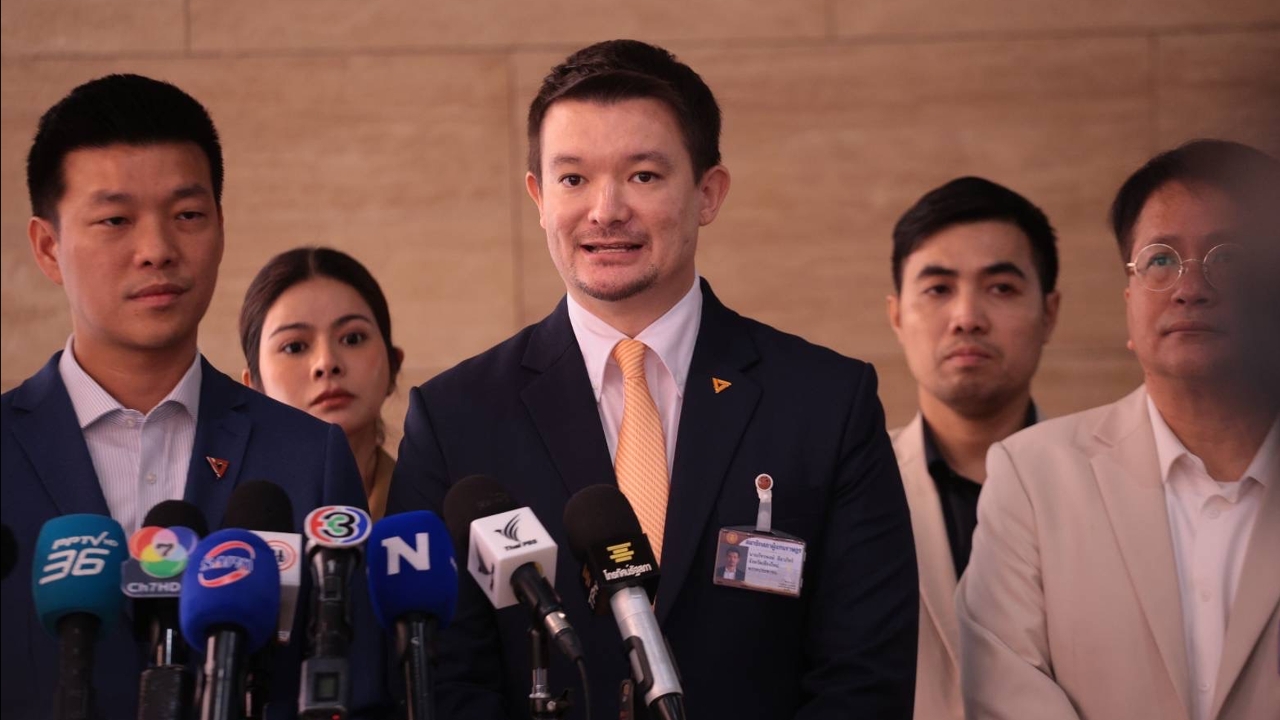
Pattarapong urges Anutin to seize the opportunity of Min Aung Hlaing's visit to Thailand to urgently address cross-border water and air pollution with clear, concrete management plans for pollution sources.
On 6 August 2026, Pattarapong Lee Lapath, a Chiang Mai MP from the Prachachon Party, called on Anutin Charnvirakul regarding Myanmar leader Min Aung Hlaing's visit to Thailand, saying it should not be limited to ceremonial welcomes and photo ops. Instead, the prime minister should discuss solutions to cross-border air and water pollution.
Pattarapong stated that the public hopes this visit by Senior General Min Aung Hlaing will be an opportunity for both countries' leaders to address the root causes of cross-border pollution, especially the toxic river contamination from Myanmar's mining activities, which the Thai government has never acknowledged or sought to manage, leaving citizens to endure the degrading effects on health and quality of life.
Additionally, he presented three demands for the Thai government to negotiate with Myanmar's leader as follows:
1. Demand the Thai public's right to know about river pollution by proposing amendments to the Terms of Reference (TOR) to allow data disclosure. The current draft by the Thai government requires written consent from both governments before information can be shared. If either side refuses, the public remains uninformed. Thus, it is urgent that Suchat Chomklin, Minister of Natural Resources and Environment, makes these amendments.
2. Discussions must focus on "stopping toxins," not merely "detecting toxins." The government should develop clear management strategies addressing the root causes, including clear identification of pollution sources—both dust and water—and control over imports and exports of minerals, mining products, and precursor chemicals. It should also include precise legal enforcement measures and enactment of subsidiary laws by each country's ministers to manage sources and urgently halt upstream mining expansion affecting Thailand. Moreover, collaboration on this issue should be advanced on global platforms.
Lastly, all negotiation outcomes must include clear timelines and success indicators so the public can monitor progress, as citizens are directly affected.
Pattarapong concluded: "Currently, Thailand has a government that waits for neighbors to sign off before taking action, instead of protecting the country immediately within its own powers and then inviting others to join. The government must stop acting as a petitioner and become proactive in setting standards before we lose our environment for future generations. Success is not just about negotiations and photo opportunities but about Thailand regaining clean rivers, breathable air, and restoring people's lives. That is the true goal the government must set for the people."