

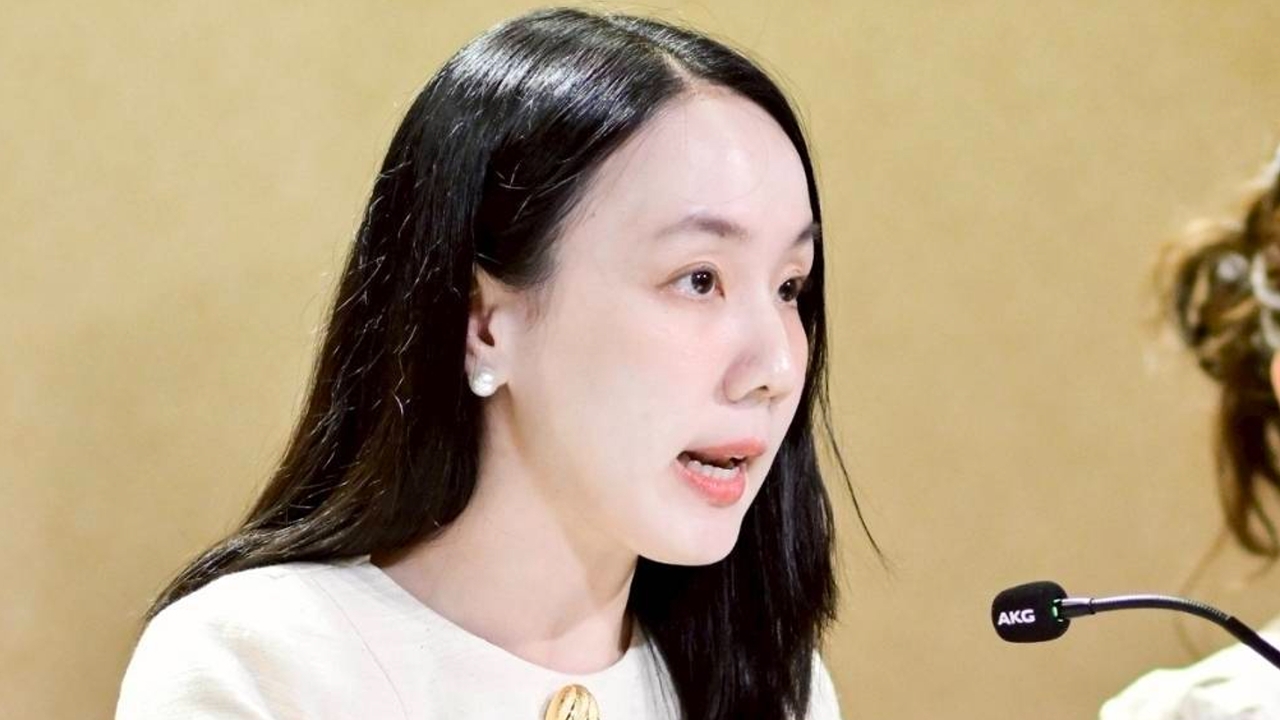
The Deputy Government Spokesperson explained that the groundwater budget reflects the number of MPs and electoral districts, emphasizing that the opposition also received funding. In response to "Rukchanok," the Prachachon Party’s area received the highest average funding per project.
On 6 Aug 2026 GMT+7, Ms. Lalida Pertvivattana, Deputy Spokesperson for the Prime Minister’s Office, addressed concerns raised by Ms. Rukchanok Srinok, a party-list MP from the Prachachon Party, who noted that the community groundwater development project with 858 sites and a budget of 6,541.98 million baht is concentrated in constituencies of Bhumjaithai Party MPs. She said the government respects the opposition’s oversight role but asked that all data be fully considered, as the figures can be explained by the number of MPs and constituencies each party won, not evidence of budget allocation by party affiliation.
The Deputy Government Spokesperson said the first fact is that the number of projects in Bhumjaithai areas increased at a rate closely matching the rise in single-member district MPs for the party, which grew from 68 in 2023 to 172 in 2026—a 2.53 times increase. Meanwhile, the number of original projects located in those areas rose from 201 to 487, about 2.42 times.
“When a party wins more than two and a half times the constituencies, the number of existing projects in those areas naturally increases in a similar proportion. Therefore, there is no need to assume budget allocation is politically motivated,” the Deputy Government Spokesperson said.
Ms. Lalida added that this fact is clearer when considering all 858 projects are the original set with fixed budgets and coordinates. When mapped onto the 2023 constituencies, Pheu Thai had the most projects at 257 sites, while Bhumjaithai ranked second with 201 sites.
“No groundwater wells have been relocated; only the electoral boundaries and winning candidates changed. Thus, project counts by winning party reflect political map changes rather than intent to allocate budgets politically,” the Deputy Government Spokesperson said.
The second fact is that opposition parties also received substantial project allocations. The opposition Kla Tham Party received 142 projects worth about 1,090.84 million baht, accounting for 16.6 percent of all projects—ranking third highest.
Calculating projects per MP, Kla Tham received an average of 2.45 projects per MP, close to Bhumjaithai’s 2.52 and higher than coalition partner Pheu Thai’s average of 2.04 per MP.
“If project allocation were political rewards to coalition parties as alleged, it must be explained why an opposition party ranks third in total projects and has a higher average per MP than some coalition parties,” the Deputy Government Spokesperson said. The Deputy Government Spokesperson stated this point.
Conversely, Palang Pracharath Party, a current coalition partner, saw its project count in constituencies drop from 157 to only 11—a roughly 93 percent decrease—contradicting claims that project allocation favors coalition parties.
The third fact is that when calculating average funding per project, Prachachon Party areas received the highest average at about 7.81 million baht per project, higher than Bhumjaithai’s 7.64 million and the overall project average of about 7.62 million per project.
Meanwhile, Kla Tham areas averaged about 7.68 million baht per project, Democrat and Pheu Thai areas about 7.52 million, and Palang Pracharath about 7.50 million per project.
“The average funding across parties ranges narrowly between approximately 7.50 and 7.81 million baht per project, with Prachachon areas receiving the highest average. This does not support allegations of selectively allocating high-value projects to specific party areas,” the Deputy Government Spokesperson said. The Deputy Government Spokesperson said this.
Ms. Lalida added that funding differences for each site arise from engineering facts and local conditions, such as well depth, distance, and pipeline length, and do not vary according to the MP’s party affiliation in the area.
“The government welcomes scrutiny at every step, but conclusions about political favoritism should consider all data—including the number of constituencies each party won, the parties receiving projects, and average funding per site—not just the count of projects per party’s constituencies alone,” the Deputy Government Spokesperson said.
“The facts clearly show project numbers correspond to the areas each party won, the opposition received a high proportion of allocations, and Prachachon areas received the highest average funding per project. The government asks that investigations proceed based on complete and fair data to ensure transparency and genuine public benefit from the clean water projects,” the Deputy Government Spokesperson said.