

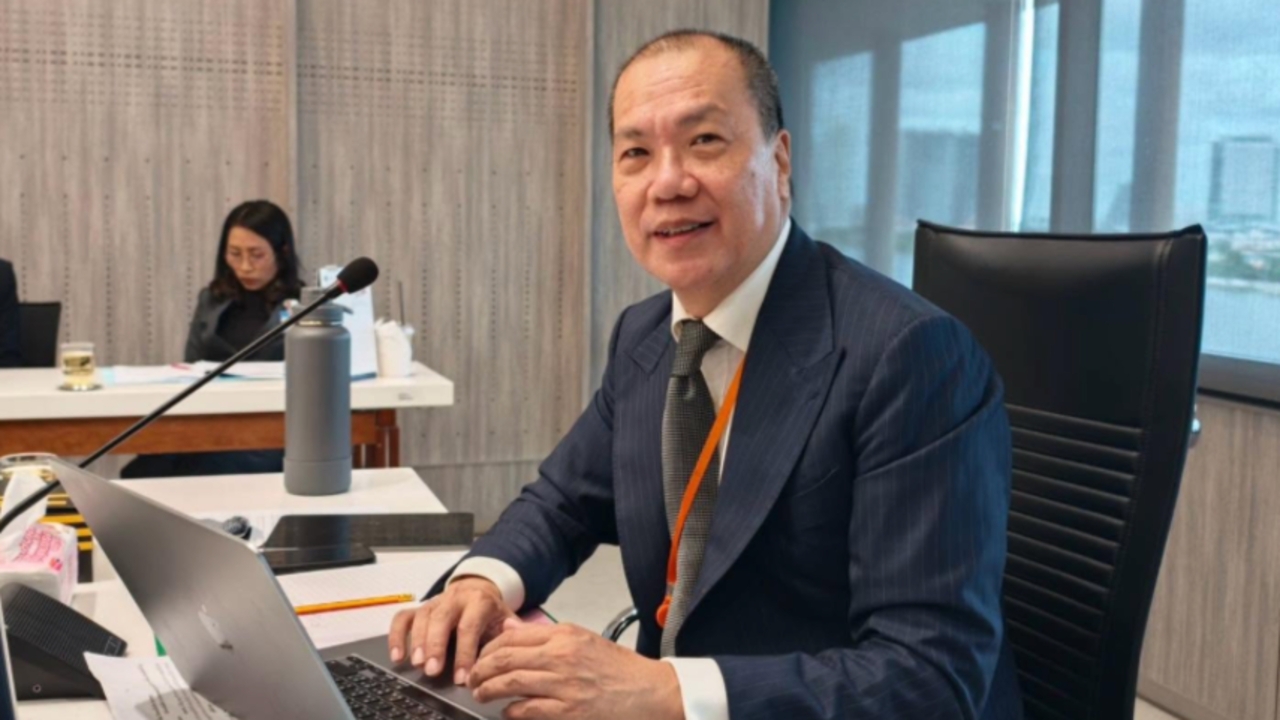
Sorasak, a party-list MP from the People’s Party, criticized the government for going all out to welcome Min Aung Hlaing but receiving only empty promises, causing Thailand to lose credibility on the global stage. He urged an urgent review of Thailand’s stance toward Myanmar.
On 8 August 2026, Sorasak Somkraiskrit, party-list Member of Parliament from the People’s Party, criticized the government led by Anutin Charnvirakul for its reception of Senior General Min Aung Hlaing, marking his first visit as Myanmar’s 'civilian government leader.' He described this as a high-risk diplomatic investment that yielded only 'empty promises' and damaged Thailand’s credibility internationally.
Sorasak pointed out three flaws in the 'Calibrated Re-engagement' diplomatic approach driven by former professional diplomats and security officials closely linked to Myanmar’s military regime, with Deputy Prime Minister and Foreign Minister Sihasak Puangketkaew as the main architect directing the policy.
First, the policy is based on a historical assumption that Myanmar’s military (Tatmadaw) represents the majority Bamar ethnicity, holding central governing and sovereignty power since the past, and therefore coordination should focus on Naypyidaw’s central authority. However, the issues along the Thai-Myanmar border are complex and involve multiple ethnic groups.
Second, the Thai government is effectively whitewashing the dictatorship. Under the direction of Sihasak Puangketkaew, Thailand’s decision to officially receive Senior General Min Aung Hlaing as civilian government leader entails a huge cost in terms of ASEAN’s shared stance and the international order.
If Thailand concedes to be a bridge but gains no tangible results, this gamble becomes a strategic loss—especially since Myanmar’s parliament formally rejected ASEAN’s Five-Point Consensus (5PC). Moreover, the assumption that the Myanmar military is the sole power center is weakening due to its military setbacks across regions. Betting solely on Naypyidaw risks losing opportunities to build bridges with other parties like the National Unity Government (NUG) or ethnic armed organizations (EAOs) controlling actual territories.
Lastly, what Thailand has gained from negotiations is only a blank paper. A clear example is the failure to resolve the toxic contamination crisis in the Kok and Sai rivers, where Myanmar removed key points such as joint water sampling from the draft Terms of Reference (TOR).
Furthermore, security crises including call center scams, human trafficking, and online gambling in border special economic zones (such as Myawaddy or Shwe Kokko), along with mining-related pollution in Shan State, remain under the influence of Chinese capital and local armed groups like the United Wa State Army (UWSA) or Border Guard Forces (BGF), which Naypyidaw admits are 'beyond central government control.'
Relying solely on Naypyidaw cannot lead to real solutions. Thailand must send a clear signal that future success requires Myanmar’s serious commitments and concrete actions. Otherwise, Thailand will have to reconsider and adjust its policy direction inevitably.
The People’s Party urged the government to urgently review its stance and foreign policy toward Myanmar, making clear that any cooperation must have verifiable conditions and enforceable measures. Otherwise, this gamble risks becoming a major strategic loss for Thailand.
“This Myanmar policy did not emerge overnight but is the result of one of the first deep diplomatic roles of Anutin Charnvirakul’s government, led by Sihasak Puangketkaew. The forthcoming outcomes—whether actual cooperation, ASEAN’s stance, or the strategic environment along the border—will be crucial tests to determine if Thailand’s big gamble will yield benefits or end as a wasted risk.”