

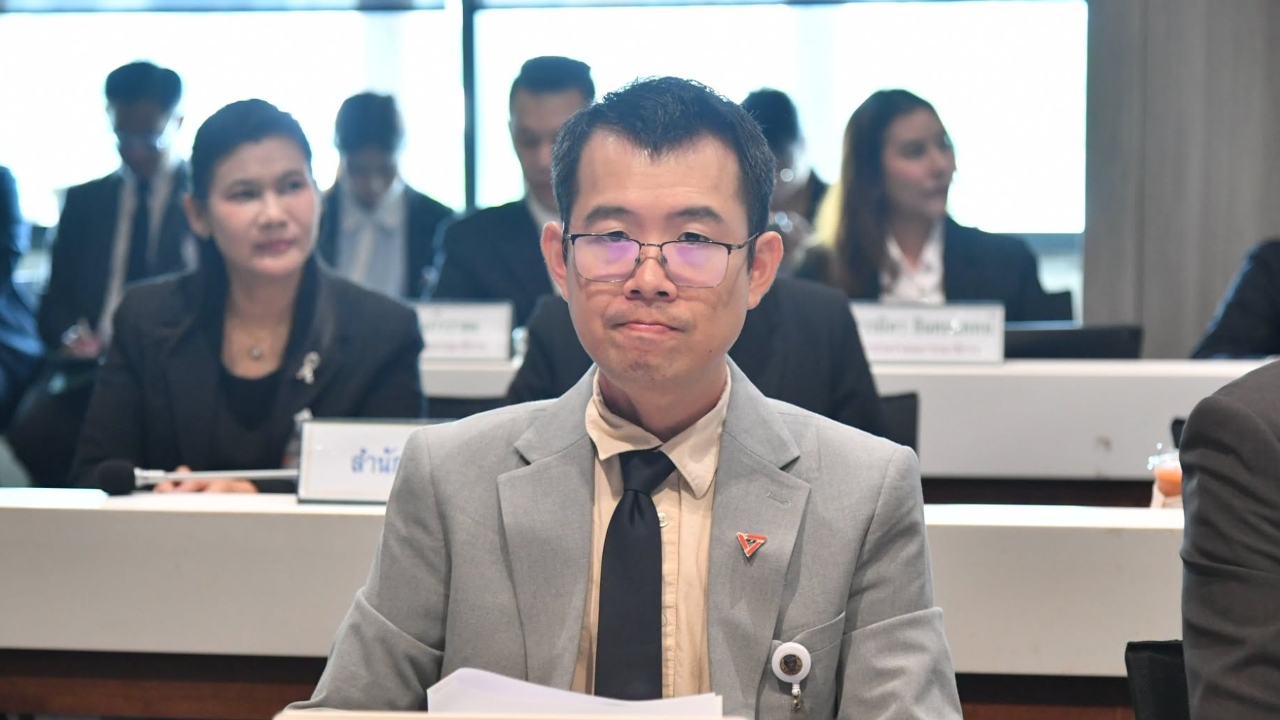
MP Ekaphop of the People’s Party cites the shooting at Thepsirin School to call for a review of mental health education for all age groups and educational institutions, after studies show a rising mental health crisis among children and youth, increasing their risk of depression and stress-related disorders.
On 8 Aug 2026 GMT+7, Mr. Ekaphop Sithiwannathana, a party-list Member of Parliament from the People’s Party’s public health wing, urged a reconsideration of mental health and violence issues in schools following the shocking shooting incident at Thepsirin School in Nonthaburi. The event caused injuries and deaths, deeply alarming students, teachers, parents, and the public nationwide.
The People’s Party expressed deepest condolences to the families of the deceased and those affected by this traumatic event. The loss occurring within a school—a place that should be the safest environment for children and youth—demands urgent healing and corrective action.
Mr. Ekaphop stated that a 2025 study by the Mental Health Subcommittee of the Public Health Commission, House of Representatives, during the previous government, found schools to be high-risk areas for violence and mental illness. Measures to reduce violence and improve mental well-being remain inadequate. The study details include rising violence risk and mental health crises among children and youth. Data shows those under 20 face higher-than-average risks of depression and stress. Screening and service access bottlenecks persist despite the School Health Hero system, which currently covers only 32% of schools, leaving many at-risk children unidentified or receiving delayed treatment.
Additionally, environments encouraging violence include bullying both in schools and cyberbullying, affecting up to 31% of children, as well as family violence and an authoritarian school culture that undermines mental health.
There is a critical shortage of frontline personnel. The ratio of child and adolescent psychiatrists is extremely low (about 110 nationwide), while most school psychologists lack job security. Social workers, vital for case resolution, are nearly absent. Regional health area psychologists number only 1–2, with high turnover rates, insufficient to care for student mental health locally. The government shows little financial or employment support for school psychologists. Regarding access to weapons and risk factors, gun carriers in communities undergo insufficient mental health screening before firearm licensing; once licensed, renewals are rarely required.
Mr. Ekaphop’s policy recommendations for prevention include: 1. In schools, upgrading screening systems by expanding mental health screening like School Health Hero to cover all schools and integrating data between the Ministry of Education and Ministry of Public Health for seamless patient referral. Increase personnel, set appropriate school psychologist-to-student ratios (target 1:1,500), and establish stable employment systems to ensure continuity. Revise curricula to build life skills, include mental health and emotional skills in basic education as non-exam subjects to reduce pressure and raise awareness, and reduce authoritarian culture. Promote policies for school safety and diminish authoritarianism to create safe environments.
2. Structural management via Mental Health in All Policies (MHiAP), making mental health a national agenda with every ministry having shared indicators and measures—for example, the Ministry of Interior overseeing community safety, and the Ministry of Public Health managing treatment—with the National Mental Health Committee responsible for policy implementation.
This includes firearm management by establishing risk assessment criteria and systematic mental health checks for those involved with firearms, enacting specific legislation, drafting laws to address school bullying and cyberbullying, and amending the Mental Health Act to strengthen the committee’s power to control mental health threats.
3. Develop emergency response and rehabilitation systems by integrating hotlines 1669 or 191 with psychiatric emergency services into the national emergency medical system, and training police and emergency medical personnel in de-escalation skills.
Also, promote the use of effective medications, supporting long-acting injectable drugs for patients with severe mental illness (SMI-V) to reduce risks of medication noncompliance and violent incidents.