

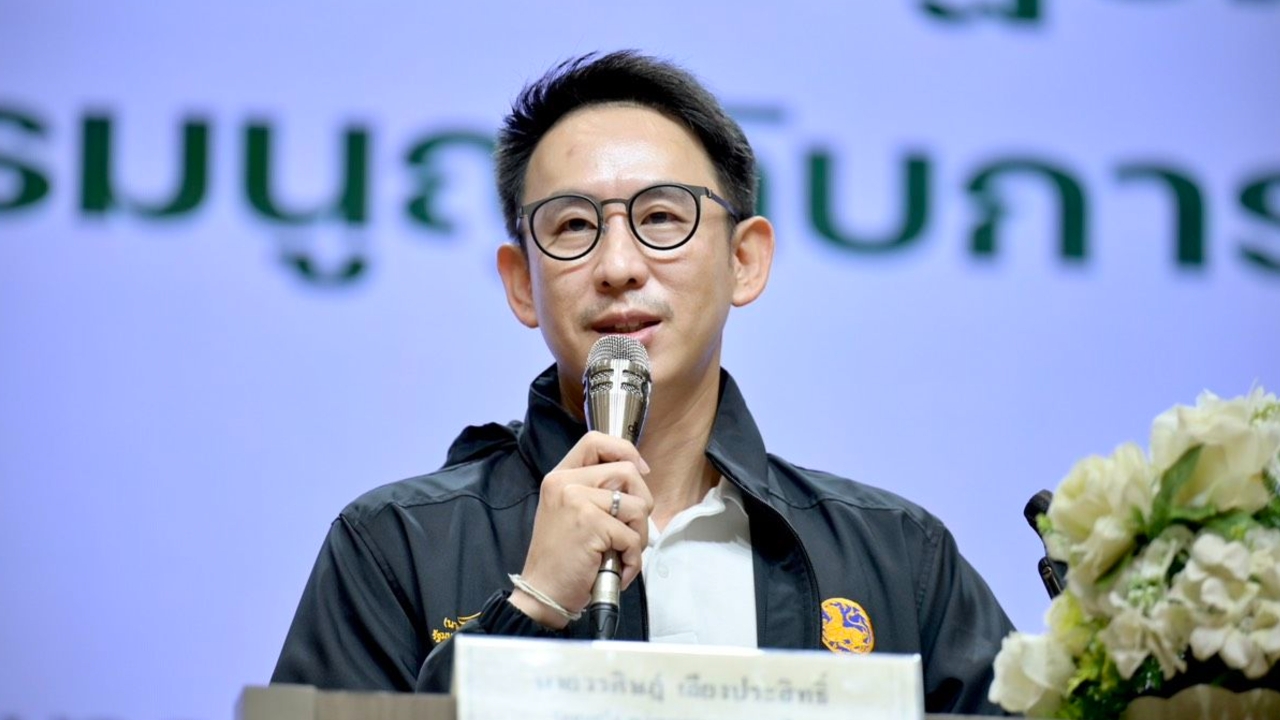
Worasit opened a seminar on the constitution and decentralization, pointing out that central authorities in Bangkok do not know as much as local people. He proposed the Local Tax Act to allow local areas to fully manage their budgets.
On 8 Aug 2026 at Banjongburi Hotel, Surat Thani, Worasit Liangprasert, Deputy Minister of Interior, opened a workshop seminar titled “Constitutional Law and Decentralization.” Attendees included Witsak Jamroenrusit, Deputy Governor of Surat Thani; Nattapop Somkid, Deputy Director of Burapha University's Academic Services; heads of government agencies; members of parliament; Kamron Intotho, President of the Surat Thani Subdistrict Administrative Organization Chairmen Association; local executives; council members; and over 1,000 participants from 14 southern provinces.
Worasit said the constitution clearly intends to decentralize power to local administrative organizations to manage and care for local residents. For example, when streetlights in front of houses are broken or roads have potholes, it is local council members, local executives, and officials in local administrative organizations who handle it, because central authorities in Bangkok do not have as much local knowledge. This is the essence of the decentralization intent.
Worasit said today’s citizens expect not only prompt services but also efficient, transparent, and accountable government management that prioritizes the public interest. The Ministry of Interior emphasizes policies centered on citizens, promoting local administrative organizations to be high-performing, with good governance, effectively meeting public needs, and managing operations based on legality and regulatory prudence.

“Local administrative organizations are a vital state mechanism driving national development from the grassroots. They are the closest agencies to the people and the frontline for alleviating hardships and promoting well-being with tangible results. This is within a rapidly changing world context, requiring adaptation in economic, social, technological dimensions, and rising public expectations.”
Worasit also discussed the concept of pushing a draft law (Local Tax Act) whereby when citizens pay annual taxes, they can choose which local area to support. This allows citizens to direct their tax contributions toward local development as they desire. It is a challenge and a KPI for administrators to build trust through their performance.
Additionally, he outlined plans to enhance local administrative management efficiency by 1. Creating a legal assistant encyclopedia system; 2. Developing an AI system to learn laws on local government operations and serve as a search engine for guidelines and legal references for administrators; and 3. Establishing a centralized local service system (a central app) through which local governments and citizens can access services via a single mobile device.

