

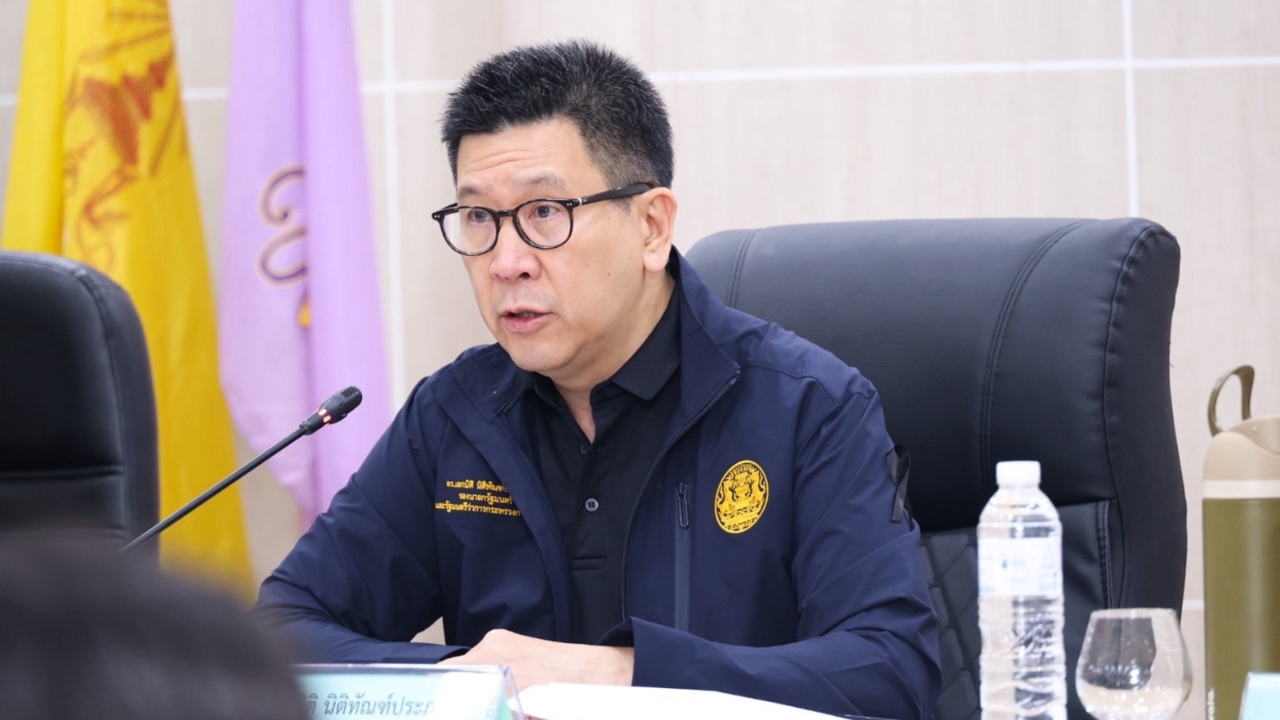
"Aekniti" urges the public to have confidence as the government is closely prepared to handle floods and droughts in the central region. He has ordered the creation of Risk Maps in each province to prepare for the super El Niño phenomenon.
10 Aug 2026 GMT+7 Mr. Aekniti Nitithanprapas, Deputy Prime Minister and Minister of Finance, revealed about the first meeting of the Committee on Prevention and Resolution of Flood and Drought Issues in the Central Region for 2026, held in Phra Nakhon Si Ayutthaya Province to monitor preparedness and address flood and drought problems in the central region. He said the Prime Minister is concerned about potential disasters affecting the public, so five regional committees were appointed for the north, northeast, central, east, and south regions. Each is chaired by an assigned Deputy Prime Minister to centralize operations for unified command, reduce order issuance steps, and eliminate redundancies during disasters.
The central region is a low-lying area receiving floodwaters from the north before draining to the sea. It is also an important economic zone, including agriculture, industrial areas, and dense communities. Therefore, readiness is needed for both floods and droughts, especially regarding water for consumption and agriculture. He ordered related agencies to use geospatial technology from GISTDA, the National Water Resources Office, the Meteorological Department, the Royal Irrigation Department, and the Department of Disaster Prevention and Mitigation to jointly create Risk Maps for floods and droughts to assess risk points in real time. This data will be used by each province for targeted water management planning and to improve the efficiency of warning systems.
Additionally, the National Water Resources Office and Department of Disaster Prevention and Mitigation were instructed to develop operational checklists for provincial governors to immediately prepare, such as inspecting water gates, installing pumps, clearing waterway obstructions, preparing water catchment areas, managing saltwater intrusion, and developing comprehensive disaster response plans covering before, during, and after events.
For response and assistance, provincial governors are to set up provincial command centers integrating military, police, civilian agencies, and local governments, prioritizing aid to vulnerable groups. The Ministry of Social Development and Human Security has been tasked with preparing sufficient temporary shelters.
Regarding public health, hospitals and sub-district health promotion hospitals must prepare medicines, medical supplies, and personnel to care for the public 24/7. Meanwhile, for economic zones, industrial areas, and tourist sites, relevant agencies should implement strict measures to prevent impacts from floods and droughts.
For recovery and relief, provinces are urged to swiftly, comprehensively, and fairly survey damages and distribute compensation, using technology to streamline processes and facilitate public access.
In management, the central region's flood and drought prevention responsibilities are divided among 17 provinces plus Bangkok. Each river basin is overseen by a designated cabinet member to ensure rapid command and problem-solving.
Meanwhile, Mr. Aekniti emphasized communication with the public, instructing provincial governors to promptly disseminate accurate water situation data through all channels to prevent panic but raise awareness and preparedness, focusing on two-way communication.
"Thailand is entering a super El Niño period. Early preparation helps reduce risks from potential disasters, especially through the development of Risk Maps, as each province faces different risks that must be analyzed according to local contexts."
In closing, Mr. Aekniti said he urges the public to trust the government's actions. The committee will closely monitor flood and drought situations in the central region to protect lives, property, agricultural areas, and ensure public safety.