

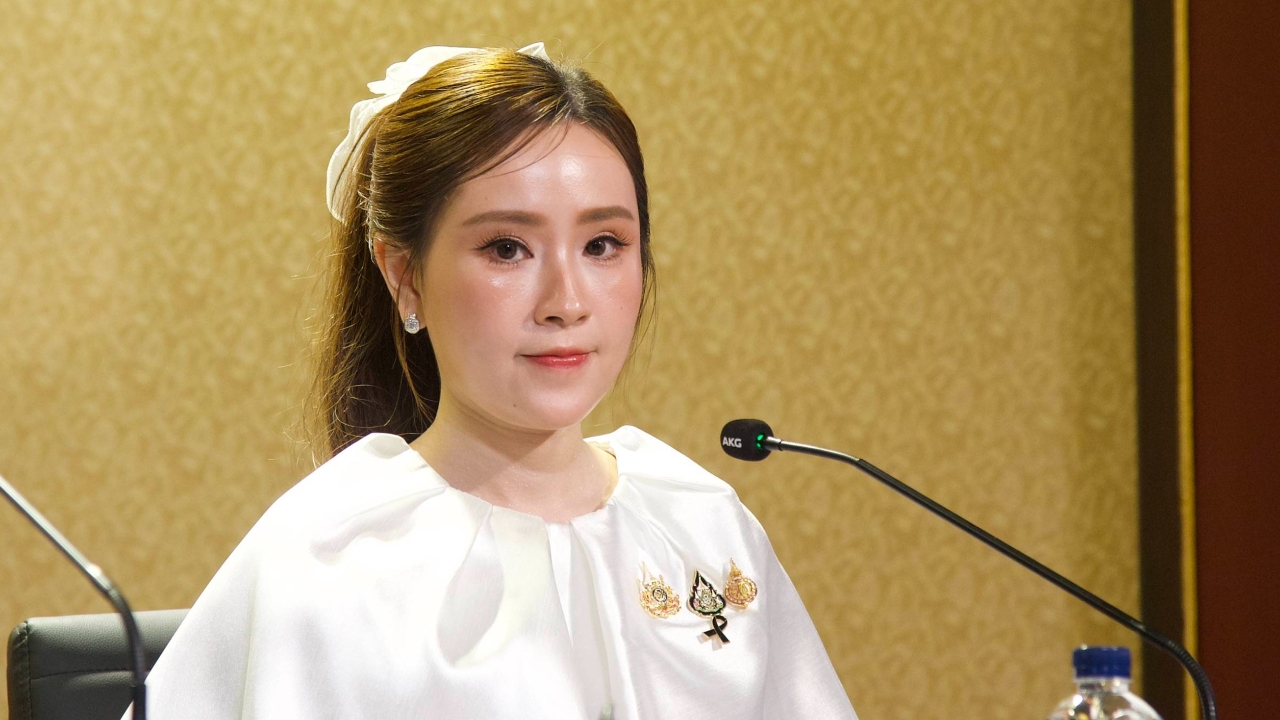
The Cabinet has approved the Education Ministry's proposal to elevate school safety to a national priority, effective immediately in all schools, with strict controls on "weapon screening" and the establishment of School Safety Zones and Safe Rooms to enhance security.
On 11 August 2026, Captain Phatdarasmi Thongsaluaykorn, Deputy Spokesperson of the Prime Minister's Office, announced the decision. The Ministry of Education proposed to the Cabinet to upgrade safety measures in educational institutions to a "national agenda," and the Cabinet agreed to the proposal. This follows a violent incident at a school in Nonthaburi province on 7 August 2026, aiming to systematically enhance prevention and response to incidents in schools to ensure the safety of students, teachers, and educational personnel nationwide.
. Effective immediately, the Ministry of Education issued a safety measure announcement for educational institutions dated 10 August 2026, requiring schools to implement it at once. Schools are designated as "School Safety Zones," with the establishment of Rights, Freedom, and Safety Protection Centers at each school, preparation and rehearsal of emergency response plans, and coordination with police and relevant agencies.
The core approach focuses on risk prevention before incidents occur by strictly searching and screening for weapons, illegal items, and dangerous objects before entering schools, alongside implementing mental health care systems to cover the physical and psychological safety of students, teachers, and staff.
Meanwhile, the Ministry of Education is providing care and counseling for those affected, working with psychologists, the Psychology Department of Chulalongkorn University, and the MCATT team from the Department of Mental Health. "Safe Rooms" are being prepared as spaces for psychological recovery, also readying teachers and parents to support students appropriately before they return to regular classes.
For long-term planning, the Ministry of Education is drafting a master law on safety in educational institutions to establish sustainable care systems for students, monitoring and assessing the mental health of affected individuals, and screening for post-traumatic stress disorder (PTSD) at one, three, and six months after traumatic events to ensure ongoing care until full recovery.
"The government is not complacent and will not wait for incidents to occur before taking action but will accelerate prevention, readiness, and comprehensive care for children’s physical and mental well-being. The Ministry of Education will coordinate with all ministries overseeing schools to adopt these safety measures uniformly nationwide, assuring students, teachers, and parents that schools must be safe spaces for learning and living for all children."
Currently, the Ministry of Education is soliciting public opinions on the draft Act concerning safety and the use of communication devices or electronic equipment by students in schools through the centralized legal system (Law.go.th) from 10 August to 9 September 2026, aiming to establish a master law and framework for long-term safety management in educational institutions.

Ms. Ploytale Laksameesangchan, Deputy Spokesperson of the Prime Minister's Office, revealed that the Cabinet approved financial support for the World Health Organization's (WHO) Investment Round (WHO IR) totaling 1 million U.S. dollars, approximately 32.24 million baht, for fiscal years 2027–2028. The Cabinet also approved the principle of sending five Ministry of Public Health officials per year on temporary assignments to the WHO to develop Thai personnel capabilities, build global health networks, and bring knowledge back to enhance Thailand's public health system.
The WHO IR funding will be disbursed as 500,000 U.S. dollars annually, about 16.12 million baht in fiscal years 2027 and 2028, with a goal that 50 percent of Thailand's contribution be allocated back to the WHO office in Thailand to support health initiatives aligned with the country's context and needs. The WHO Investment Round is a fundraising mechanism supporting the WHO’s 14th General Programme of Work (GPW14) from 2025 to 2028, covering international public health missions. WHO aims to raise approximately 7.1 billion U.S. dollars through this mechanism.
Beyond financial support, the Cabinet approved the principle to assign five Ministry of Public Health officials annually on secondment to WHO headquarters, the WHO Regional Office for Southeast Asia, and member countries with strong health economies from fiscal year 2027 onward. The positions correspond to P4 or P5 levels under the UN structure.
WHO’s priority fields needing additional personnel include universal health coverage, essential medicines, antimicrobial resistance management, digital health, data analytics, health economics, and health finance—all critical for Thailand’s long-term health system development.
Ms. Ploytale added that sending personnel to work with the WHO is not only support for the organization but an investment in Thailand’s human resources. The Ministry of Public Health will select personnel appropriately, transparently, and accountably, establishing knowledge transfer methods and success indicators after assignments to ensure acquired expertise, experience, and networks benefit Thailand’s health system concretely. Estimated expenses for sending five officials annually are about 22.51 million baht, covering salaries, relocation, accommodation, and travel, funded by the Ministry’s annual budget and strictly following civil service and related regulations.
"This support maintains Thailand's role in international public health forums. The government mandates that expenditures must benefit Thailand, both through budget support for WHO work in Thailand and knowledge gained by Thai personnel abroad. The goal is to connect global cooperation back to enhancing the country’s health system and citizens' quality of life."
The WHO IR support is a voluntary donation by Thailand as a WHO member country, separate from annual membership fees, and does not constitute a new international treaty.