

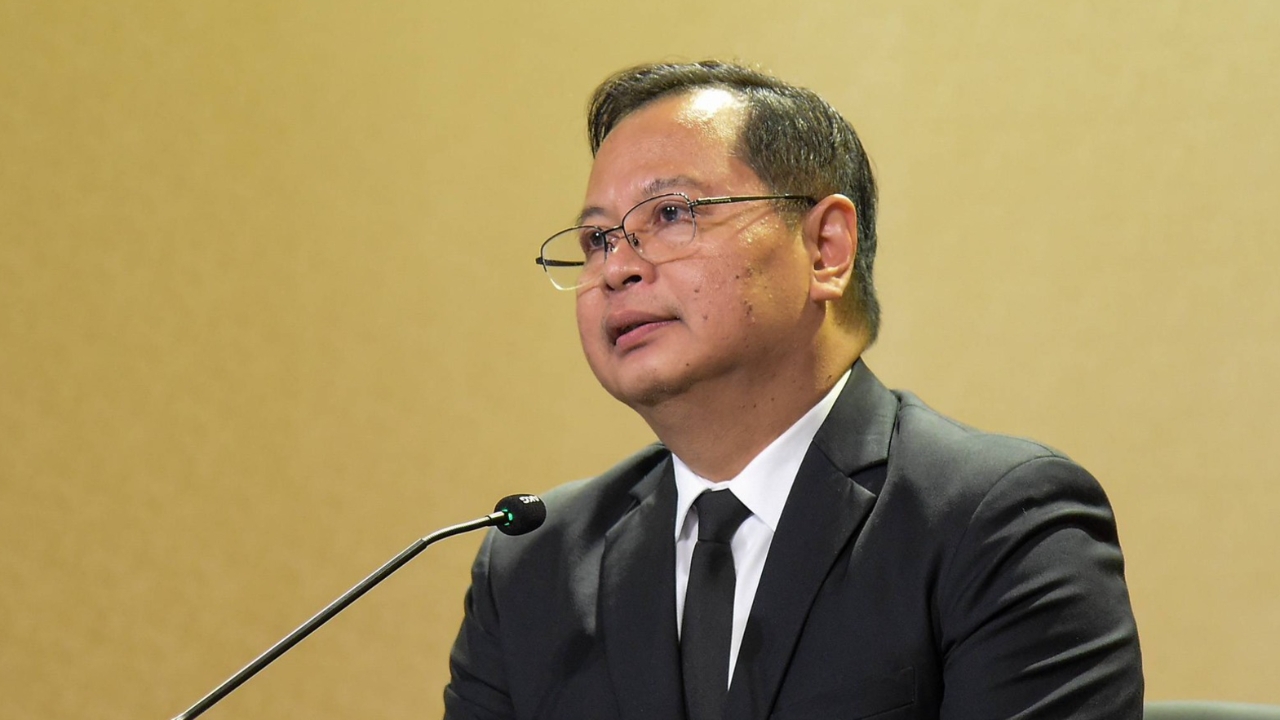
Deputy Prime Minister Pakorn Nilprapunt is spearheading a restructuring of the civil service workforce, freezing quotas, and gradually dissolving central agencies in regional areas, aiming to cut over 30,000 positions and reduce the regular budget to 30% in the long term.
At 13:55 on 11 Aug 2026 GMT+7 at the Government House, Deputy Prime Minister Pakorn Nilprapunt revealed that the Cabinet approved the Office of the Civil Service Commission's proposal to reform civil service workforce management. This action aligns with key government policies because currently about 73% of the national budget is consumed by regular expenditures, leaving limited funds for investment and development. Therefore, it is necessary to urgently review the structure and missions of government agencies to improve budget efficiency.
Measures were presented by two main agencies: the Office of the Civil Service Commission (OCSC) and the Office of the Public Sector Development Commission (OPDC). These aim to improve both workforce structure and the working model of the public sector. The OCSC proposed four main measures, which include:
Measure 1 Freezing workforce quotas by setting the current number of personnel as the maximum ceiling for each government agency and public organization, encouraging other agencies to adopt this approach with the country's benefit as the priority.
Measure 2 Abolishing unnecessary positions in both professional and general categories, without affecting current incumbents.
Measure 3 Eliminating job streams that do not require large personnel numbers, adjusting according to agency missions.
Measure 4 Restructuring agencies and their missions to be more modern and streamlined, emphasizing serious adoption of technology in public services, not merely purchasing computers or tech equipment.
Meanwhile, the OPDC aims to reduce burdens from central government agencies established in regional areas, which are currently numerous. It will halt new establishments in these regions and set the existing number as the maximum ceiling. Existing agencies will have their roles and missions reviewed before being gradually dissolved to avoid impacting public services, with the goal of continuous reduction in agency numbers.

Deputy Prime Minister Pakorn stated that the key to redefining the public sector’s role in the new era is shifting from a controlling or supervisory state to one that facilitates citizens, ensuring public services are comprehensive, efficient, and cost-effective. The initial target is to reduce more than 30,000 positions. Each agency must review its roles and tasks to identify which processes can be simplified, which can be replaced by technology, or which missions no longer require traditional methods. Agencies will then submit plans to the OCSC to gradually reduce workforce numbers. Meanwhile, the OPDC will develop detailed plans and disclose them to the public.
When asked about the target for cutting regular expenditure, Deputy Prime Minister Pakorn said: The goal is to reduce the proportion of the regular budget to no more than 30%. This is a long-term target even though it has not yet been formally presented to the Cabinet.
"If we do not act now, future generations will suffer. We must accept this reality and address it. Workforce and budget restructuring will not yield quick results within 1-2 years because it is a large-scale reform that requires continuous, gradual implementation, possibly taking up to eight years—not just the four-year term of a single government."

Government spokesperson Ratchada Thanadirek said the government recognizes the importance of reforming civil service workforce management due to the country’s fiscal status, with 70% of the budget allocated to personnel costs, which is very high. The government has several important missions requiring budget allocation to drive the country forward. Therefore, reforming workforce management is essential. The Cabinet appointed a committee chaired by Deputy Prime Minister Pakorn Nilprapunt to set workforce targets and policies in line with the government's parliamentary agenda.
Today, the Cabinet approved the committee's proposals as follows: delaying the allocation of new civil service positions in all cases, requiring agencies to freeze workforce numbers, manage current personnel, and fill vacant posts only as necessary based on results from competitive exams or selections. This is to control overall workforce expansion. The subcommittees of ministries (Ministry Civil Service Committees) will:
1. Consider abolishing unbudgeted civil service positions at professional operational/expert levels and general operational/expert levels from 1 Oct 2024 onwards, except for cases already announced for recruitment. The results must be reported to the Public Sector Workforce Target and Policy Committee by December 2026.
2. Abolish vacant civil service positions from retirements in fiscal year 2027 that were previously replaced by other employment forms (contractual employees) according to the 2023-2027 workforce management measures, without replacing them with contractual positions. Exceptions include medical and dental staff at the Ministry of Public Health for hiring graduates and prison staff. These measures cover fiscal years 2028-2032.
3. Eliminate positions in 11 unnecessary support job categories when incumbents retire starting fiscal year 2027, including:
1) Administrative officers (central government only)
2) Public relations officers
3) Communications officers
4) Audiovisual officers
5) Library officers
6) Dredging technicians
7) Printing technicians
8) Photographers
9) Art technicians
10) Librarians (except for the Fine Arts Department, Ministry of Culture)
11) Announcers and news reporters
To ensure efficiency and avoid impacting government operations, agencies will phase out these support positions as incumbents leave and consider suitable alternative employment types, alongside long-term workforce planning and management.
Ratchada added that the Cabinet also directed all agencies to review their roles, missions, and organizational structures to align with the workforce ceilings from the freezing measure, implementing structural reforms without affecting operational efficiency or public service quality.
The OCSC will develop policy proposals and related measures such as early retirement and delaying promotions. Relevant agencies will propose policies supporting service contracting, enhancing public sector efficiency through digital technology, restructuring government agencies, reducing redundancy, and reforming pension systems to fit the changing national context.
"This reform of civil service workforce management will enhance government administration efficiency, promote cost-effective personnel spending, align agency structures and workforce numbers with their roles and missions, and increase operational efficiency through digital technology, all consistent with the current national situation."