

The government reiterated its firm commitment to combating corruption, reporting progress in resolving key cases. It is cracking down on the "fake fathers" and oil hoarding networks, expanding investigations in all cases, and partnering with the private sector to promote an "Open Government" system to prevent long-term corruption issues.
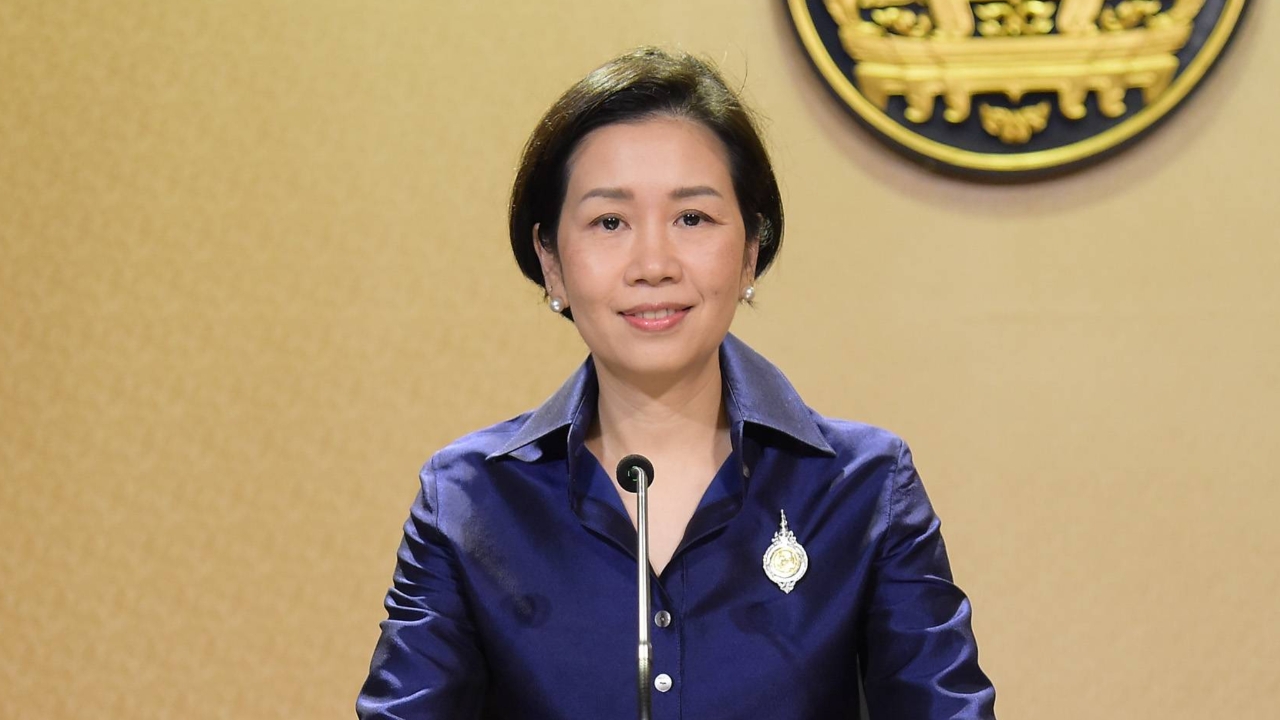
On 12 Aug 2026 GMT+7, Ms. Ratchada Thanadirek, spokesperson for the Prime Minister's Office, outlined the government's approach and actions in tackling corruption. She emphasized the government's strong focus on suppressing corruption at all levels, especially on issues of public concern. The government has integrated efforts with relevant agencies to enforce the law firmly, decisively, and continuously to protect national interests and public security.
Regarding progress in cracking down on networks hiring Thai men to register and falsely acknowledge children’s births to enable foreign children to obtain Thai nationality and birth certificates illegally, the Department of Provincial Administration, Ministry of Interior, together with the Royal Thai Police and relevant agencies, has launched three continuous operations targeting transnational criminal networks involved in fraud related to the civil registration system and illegal acquisition of Thai nationality and registration status.
1. Operation "Crackdown on Fake Children" resulted in the arrest of four suspects. The local registration office in Huai Khwang district revoked false birth registrations of two foreign children. Investigations into other cases are ongoing to verify additional facts.
2. Operation "Dragon Scale Reversal" on 29 Apr 2026 GMT+7 led to the arrest of six individuals under warrants: two Chinese nationals, three Thai men hired to register false marriages and acknowledge children, and one district official. Further investigations expanded the operation, resulting in 35 additional arrest warrants issued on 7 Jul 2026 GMT+7 for other offenders.
3. Operation "Dragon Scale Removal" targeted networks disguising marriage registrations and committing fraud in the civil registration system to falsely obtain Thai nationality for children. As of 9-11 Jul 2026 GMT+7, courts have approved 35 arrest warrants, with 32 suspects detained. Among the Chinese mothers involved, one has left the country and two remain at large. The court views these individuals as part of a serious, organized network threatening national security, denying bail for all 27 arrested. The Department of Provincial Administration has ordered the cancellation of false birth registrations for all affected children. Additionally, the Anti-Money Laundering Office will investigate financial flows and seize assets of those involved.
Ms. Ratchada stated that another case drawing public attention involves irregularities in approximately 57 million liters of oil valued at over 2.3 billion baht. Relevant agencies have coordinated to verify facts and prosecute. The Department of Special Investigation, Department of Energy Business, Royal Thai Police, Excise Department, Customs Department, Marine Department, Civil Affairs, Ministry of Defense, and the Center for the Protection of National Maritime Interests have integrated efforts to track oil flows and prosecute private companies and involved parties in three cases in Ang Thong province and the southern region. Suspects have been notified of charges. The DSI continues investigations into other oil depots and traders to expand prosecutions on all offenses involving related parties.
"The government does not ignore or overlook any corruption issues. Agencies have acted decisively and seriously to suppress corruption and continue investigations to protect national and public interests. Furthermore, the government is implementing long-term anti-corruption measures by cooperating with the private sector to establish a multilateral committee for managing an Open Government system. This mechanism provides the public greater access to government information and participation in policymaking, enhancing Thailand’s anti-corruption prevention and enforcement effectiveness," Ms. Ratchada said.