

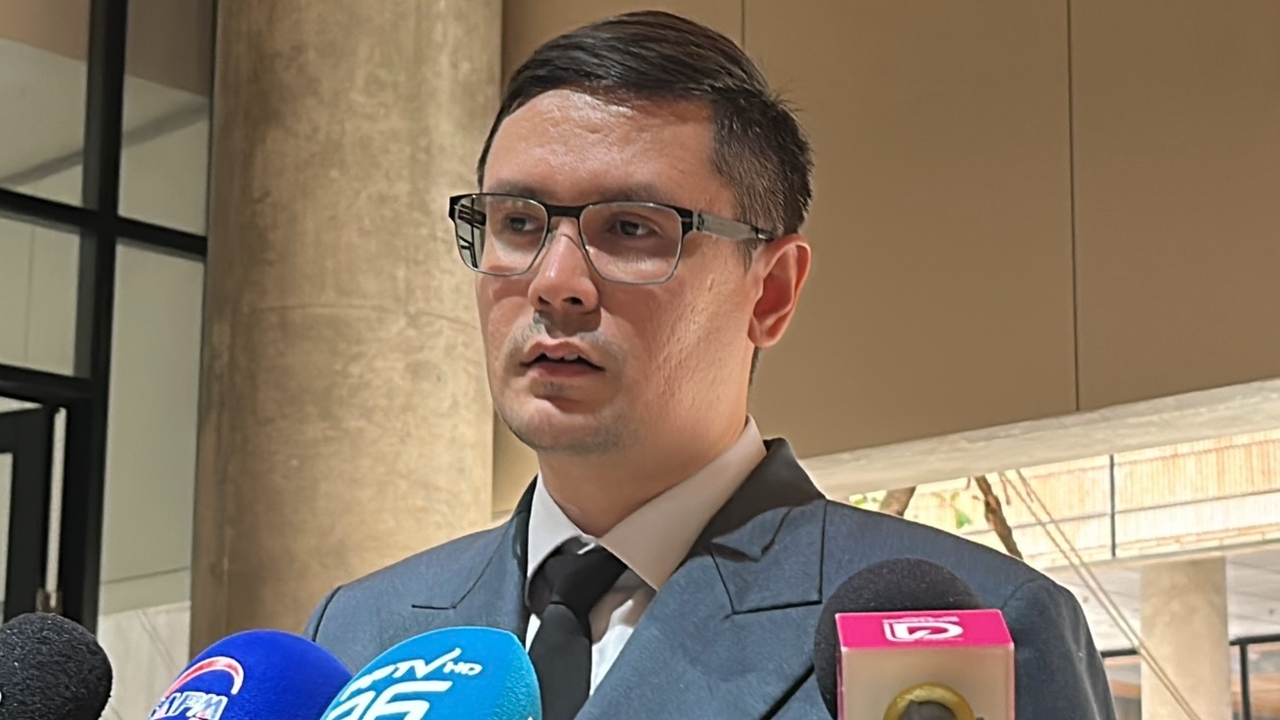
"Rom" criticized the government as all talk and no action, with wheels not turning, failing to solve the false father issue. Meanwhile, "Toto" expressed concern over 1,500 cases where Thai individuals were hired to falsely acknowledge foreign children, but DNA verification is difficult due to high costs.
At 1:00 p.m. on 13 Aug 2026 GMT+7 at the Parliament, Mr. Piyarat Jengnap, party-list MP of the Prachachon Party and vice-chairman of the House Committee on Law, Justice, and Human Rights, gave an update on the hiring of Thai men to falsely acknowledge foreign children to obtain Thai nationality, the so-called false father cases. The meeting invited relevant officials who revealed alarming data that foreign parents have used Thai individuals as false fathers, especially in eight hospitals in Bangkok, totaling 1,000 to 1,500 cases. Officials from the administrative sector reported they have managed to stop the flow and will implement stricter measures going forward. However, revoking Thai nationality from these children faces problems, particularly among the 1,000 cases, due to budget constraints for DNA testing, which costs 3,000 baht per test, and the need for investigative staff to follow up on cases. Therefore, little action can be taken so far because of budget issues.
Recently, four additional false father cases were discovered at a large private hospital on Srinakarin Road, representing a new case outside the original eight hospitals. Authorities will urgently coordinate further investigations. Mr. Phonphir Suwannachavee, Deputy Minister of Interior, who mentioned that Chinese individuals or brokers have offered bribes to resolve issues related to gray-area Chinese investors in Thailand, was urged to promptly prosecute those cases. The call was made not to repeat the situation of the Minister of Digital Economy and Society, who mentioned bribe offers but the matter remains unresolved. Investigations must trace all recipients and everyone involved in the process.
Mr. Rangsiman Rome, party-list MP of the Prachachon Party and chairman of the House Committee on Law, stated that official data links this operation to transnational crime, yet authorities have been unable to dismantle the network. Most efforts have focused on small-scale cases, addressing only symptoms. Current official data will be audited retrospectively over 30 years, including cases of Chinese children now aged 23 who obtained Thai nationality. Government agencies admit there is no plan to resolve the issue, possibly due to budget constraints and lack of data integration among Ministry of Interior agencies. Hence, the problem persists. He frankly stated the government’s actions are all talk with no progress; no effective suppression has occurred. He proposed solutions as follows:
1. Conduct quantitative checks by reviewing records of foreign mothers already in the system, determining who is present or absent to identify at-risk groups. 2. Carry out qualitative checks, such as verifying fathers’ tax documents and income declarations against the use of high-end hospitals for childbirth, which can be cross-checked. Genuine efforts to solve the problem require integrating data across agencies into a unified system rather than issuing statements without resolution. This issue involves corruption by both state officials and other collaborators. Multiple interconnected factors exist. It remains to be asked whether high-level hospital administrators are aware of this. So far, no further investigations have expanded.