

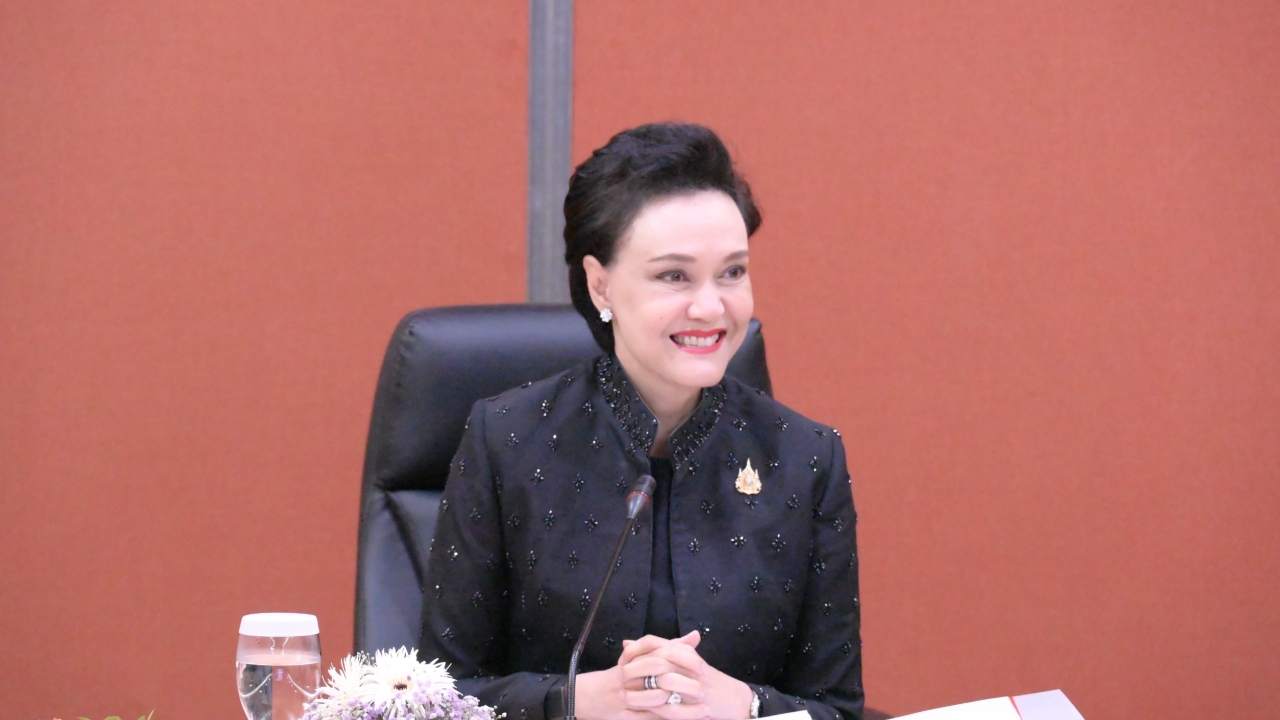
Supachai delivers policy directives to the Ministry of Industry to revitalize Thai industry for the new global era, promoting Made in Thailand with an emphasis on bioenergy, semiconductors, and photonics. Plans include reviewing legislation and adjusting indices to reflect the real economy, with US tax negotiations scheduled for late August.
On 13 August 2026 GMT+7, Ms. Supachai Suthamphan, Deputy Prime Minister and Minister of Commerce, visited the Ministry of Industry to inspect and deliver policy guidance. Mr. Warawut Silpa-archa, Minister of Industry, and agency executives attended the meeting.
Ms. Supachai stated the government aims to strengthen Thailand’s economy from its domestic base while maintaining competitiveness in the global market, noting that the National Industry Committee (NIC) had not met for nearly four years amid rapid changes in geopolitics and global industrial structures.
A key focus is opening public sector markets to domestically produced goods, raw materials, components, and services, especially three high-value, strategically important industries: defense, rail systems, and medical devices, through public procurement and green purchasing initiatives.
Ms. Supachai said the government will be a major user to generate demand for these industries before expanding to private and international markets. However, the Made in Thailand advantage must not lower standards; products using Thai components must meet international quality and have clear local content criteria.
The Ministry of Industry has been tasked to connect “research-production-market-investment” through the GMT SMEs mechanism of the Department of Industrial Promotion or DEPA, to upgrade SMEs’ manufacturing efficiency, technology, standards, and proportion of local raw materials, alongside MiT certification from the Federation of Thai Industries.
“The important thing is to align the market with enterprise development, using market demand as the basis to develop SMEs for genuine growth and build consumer confidence,” Ms. Supachai explained.
Separately, the meeting discussed promoting bioenergy for diesel and gasoline, considering excise tax, market mechanisms, automotive industry readiness, and balanced benefits for farmers, linking to the green economy under BCG and ESG principles.
Ms. Supachai emphasized the need to accelerate support for new industries including biotechnology, digital AI, new automotive types, medical devices, and defense industries, which require new supply chains so Thailand can move beyond being just a production base to creating more domestic value.
The meeting also discussed adjusting industrial indices to better reflect real situations, assigning TDRI to analyze data, particularly capacity utilization rates that may still include declining old industries but exclude rapidly growing new industries.

Mr. Warawut cited semiconductors and photonics—especially optical switch and transceiver equipment growing with global data center demand—as clear examples. Some Thai operators have doubled sales for two consecutive years. Updating the MPI base year from 2021 to 2024 would more accurately reflect new industry potential.
The meeting reiterated the need to adjust industrial indices to reflect real conditions, with TDRI reviewing figures, especially capacity utilization that may still count declining old industries while excluding fast-growing new sectors.
Ms. Supachai noted that since the NIC has not met for a long time, 5-6 draft laws—including factory, industrial waste, palm oil, and related regulations—need comprehensive review before Cabinet submission to ensure coverage of present and future global contexts.
Regarding US trade measures, Ms. Supachai said that under Sections 301 and 232, about 72% of products have received tariff exemptions, leaving 28% still requiring negotiation. She will travel in late August to negotiate tax issues with the US to maximize Thailand’s trade benefits.
However, Thailand’s negotiation framework with the US remains focused on trade and does not trade military issues for tariff benefits. Instead, it will use trade, investment, and supply chain data to highlight mutual benefits for both countries.
Ms. Supachai added that Thai private sector investment in the US has reached nearly $20 billion, with plans to invest over $5 billion more. At the same time, part of Thailand’s trade balance comes from US companies investing in Thailand, so trade and investment must be considered together.

