

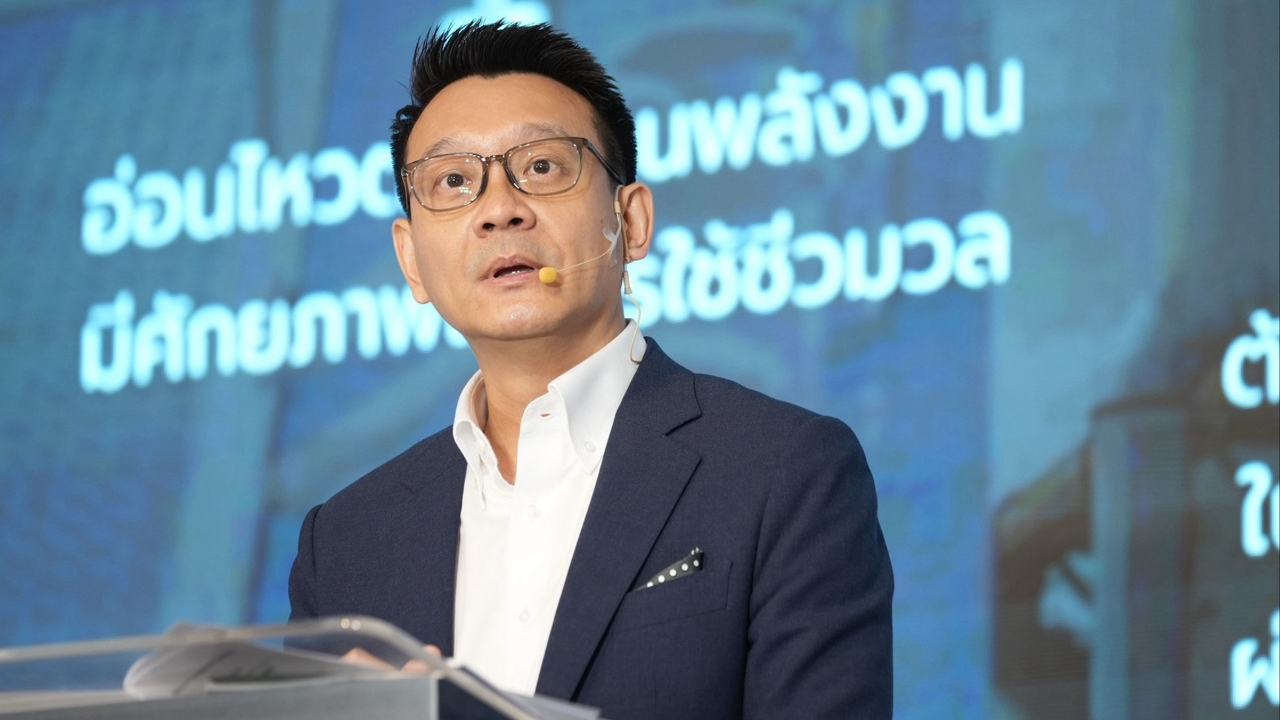
Veerayut leads the Economic Development Committee team in organizing the Growth Forum, highlighting two key strategies to revive Thailand’s economy: energy transition and building a medical equipment supply chain. He points out that investors have not lost faith, but Thailand lacks clean energy, which deters new capital inflows.
On 14 Aug 2026 GMT+7, Veerayut Kanchuchat, deputy leader of the People’s Party and chair of the Economic Development Committee, held the Growth Forum themed “Renewable Thailand: Reviving the Thai Economy through New Energy Transition and Medical Equipment Industry Development.”
The forum launched two research reports by the committee proposing approaches to restore Thailand’s economy. They highlighted the challenges the country faces, including “too high” issues like an aging population and inequality, as well as “too low” issues such as growth rate and productivity.
Veerayut emphasized that given budget and time constraints, Thailand should not panic and resort to indiscriminate incentives to attract foreign direct investment. Instead, strategic prioritization is needed, focusing on two main points: transitioning to clean energy and building the medical equipment supply chain. He stressed moving beyond wellness centers as mere downstream health services to owning technology and reducing import burdens amid an aging society.
The world is entering the era of No Green, No Growth.
Regarding clean energy, a key topic from the collaborative study between the Economic Development Committee and the Clean, Accessible, and Secure Energy project for Southeast Asia (CASE) under the German International Cooperation Agency (GIZ Thailand), Dr. Veerayut stated that global trade rules have tightened environmental measures, ushering in the “No Green, No Growth” era. Without clean energy, economic growth is unattainable.
Based on collaboration with over 215 businesses, the report identified a critical limitation: the “clean electricity gap” where Thailand cannot meet investor demand. Currently, Thailand’s clean power capacity is about 30 terawatt-hours per year, but industrial demand is projected to soar to 90 units in four years and nearly double again in ten years.
“If the government does not urgently close this gap, Thailand may lose a significant opportunity. Existing capable investors may relocate production to more prepared countries, while quality new capital will be deterred, leaving only fossil fuel-dependent and environmentally negligent industries to compete for investment space,” Veerayut said.
Policies must be crafted to address diverse needs.
Another key point Veerayut stressed is that energy transition cannot adopt a one-size-fits-all approach across industries. State policies must be “crafted” to align with specific demands of each business sector. For example, automotive parts SMEs may require diverse access to clean electricity, whereas the energy-intensive petrochemical industry needs large, stable clean power supplies to support production processes.
Veerayut concluded that structural energy transition must go beyond supporting rooftop solar loans or promoting electric vehicles. The focus must be on increasing the share of clean electricity within industrial systems to replace fossil fuels, alongside designing appropriate mechanisms and regulations. This will be the crucial first step to restoring Thailand’s competitive edge.