

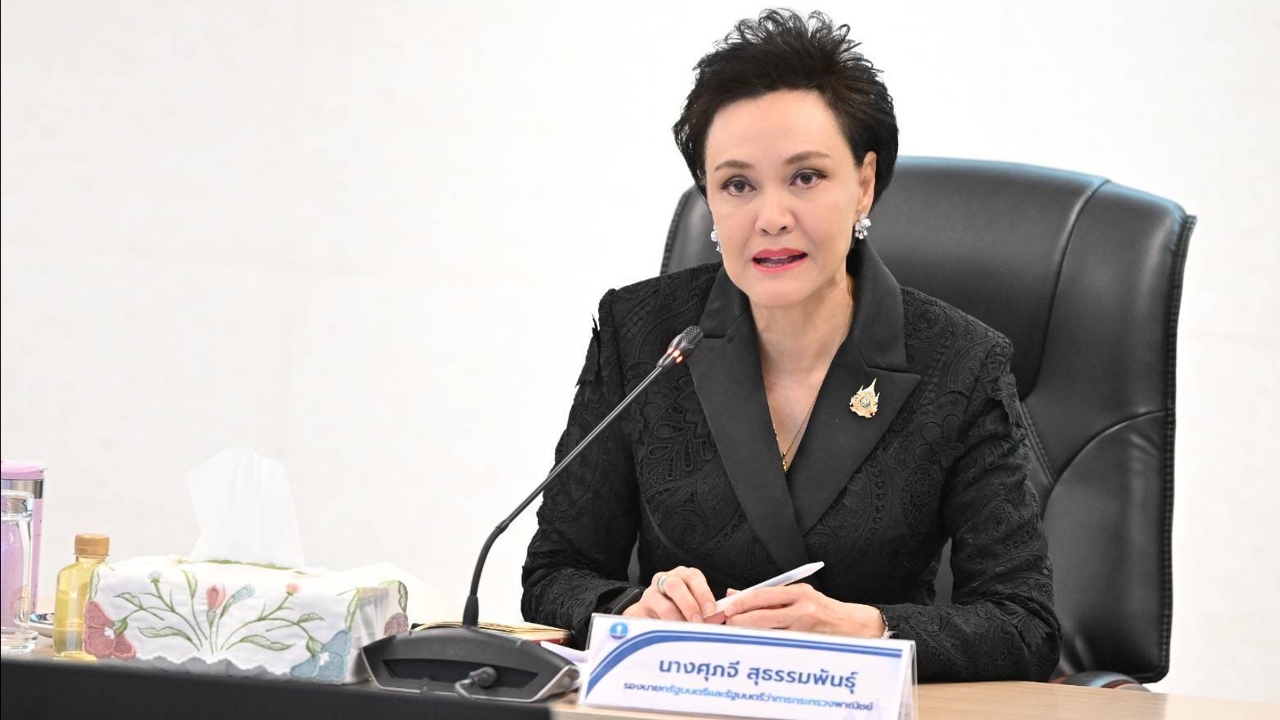
Supachai sets policy for the Ministry of Tourism to advance the “Visitor Economy” strategy, elevating the entire tourism system with emphasis on safety and convenience, aiming to increase value, lengthen stays, and stimulate spending on tourism.
On 14 Aug 2026 GMT+7, Supachai Sutthumpun, Deputy Prime Minister and Minister of Commerce, disclosed after chairing the meeting to accelerate implementation of the integrated tourism revenue plan for fiscal year 2026, the first meeting of the National Tourism Policy Committee (NTPC) of 2026, and a visit to provide policy guidance to the Ministry of Tourism and Sports on 14 Aug 2026 GMT+7, that today's meeting was divided into two main groups, the first focused on monitoring budget integration progress.
For fiscal year 2026, despite tourism facing challenges from the energy crisis and war situations affecting travel, the Ministry of Tourism and Sports continues to drive work steadily. The meeting agreed that addressing problems and developing tourism requires a comprehensive, systematic approach aligned with the Prime Minister's policy, who established a working group through the joint public-private committee mechanism (JCC).
Supachai said one of the working groups directly advancing this is the Creative Economy and Visitor Economy group, led by Veerasak Kowsurat. Moving forward, the focus will not be just on 'tourism' alone but will adopt the Visitor Economy concept to manage the entire system and tourist experiences from departure, during their stay in Thailand, through their return, to create lasting impressions and encourage tourists to revisit Thailand.
“We must take care of the entire system and the tourist experience, from before departure, while in the country, until they return home, to leave a strong impression and encourage them to visit us again.” .
Supachai added that advancing the Visitor Economy will prioritize safety, convenience, and creating new experiences for tourists to enhance Thailand’s tourism potential. The focus is not solely on increasing tourist numbers but on the quality and economic value generated throughout the system.
The second meeting was the National Tourism Policy Committee (NTPC), reconvening after more than a year. The committee discussed key goals to increase tourism value, extend tourists’ length of stay in Thailand, and stimulate higher spending to generate broad economic benefits from tourism.
Additionally, the NTPC considered revising regulations and laws related to tourism, raising standards for unregistered accommodations, and reviewing policies on foreign tourist fees to ensure appropriateness and alignment with current circumstances.
At the same time, efforts continue to promote sustainable tourism in four special areas: Koh Chang islands, Songkhla lake basin, Chiang Rai, and Bang Kachao. The committee also pushes for model areas in world heritage management and cultural capital in Sukhothai, Si Satchanalai, and Kamphaeng Phet, to develop natural, cultural, and historical assets into sustainable tourism and long-term added value for these regions.
Supachai also said that all these approaches require collaboration between government agencies, the private sector, and tourism stakeholders to shift Thailand’s tourism development from focusing on numbers to creating quality value and experiences. This will help increase income, distribute benefits to communities, and strengthen Thailand’s long-term competitiveness.