

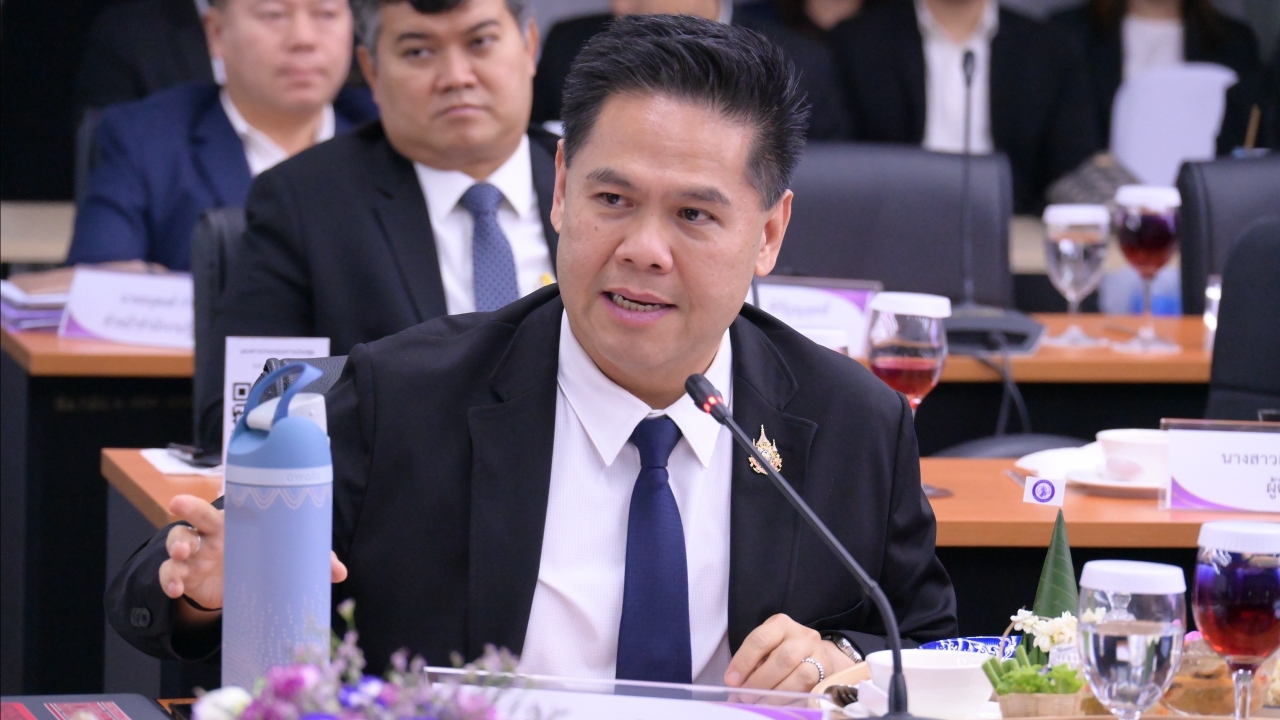
Warawut declared, "Thailand must gain more than just investment capital," endorsing government policy to overhaul new industries and leverage supply chains to create economic value domestically.
On 14 Aug 2026 GMT+7, Warawut Silpa-archa, Minister of Industry, announced that the ministry is adjusting Thailand’s industrial strategy to align with the rapidly changing global economic structure, advancing an industrial strategy from a production base while accelerating development of new industries (New S-Curve).
Warawut emphasized that Thailand’s challenge is not merely attracting investment but connecting research, production, market, and investment while upgrading SMEs so Thai entrepreneurs can integrate into the supply chains of future industries to the greatest extent, following the policy of Deputy Prime Minister and Minister of Commerce Supachai Sutthumpan.
This shift reflects changes in Thailand’s industrial structure, evidenced by rapid growth in the semiconductor and photonics industries used for data transmission and processing, with sales approximately doubling compared to the previous year for the second consecutive year, partly driven by global expansion of large data centers and increased adoption of optical communication systems.
Therefore, tools measuring the industrial sector must evolve. The Ministry of Industry, through the Office of Industrial Economics (OIE), plans to update the base year for the Manufacturing Production Index (MPI) and Capacity Utilization Rate from 2021 to 2024 to better reflect the current industrial structure and capabilities of Thailand, supporting the rapid expansion of advanced technology industries.
"If we want new industries to be genuine engines of economic value added, we must look beyond investment figures. Using outdated data risks missing emerging high-potential sectors like biotechnology, digital and AI, modern automotive, medical, and defense industries. We must identify where supply chains are and how extensively Thai entrepreneurs can participate. This is a key challenge for the Ministry of Industry," Warawut explained.
Aligning with Supachai’s policy, the government is leveraging the public procurement market as a channel, especially green procurement that prioritizes environmentally friendly products and services, by giving preference points to Made in Thailand (MiT) products with high proportions of local content in three sectors: defense, public health and medical equipment, and rail systems.
Furthermore, the ministry is coordinating with the Ministry of Finance to review excise taxes aiming to create a level playing field between Thai and foreign operators, ensuring tax structures support competitiveness without becoming business costs or disadvantaging Thai entrepreneurs. It also promotes bioenergy, including biodiesel and ethanol, to balance the market and distribute benefits to farmers in the transition to clean energy.
Specifically, for the electric vehicle (EV) industry, the government is considering new measures and adjusting excise tax bases to create incentives that ensure fair competition between domestic manufacturers and imported vehicles, avoiding excessive cost disadvantages and attracting investors to Thailand. This is especially important amid reports of Toyota expanding investments in Indonesia, requiring cooperation across sectors to strategize to attract them back.
At the same time, the ministry is ready to push draft Factory and Industrial Waste Acts through the cabinet and parliament to ensure legislation keeps pace with industrial changes and effectively supports environmental management.