

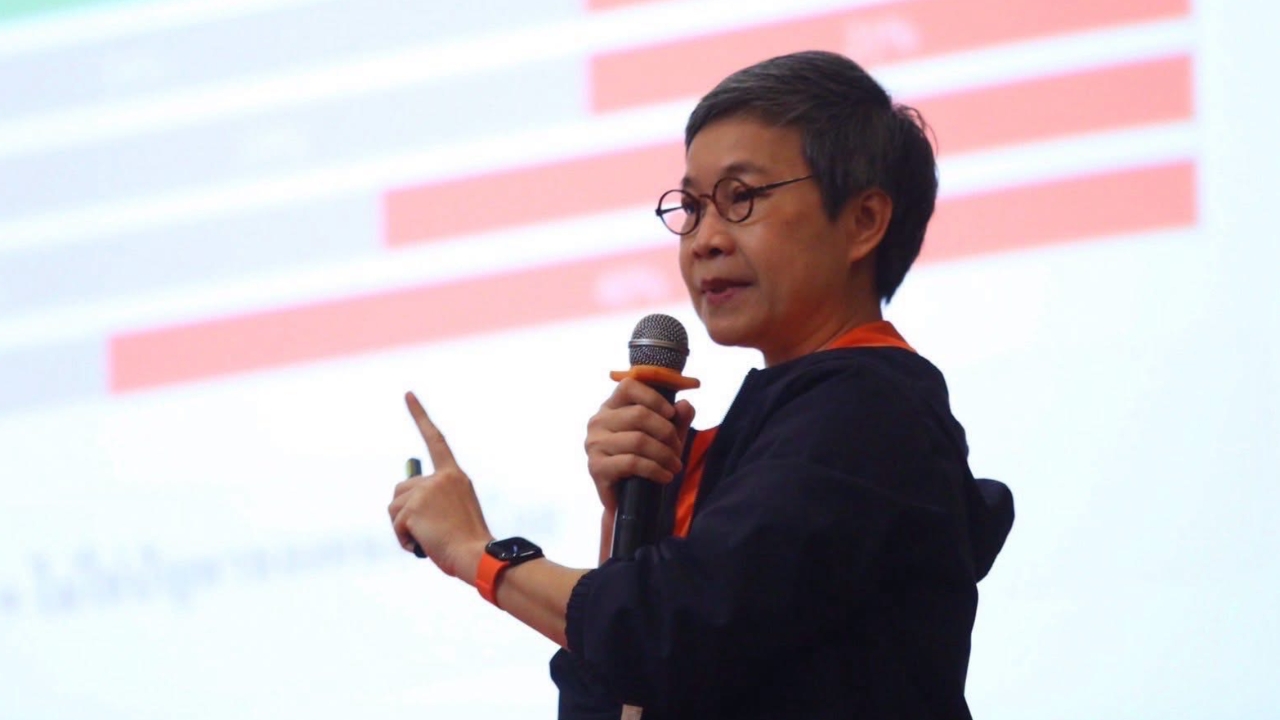
Nattaya, a party-list MP from the People’s Party, urges the Ministry of Education and the Ministry of Higher Education to quickly issue guidelines to handle shooting threats, warning not to leave schools to face these challenges alone. She also proposes four measures to close loopholes that allow copycat behaviors.
On 14 August 2026, Ms. Nattaya Boonpakdee, party-list MP from the People’s Party, spoke about the ongoing situation following a school shooting in Nonthaburi Province. She noted that within less than a week, threatening messages mimicking violence in schools have appeared in at least three provinces. Most recently, two more provinces' high schools abruptly announced closures. This reflects that currently over 28,000 school principals nationwide are being left by the Ministry of Education to face and decide on these matters alone, without tools, risk assessment criteria, or timely support from psychological teams.
Ms. Nattaya said that although school closures may be the only option schools have for safety, it can also cause panic and become a way for at-risk students to use threats to control school decisions. Lessons from abroad clearly show that 70% of threats are mere "momentary threats," while 30% are "credible threats." Therefore, the government must have criteria to distinguish these and dedicate resources to manage real risks without paralyzing the education system. Students who threaten because they feel bullied are actually children crying out for help in the most dangerous way.
Ms. Nattaya proposed that the Ministry of Education and the Ministry of Higher Education should immediately issue operational guidelines on managing violent threats directly to every educational institution, with four key points:
1. Establish criteria to differentiate momentary threats from credible ones, including guidelines on when to suspend classes or implement alternative measures if normal schooling cannot continue.
2. Require a written mental health assessment and individualized support plan in every case, conducted by qualified personnel such as psychologists, child and adolescent psychiatrists, guidance counselors, or social workers.
3. Mandate verification of firearm access at the homes of students showing warning signs, in cooperation with police authorities. This should be a compulsory step, especially given the recent Nonthaburi incident.
4. Provide an anonymous reporting channel that does not require identification, with a response time within two hours for cases involving weapons or self-harm risks. Anonymous reporting has been proven to encourage more informants to come forward.
Additionally, Ms. Nattaya called on the Ministry of Public Health to reinforce hotline 1323 for the next 30 days, focusing proactively on large high schools nationwide. She also urged the Royal Thai Police to permanently strengthen policies not to disclose the names or images of perpetrators. Furthermore, she requested the National Broadcasting and Telecommunications Commission to collaborate with media professional councils to establish reporting regulations to prevent copycat behavior, following World Health Organization guidelines.
"Finally, we must ask for cooperation from the media and the public to refrain from spreading or forwarding threatening messages, images of weapons, and method details, as this amplifies the impact intended by the sender and may create a template for future incidents," she said.