

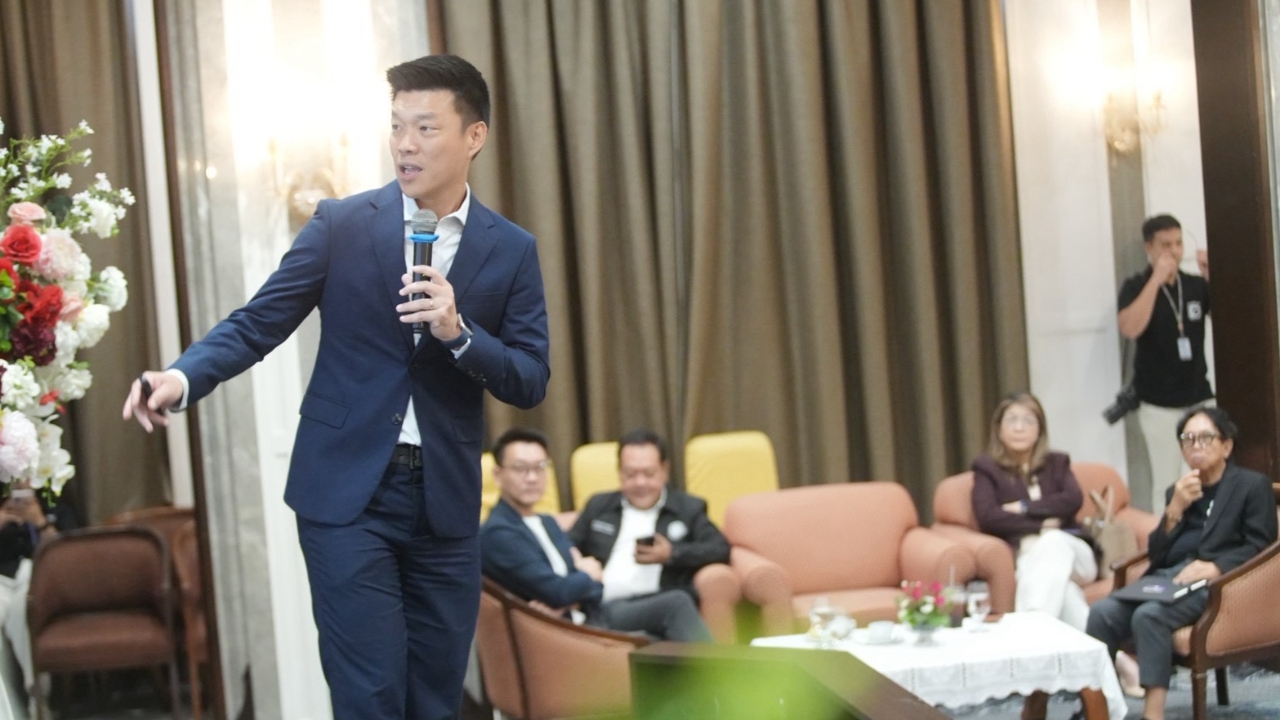
Opposition leaders held a forum with citizens at the site where fraudulent ballots for the Senate election were made. "Teng" criticized efforts to reinforce the power structure and questioned whether independent agencies can be trusted, criticizing that current Senators are appointed and not connected to the people.
At 09:00 on 15 August 2026, at Krungsri River Hotel in Phra Nakhon Si Ayutthaya province, the Secretariat of the House of Representatives organized an event titled “Opposition Leader Forum: Political Institution Reform under the Constitution and the Checks and Balances Mechanism.” Leading opposition figures attended enthusiastically, including Natthapong Ruangpanyawut, leader of the People’s Party and opposition leader in the House; Veerayut Kanchuchat, party list MP and deputy leader of the People’s Party; Satit Wongnongtoey, party list MP and deputy leader of the Democrat Party; Pol. Col. Tawee Sodsong, party list MP and leader of the Prachachart Party; and Khunying Sudarat Keyuraphan, who joined the panel discussion on political institution issues under the constitution and the Senate election fraud case.


Natthapong said in his opening remarks that they aim to address structural problems, but the highest rule—the constitution—does not yet allow them to do so. Currently, state power never centers on the people. The root problem is whether Thailand lacks laws or effective law enforcement. They see the main barriers but ultimately question how we can trust that those in executive power will use their authority to solve structural problems. If those who come to power do so improperly, they will try to use all their power to reinforce the barriers and maintain their positions.
Strong question raised: Can we trust the checks and balances agencies?
Natthapong added that if people cannot trust those in executive power, who else can we rely on for oversight? The answer is likely independent agencies. However, the question remains whether we can trust their oversight processes. For example, the National Anti-Corruption Commission (NACC) dismissed a complaint about former Transport Minister Sak Siam Chidchob’s false asset declaration. The opposition filed a petition to the Speaker of Parliament requesting the Supreme Court to set up an independent committee to investigate the NACC’s performance, but unfortunately, the Speaker belongs to the same group.

Criticism of current Senators’ appointment and lack of connection to the people
Natthapong further said that on 26 August, the Constitutional Court will summon witnesses regarding the barcode issue on election ballots. How can the public trust this process when justices appointed by Senators still face allegations of collusion? This raises questions about the independence of these bodies, whose members are appointed by Senators who themselves lack public linkage. He does not believe a good country can be built by good people alone, especially when constitutional rules allow dishonest people in without effective checks. No matter how many good people there are, problems will persist. Changing people, parties, or appearances will ultimately require reforming political systems to enable checks and balances.

Veerayut Kanchuchat, party list MP and deputy leader of the People’s Party, said the issue of how Senators are selected should not only be viewed in terms of legitimacy or political fairness but also regarding the constitutional structure and regulatory bodies with increasing power that directly affect citizens’ economic lives. These organizations should not be called independent agencies because this may overlook critical questions about the source of their power. Instead, they should be called 'appointed organizations' to prompt society to ask who appoints these individuals, their backgrounds, and their ties to the public.
This structural problem extends beyond well-known bodies like the Election Commission or the NACC to regulatory agencies influencing daily life and the economy, such as the National Broadcasting and Telecommunications Commission (NBTC) and the Trade Competition Commission (TCC). Small entrepreneurs and SMEs rely on digital platforms but have limited bargaining power when platforms change fees or terms. In many countries, such actions would trigger investigations for collusion or abuse of market power, but in Thailand, regulatory roles in these matters remain obscure.
Veerayut also pointed out that after major telecommunications mergers, the industry similarly lacks transparency. Though these issues may not make major headlines like political conflicts, they directly affect everyday costs—such as internet, phone bills, and operating costs for small businesses.
Therefore, the connection between Senators and various organizations is not distant. If Senators participate in approving appointments to regulatory bodies that oversee competition structures, the resulting decisions directly affect citizens’ livelihoods. Currently, authority over many matters is not solely with elected governments but with small groups in these bodies. If these structures are dominated by capital or political interests, it could lead to consolidation of political and economic power, especially when large capital influences regulatory agencies, while small capital and SMEs face unfair competition.
"This issue goes beyond political legitimacy and irregularities; it impacts economic fairness in everyday life—business operations, market competition, internet and mobile prices—all linked to these appointed organizations."

Veerayut noted that beyond political and economic effects, there is a long-term impact on career paths and motivations within various sectors. Positions in appointed organizations carry power, remuneration, and social status, becoming career goals for civil servants, academics, or civil society personnel. If newcomers to these fields view such positions as future targets from the start, this motivation influences their decisions and behavior throughout their careers.
Historically, academic institutions, civil society, and NGOs were expected to be independent from capital and state power, voicing the people's concerns. However, as more personnel from these sectors advance into appointed organizations, this structure may shift initial motivations and lead those tasked with overseeing power to become quieter or more cautious toward authorities.
Veerayut added that the problems of appointed organizations affect at least three interconnected levels: political legitimacy and checks and balances; economic fairness and competition affecting daily life; and changes in motivations among academics, civil servants, and civil society. Over time, this may prevent these groups from fully serving as independent voices to hold power accountable for the people.