

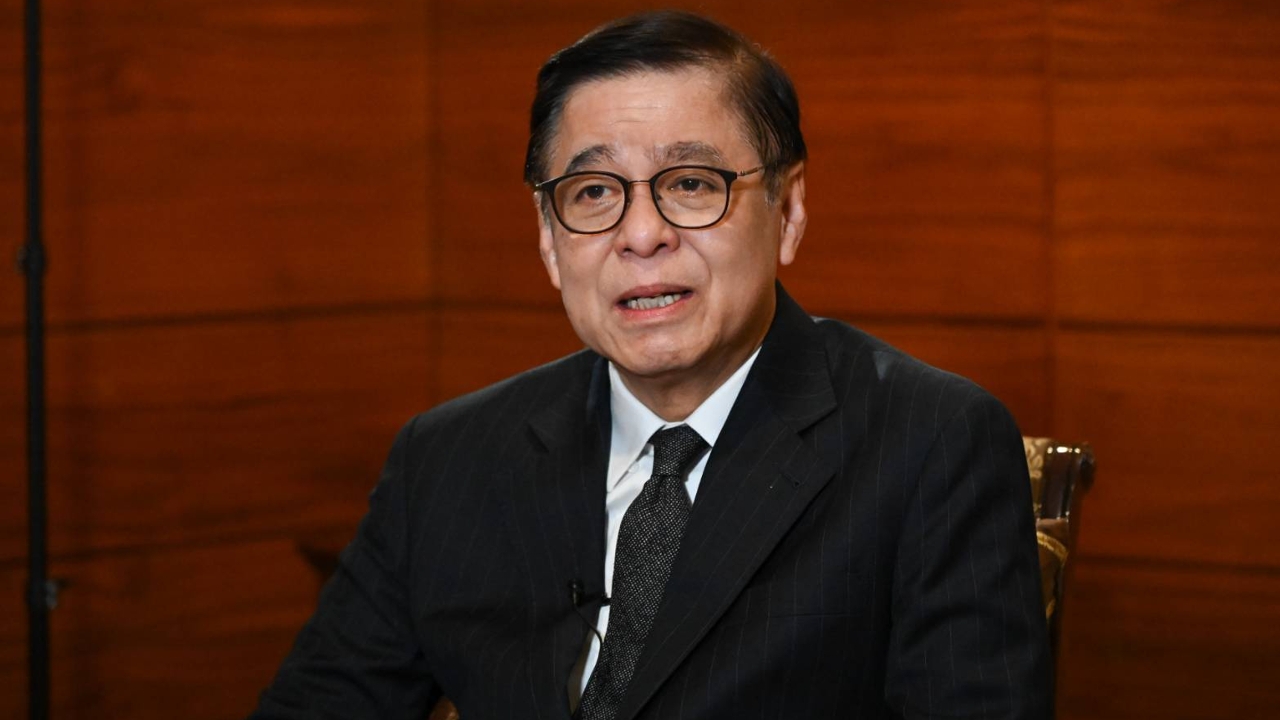
Sihasak is pleased with the outcome of his visit to Russia, where the JC meeting was revived after three years. He is advancing efforts to remove obstacles in payment systems to stimulate trade and increase economic value. Thailand will host the next meeting next year.
On 16 Aug 2026 GMT+7, Sihasak Puangketkaew, Deputy Prime Minister and Minister of Foreign Affairs, said after completing his visit to the Russian Federation and attending the 9th full session of the Thai-Russian Joint Commission on Bilateral Cooperation (JC) that the visit builds upon the leaders’ discussions. They see room to further deepen relations, especially trade, since the current bilateral trade value of $1.7 billion is still low given the economic potential of both countries.
Regarding the JC meeting, which had been dormant for three years, Sihasak said many issues were discussed, both old and new. One key topic was Thai agricultural exports to Russia, with figures around $500 million if export obstacles are removed. Similarly, Russia wants to export beef and pork to Thailand but faces challenges in factory inspections. During this visit, agriculture ministries from both countries talked and hope to proceed with mutual factory inspections to remove these barriers.
Sihasak also noted that Russia is a leading exporter of oil, gas, and fertilizer but faces sanctions due to the Ukraine conflict. He emphasized the need to understand the scope of sanctions, as many products like food are exempt. Payment system issues were discussed, with Russia explaining its payment mechanisms. Thailand seeks assurance these systems are secure and low-risk. Central banks of both countries will continue talks to establish proper payment channels. Reducing these obstacles will increase trade and investment.
Sihasak added that previously, Phiphat Ratchakitprakarn, Deputy Prime Minister and Minister of Transport, visited Russia to study their advanced and cost-effective rail systems used for transport and freight, which are cheaper than European systems. Further discussions are needed since Thailand’s rail infrastructure has not been upgraded for a long time. Developing this will help make Thailand a regional connectivity hub. Russia also emphasizes cybersecurity, and Sihasak mentioned discussions with Chaiyachon Chidchob, Minister of Digital Economy and Society, who plans to visit Russia to discuss cooperation in cybersecurity and digital technology.
Sihasak said they are pushing to start negotiations on the Thai-EAEU Free Trade Agreement, linking over 180 million people with a combined GDP of $1.9 trillion. They must accelerate trade agreements at bilateral and regional levels, as the current international economic system under the WTO faces challenges. The U.S. has increased tariffs and trade barriers, so Thailand must find ways to maintain free trade, investment, and finance. Thailand is also negotiating a free trade agreement with the EU, aiming to complete it this year.
Regarding talks with Sergey Lavrov, Russia’s Foreign Minister, Sihasak said they recognized the importance of strengthening relations with Thailand. Lavrov urged speeding up pending agreements such as investment protection, intellectual property rights, and defense industry cooperation. They also discussed regional situations, with Russia concerned about volatility. Lavrov wants ASEAN to play a constructive role, preserving peace and economic dynamism in the Indo-Pacific. ASEAN has been a pillar of peace and security, and Russia hopes ASEAN continues this role.
Sihasak also spoke with Russia’s Foreign Minister about Myanmar’s situation. Previously, Myanmar’s President Min Aung Hlaing visited Thailand, which prioritizes bilateral and border issues such as scammers, drugs, pollution, and cross-border trade requiring direct talks. As neighbors, they must face realities. Thailand does not abandon Myanmar; although elections have occurred and concerns remain, Thailand encourages moving forward with peace processes, dialogues, and reconciliation among ethnic minorities and pro-democracy groups. Since Min Aung Hlaing plans to visit Russia, Thailand asked Russia to support Myanmar’s government in advancing peace talks and national reconciliation.
Sihasak said Russia is interested in investing in large projects like the Dawei port. For this to proceed, Thailand’s participation is necessary as it offers an alternative export-import route. The current ports face congestion, and transport must pass through the Malacca Strait, which could be disrupted by conflicts. Developing Dawei port, located about 200 kilometers from Laem Chabang port and connected by road and rail, could attract Thai private sector interest.
Sihasak emphasized that the private sector is alert and actively learning about trade and investment, meeting to build familiarity between Thailand and Russia and explore business opportunities. The government strives to create political dynamics and a relationship atmosphere conducive to business. Ultimately, private sector momentum drives progress. The visit achieved its goals, including reviving the JC meeting after three years. Next year, Thailand will host the JC meeting again, and Russia is willing to attend.
Regarding the 2026 BRICS Summit in India and whether it increases opportunities for Thailand, Sihasak said each forum must be evaluated for its importance, Thailand’s role, and contributions. Thailand wants to have a voice in shaping global rules that reflect changes and represent developing countries fairly. The BRICS meeting includes many countries, providing chances to connect and build relationships. Part of Thailand’s economic diplomacy is promoting ties with African countries with economic potential, aiming to increase trade and investment links with these and other less-frequently engaged nations.