

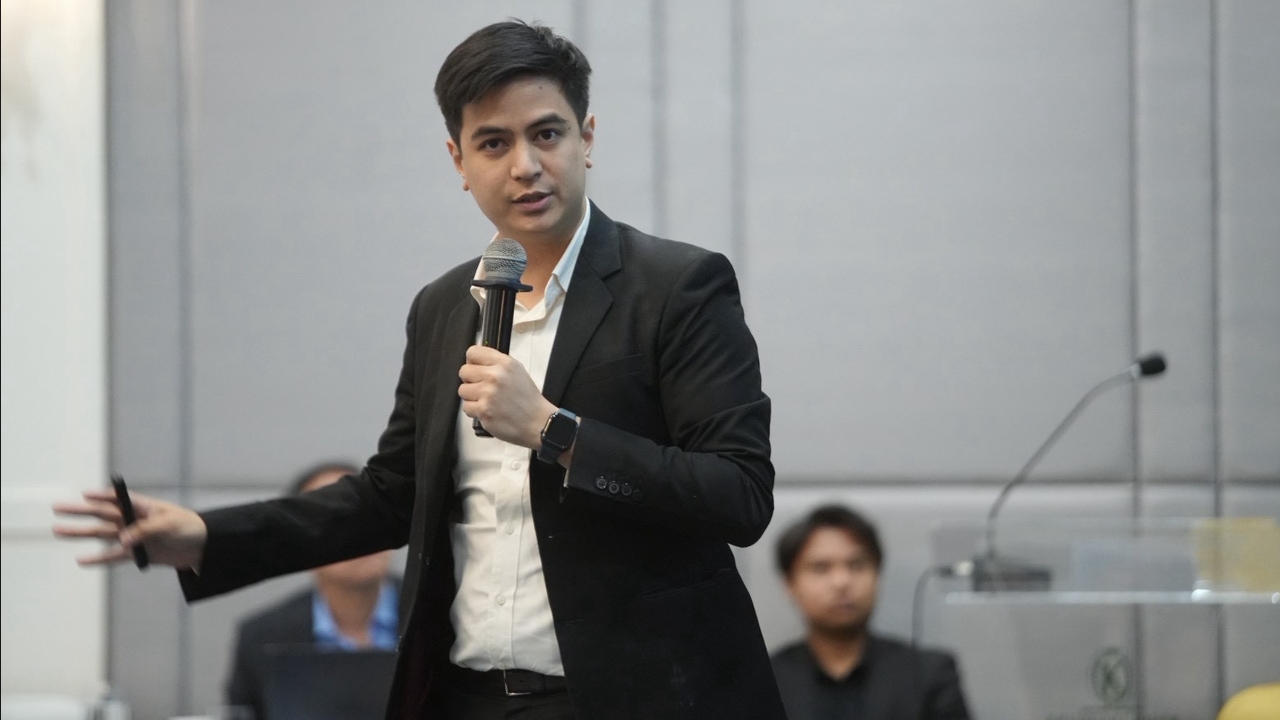
“Ice Cream” boasts a strong no-confidence strategy, confidently stating he has solid evidence of corruption cases—and challenges “Anutin” to prove his capability by answering live parliamentary questions.
On 16 Aug, Parit Watcharasindhu, party-list MP and deputy leader of the People’s Party as well as chairman of the opposition whip, spoke about talks with coalition partners regarding the upcoming no-confidence motion. He said that the opposition partners had already informally agreed before the parliamentary session ended that they would submit a no-confidence motion in the next session. When parliament reopens in late August, they will officially coordinate to discuss the framework, timing, and government ministers to be targeted in the motion. The People’s Party had already tasked its MPs to gather information before the session ended, and MPs have been continuously sending data to the party’s central office.
Parit added that the topics for the debate would likely focus on failed policies and corruption allegations, including Senate corruption cases, local exam investigations, TH-Passport issues, and some matters not yet public. Party MPs are currently collecting this information. He said it is unknown whether new issues regarding government mismanagement or corruption claims will arise before the actual debate. When asked if the opposition has a strong trump card for the debate, Parit replied, “Yes.” He said they are doing their best and believes ultimately the public will judge. He urged everyone to wait for the actual debate and let the people decide.
Hoping the opposition can find common ground to scrutinize the government.
Asked whether the opposition would vote unanimously if the no-confidence motion is submitted, Parit said discussions are ongoing about which coalition partners will join the motion and what framework and targets it will have. He hopes that although coalition partners may have differing views or policies on some issues, they can find common ground to thoroughly scrutinize the government.
Mocking “Anutin” to focus more on his own achievements.
When asked about Deputy Prime Minister and Interior Minister Anutin Charnvirakul’s statement expressing confidence in answering any opposition questions, Parit said that if Anutin really can answer, why has he never once responded to live questions in parliament? He hopes to see Anutin fulfill this duty in the upcoming parliamentary session. Regarding Anutin’s claim that without a no-confidence motion there would be no government achievements, Parit said that Anutin should be more concerned about the government’s performance instead. Many problems remain unresolved, such as corruption issues. Upon taking office, Anutin said he was ashamed of the country’s transparency score in global indices, but corruption has worsened under this administration. This includes accusations related to Senate corruption, local exam fraud, and economic issues. The government has borrowed large sums through emergency loan decrees, and it remains to be seen whether they can truly resolve the public’s economic hardships.
Urging the government whip to cooperate in advancing 40-50 bills.
Parit added that about 40 to 50 bills proposed by opposition MPs have been submitted but are still pending consideration. He hopes the government whip will cooperate with the opposition whip to increase parliamentary sessions in the next term specifically for reviewing bills from MPs and civil society. This was also a promise made by Sopon Sarum, the Speaker of the House, before his election. Parit hopes the Speaker will follow through and that the government whip will cooperate, since many of these bills benefit the public in areas such as public information, decentralization to local authorities, and labor laws.