

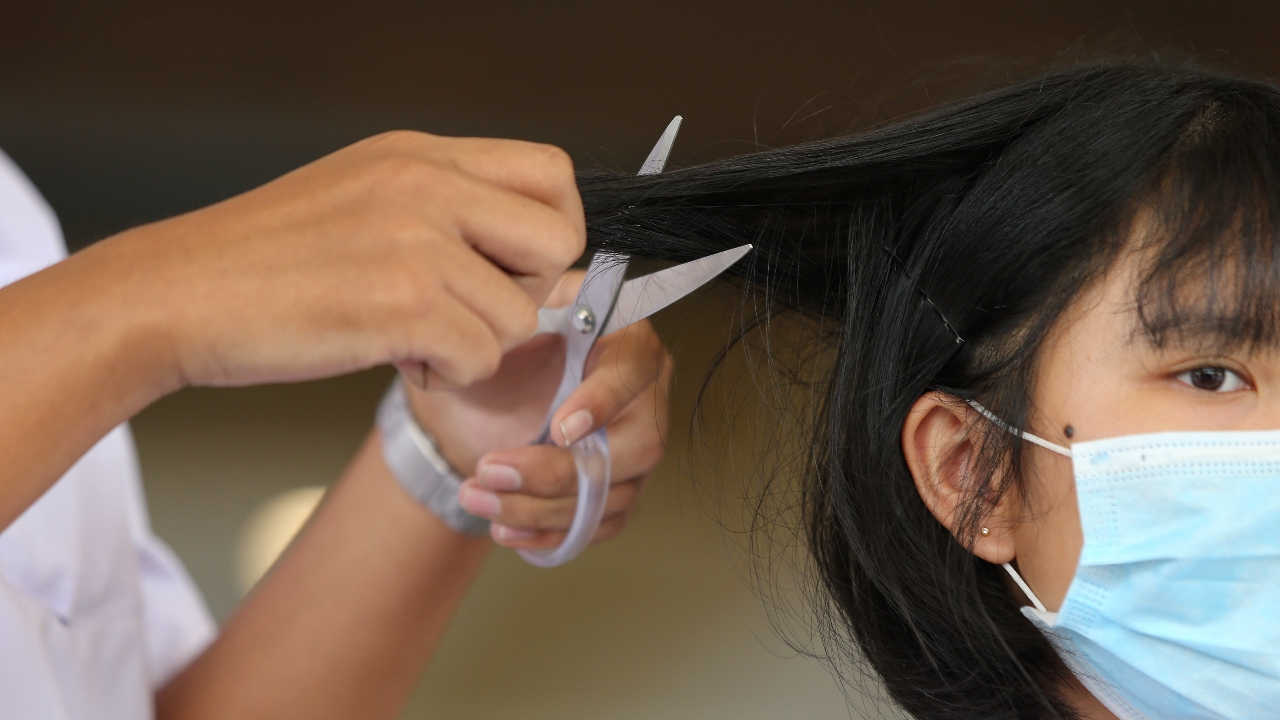
The Cabinet clarified the issue of "student haircuts," stating there is no need to amend the Child Protection Act. It pointed out that the Ministry of Education can set frameworks allowing schools to determine rules according to their contexts, but must respect children's rights and freedoms.
On 18 Aug 2026 GMT+7, Captain Phatdarasmi Thongsaluaykorn, Deputy Spokesperson for the Prime Minister's Office, announced that the Cabinet acknowledged a report summarizing considerations on recommendations regarding promoting and protecting children's rights related to student haircuts, as proposed by the Ministry of Education. This followed suggestions from the National Human Rights Commission about setting and enforcing rules on student hairstyles. The key conclusion was that there is no need to amend the Child Protection Act B.E. 2546 (2003) specifically to regulate student haircuts.
The Deputy Spokesperson explained that the Child Protection Act B.E. 2546 (2003) primarily aims to care for, protect, and promote children's welfare and behavior, including safeguarding their rights, welfare, and safety. However, the law does not grant authority to specify styles or details regarding student haircuts directly, so there is no necessity to amend the Act specifically for haircut regulations.
Nevertheless, not amending the Child Protection Act does not mean there is no framework or that schools can act arbitrarily on student haircuts. The Ministry of Education can still set policies and guidelines under education law, enabling schools to develop practices suitable for their specific contexts.
The Ministry of Education has revoked previous regulations on student haircuts and established policies allowing educational institutions to determine haircut practices based on their context and appropriateness, ensuring they do not violate students' human rights or dignity.
When setting criteria or practices, the report advises considering the diversity of educational systems, formats, and methods, as well as differences among target groups and each school's context, to ensure rules fit the situation and adapt to social changes.
Moreover, schools should not unilaterally decide haircut policies but should listen to opinions from students, parents, and relevant stakeholders before setting or announcing rules. They should also publicize these policies clearly to ensure understanding and proper compliance, aligning with the school's context and involving those concerned.
If students fail to comply with school rules or regulations, disciplinary actions can be taken according to Ministry of Education criteria but must not infringe on students' bodily rights and freedoms. Teachers and educational personnel must follow the Ministry's regulations on student discipline.
Captain Phatdarasmi said the conclusion clarifies that protecting children's rights does not mean abolishing school frameworks or rules but establishing reasonable regulations consistent with learners' contexts. The Ministry of Education has policies and guidelines supporting this, while schools must prioritize the rights, welfare, and dignity of children.
“The student haircut issue is neither a free-for-all for children nor a uniform rule for all. It is about setting appropriate frameworks fitting each school's context, alongside listening to students and parents. Importantly, maintaining discipline must not come at the expense of violating children's bodily rights and freedoms,” she added. The Deputy Spokesperson for the Prime Minister's Office stated.
The Cabinet resolved to acknowledge the report's findings, directing that student haircut policies be implemented according to laws and educational practices appropriate to each school, while upholding the principles of protecting students' rights, welfare, and human dignity.