

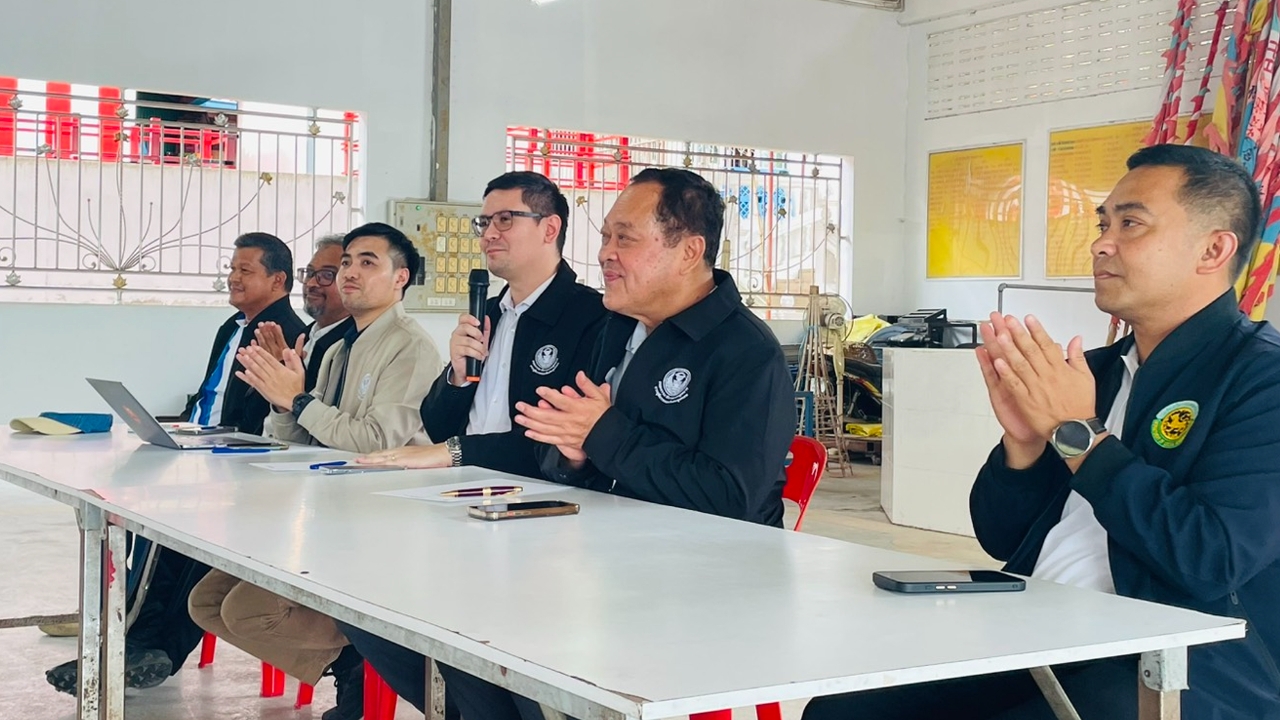
The Legal Committee listened to concerns from Dan Nok residents after the new Sadao checkpoint opened, causing a sharp decline in tourists and a slump in trade. Tawee is pushing for policy-level solutions and urges including knowledgeable local people in system planning.
On 18 Aug 2026 GMT+7, the House of Representatives' Legal, Justice, and Human Rights Committee, led by Chairman Rangsiman Rome, along with Pol.Col. Tawee Sodsong, commissioner and advisor, former Minister of Justice and leader of the Prachachat Party, spokesperson Laofang Bandittheordsakul, and secretary Ramadon Panjor, conducted a field study and listened to opinions on "Law enforcement, justice facilitation, and human rights protection to support peace-building processes in the southern region."
This field visit focused on hearing structural economic impacts following the opening of the new Sadao customs checkpoint, which severely affected businesses in the Sanam Kham municipality area (Dan Nok town). Tourist numbers noticeably dropped. Attendees included Dr. Sitthipong Sitthiphatprapa, president of the Hat Yai Songkhla Hotel Association; Nirun Sujatwong, mayor-elect of Sanam Kham municipality; along with executives, government representatives, operators, and over 100 local community members.
Pol.Col. Tawee stated that about two months after the new checkpoint opened, it directly impacted traffic and trade at the old checkpoint. He pointed out three main issues: policy and security problems and international negotiations, citing National Security Council (NSC) provisions that Malaysia prefers only one operational checkpoint, requiring bilateral fact-checking to avoid economic damage to the original area; economic impact and community agreements, as passenger and freight flows shifted entirely to the new checkpoint, drawing tourists directly to Hat Yai district and leaving Dan Nok quiet, contrary to original plans encouraging 2–3 night stays; and the lack of local participation, as management excludes community representatives and local authorities, who understand the real issues, from system planning.
Pol.Col. Tawee explained that the new checkpoint project began long ago during his tenure as secretary of the Southern Border Provinces Administrative Centre (SBPAC). The initial plan was for the new checkpoint to serve logistics and freight transport, while the old checkpoint would focus on tourism and local residents. However, legal issues concerning agricultural land rights delayed the project until 2015, when a National Council for Peace and Order (NCPO) order lifted legal restrictions, allowing construction to be completed two months ago.
"Sadao checkpoint is the country's highest-value border trade point, nearly 300 billion baht annually, and Malaysian tourists are Thailand's top visitors. The border area serves as a frontline gateway. But the current problem is not legal—it is mismanagement that breaches agreements. Instead of dividing systems, all traffic is forced through one checkpoint, leaving operators behind," he said.
Additionally, Pol.Col. Tawee reflected on broader issues in the southern border provinces, linked to structural problems like the marine fishing economic crisis, where Thailand has shifted from producer to purchaser. He also mentioned the government's strategy to end unrest in the southern region by 2027, emphasizing that traditional methods will not suffice. Armed groups must be engaged in talks alongside protecting all citizens' safety, with the core principle being adherence to the "rule of law."
"The best and most cost-effective solution is to uphold the rule of law and eradicate corruption at both national and local levels. Corruption makes life difficult for the people. As legislators, the committee acts as a channel to convey real public problems to the government for prompt resolution and prioritizes protection for those who genuinely expose corruption," Pol.Col. Tawee said. "

