

The Parliamentary Anti-Corruption Commission announced meeting results revealing financial corruption in the 2025 local government exams involving over 9 billion baht, with politicians implicated. They proposed six solutions including lifetime bans for cheaters and urged the Prime Minister to pursue criminal, civil, and administrative actions.
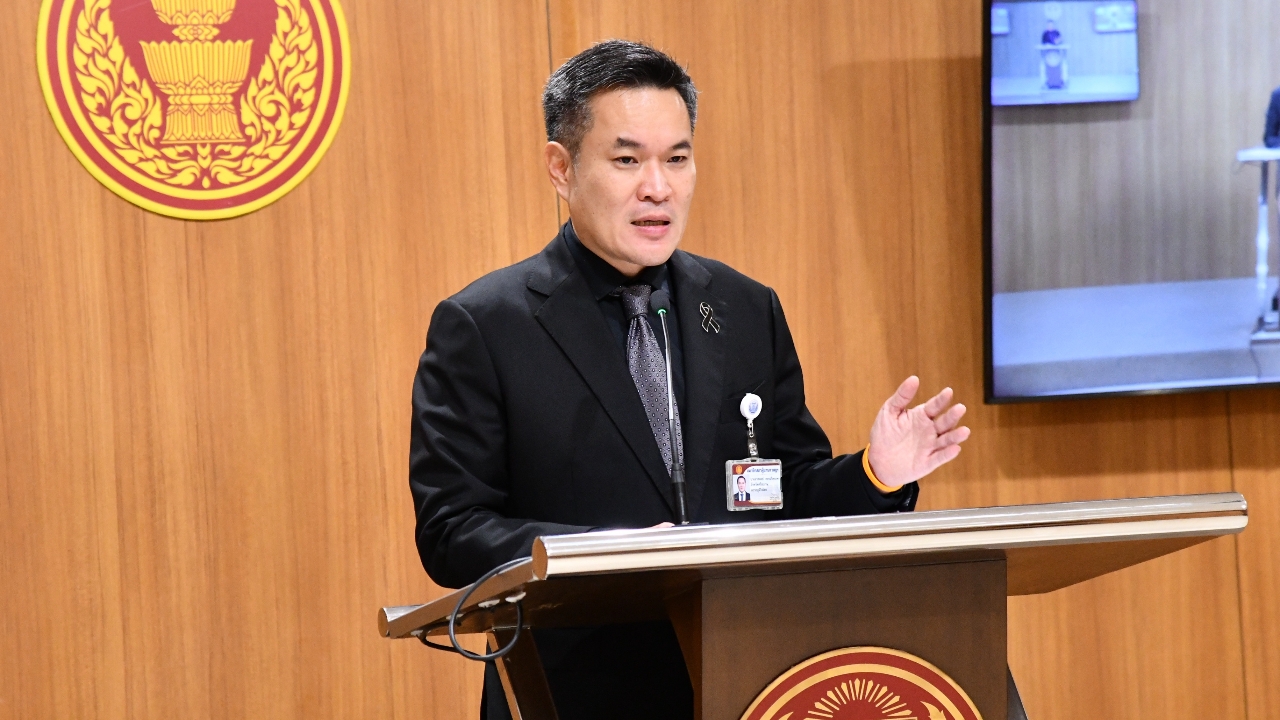
At 3:00 p.m. on 20 August 2026, Mr. Asapol Santraiphop, MP for Sisaket from the Bhumjaithai Party and chairman of the Parliamentary Commission on Anti-Corruption, reported at the parliament that the commission invited representatives from the National Anti-Corruption Commission (NACC), the Office of the Public Sector Anti-Corruption Commission (PACC), and the secretariat of the fact-finding and legal review working group on corruption in the 2025 local government civil service exams to provide updates. They found systemic corruption and procedural flaws at every stage—before, during, and after the exams.
The fact-finding working group submitted six recommendations to the Prime Minister to resolve and prevent corruption in the local government exams (SATH) as follows:
1. Strict legal enforcement The Ministry of Interior and the Department of Local Administration (DLA) should pursue criminal, civil, and administrative cases against all involved. They should further investigate beyond the previous orders from the Permanent Secretary of the Ministry of Interior, which did not cover all offenders. A new Central Examination Committee for Local Officials (CECLO) should be established to correct the list of successful candidates properly, and seek damages from the university contracted to organize the exams, due to serious shortcomings found in the former committee, which approved only the number of passing candidates without verifying actual names.
2. Reform local personnel management The DLA should reconsider its future role or consider dissolving the agency, as serious errors were found in all 32 steps of the exam process, resulting in a complete loss of credibility.
3. Lifetime blacklisting of corrupt individuals The Office of the Civil Service Commission (OCSC) should lead in creating a central database to blacklist corrupt persons, preventing them from holding any government or state enterprise positions in the future.
4. Expand investigations into financial trails The Prime Minister should empower the PACC, the Royal Thai Police, and the Anti-Money Laundering Office to collaboratively investigate the network of offenders. Currently, corruption involves over 100 groups of candidates who paid others to register and swapped payments. The Anti-Money Laundering Office has identified financial transactions ranging from hundreds of thousands to millions of baht, clearly linking 40 to 60 groups.
5. Set central standards (TOR) for exam organization The Comptroller General’s Department should establish a scope of work based on 32 standard steps as a unified guideline for all government agencies, preventing cases where agencies shift responsibility to private contractors without oversight.
6. Close legal loopholes The OCSC, the Office of the Auditor General, the Ministry of Interior, and the Office of the Council of State should jointly draft laws defining clear qualifications, disqualifications, and penalties specifically for corruption in civil service exams.
Additionally, the meeting acknowledged further information linking the current corruption network to the 2021 local exam scandal organized by Burapha University. This network involved a former mayor of Khuan Kahlong Subdistrict Municipality in Satun Province and a municipal secretary in Nakhon Ratchasima Province, both of whom served as committee members of the Examination Committee at that time. Burapha University did not bid for the 2025 exams due to new TOR requirements mandating exam materials be distributed to 10 centers nationwide, increasing costs beyond what the university could bear.
The NACC explained that over 500 individuals have been questioned and financial trails linked to corruption total as high as 9 billion baht. Corruption patterns included upfront payments and additional fees after appointment. Investigations are expected to conclude by September. Furthermore, the NACC has opened special cases to investigate past corruption in local administrative executive promotion exams from 2021-2022, following arrests of 11 individuals involved in score tampering in Nonthaburi Province, believed to be part of the same network.
Victims or accused persons wishing to cooperate and help identify top-level masterminds are encouraged to become witnesses. The fact-finding working group proposes that the Prime Minister’s team join forces with the NACC to expedite legal proceedings against offenders, reducing case duration from 6–9 months to 3–4 months.
When asked, about whether the financial trail exceeding 9 billion baht connects to politicians, Mr. Asapol said the informants confirmed political involvement. When reporters asked if the NACC had questioned individuals named in the media, such as Prime Minister and Minister of Interior Anutin Charnvirakul, Deputy Prime Minister Songsak Thongsri, and Prime Minister’s adviser Thongjua Chatkitcharoen, Mr. Asapol said the commission did not inquire on this point. He added that Burapha University, which denied involvement, was invited by the fact-finding group to provide further information but did not respond. This absence raised suspicions, as all others cooperated, leading to the confirmation of corruption in the 2021 exams during the commission’s meeting.