

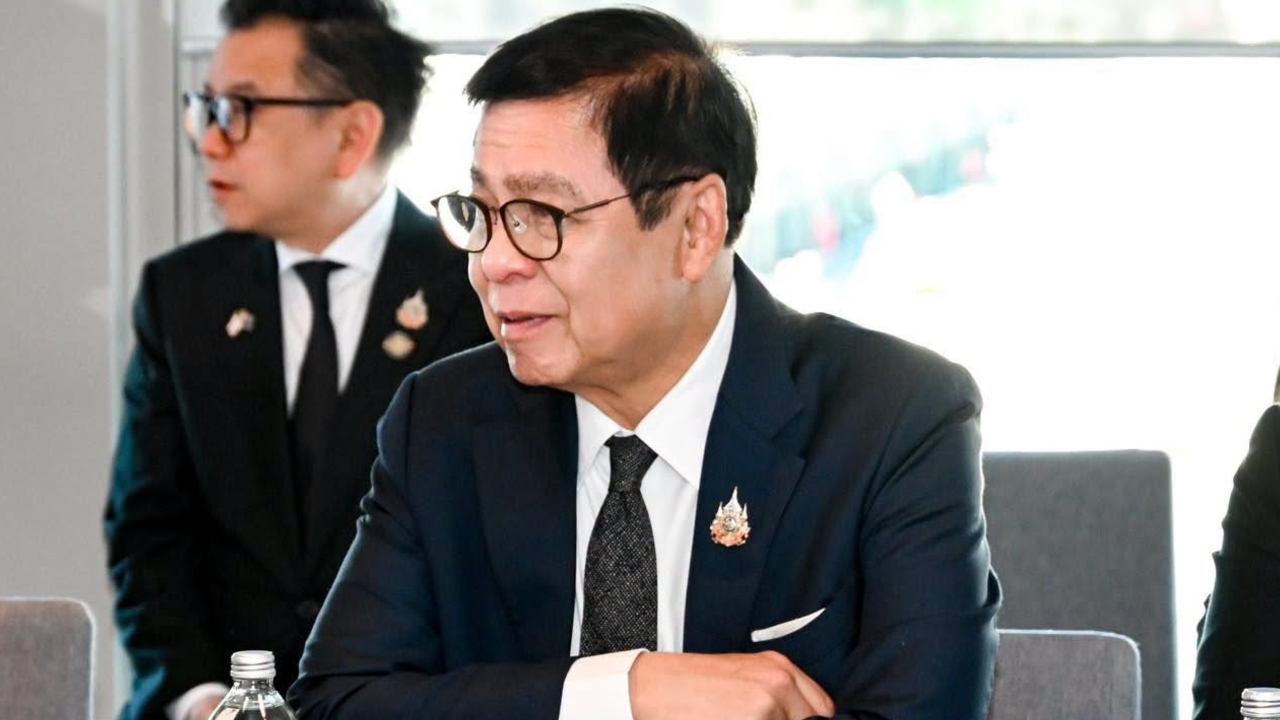
Deputy Prime Minister and Foreign Minister Sihasak Phuangketkaew is prepared to advance deep people-centered diplomacy to protect and strengthen Thai communities abroad. Meanwhile, Labor Minister Julaphan Amornwiwat utilizes the Free Trade Agreement (FTA) alongside labor issues to negotiate with New Zealand to reduce English language requirements for agricultural workers, chefs, and massage therapists to only basic communication, aiming to expand the annual quota beyond 7,800 workers.
On 22 Aug 2026 GMT+7 in Auckland, New Zealand, Deputy Prime Minister and Foreign Minister Sihasak Phuangketkaew stated at a meeting with the Thai community in New Zealand that Thailand’s global standing has clearly improved, fostering confidence among many countries. Similarly, Thailand’s economic trajectory and role on international stages are progressing steadily, despite ongoing challenges from neighboring countries’ situations.
The government has been able to establish new relations with neighboring countries on the other side, marking a significant opportunity to expand diplomatic and trade cooperation across the region. Foreign affairs missions are highly important alongside domestic duties, requiring intensive coordination from all relevant government agencies.
"The core of current foreign policy is not merely the policies themselves but the relationships between national leaders. When leaders connect on many issues, success is almost 80% assured. It is evident that in all countries visited, this has fostered friendliness, closeness, and trust among leaders. The rapport and trust built during discussions in Australia and New Zealand were key factors enabling many negotiations to achieve their goals," Mr. Sihasak said.
Mr. Sihasak added that a primary government duty that cannot be neglected is the protection of Thai people abroad through what is called deep people-centered diplomacy. This work goes beyond facilitating passports or official documents; it involves reaching into the living conditions of citizens.
The government aims to strengthen Thai communities overseas so that everyone can live comfortably and independently in foreign societies. An important aspect is promoting Thai people’s understanding of the laws of their host countries to prevent problems arising from living and working there.
Moreover, the Ministry of Foreign Affairs emphasizes building strong community foundations so that Thai people abroad enjoy good living conditions and comprehensive care. The main effort is to empower Thai communities to live well and support themselves.
Labor Minister Julaphan Amornwiwat said the government is ready to drive work for the benefit of all citizens. Despite being a coalition government formed of only two main parties, it focuses on internal unity to face uncontrollable external factors such as uncertainties involving the United States government.
The government strives to build internal strength to counter external threats and foster regional cooperation through ASEAN, including with key trading partners like Australia and New Zealand. The government’s approach acts as a key opening opportunities for the private sector and citizens to immediately benefit from strong relationships among leaders.
Mr. Julaphan stated that the government’s labor policy focuses on enhancing cooperation with New Zealand, where about 7,800 Thai workers annually enter as seasonal laborers mainly in agriculture. The Ministry of Labor is preparing to negotiate labor issues alongside revising the existing Free Trade Agreement to increase opportunities and better protect Thai workers’ rights.
"We will negotiate labor issues together with updating the old FTA, integrating labor concerns. We will discuss expanding quotas, ensuring welfare and protections for workers, and easing restrictions such as language requirements," he said.
A key negotiation approach is proposing to reduce English language skill requirements for certain occupations such as agriculture, chefs, and massage workers to allow more flexible employment. The proposal is to lower language requirements from academic levels to basic communication to better match actual work conditions and broaden job access.
"If high-level language skills are not essential, we will reduce the requirement from academic level to basic communication to create opportunities for more Thais to come to New Zealand. At the same time, we must ensure welfare and protections for Thai workers living here," he added.
