

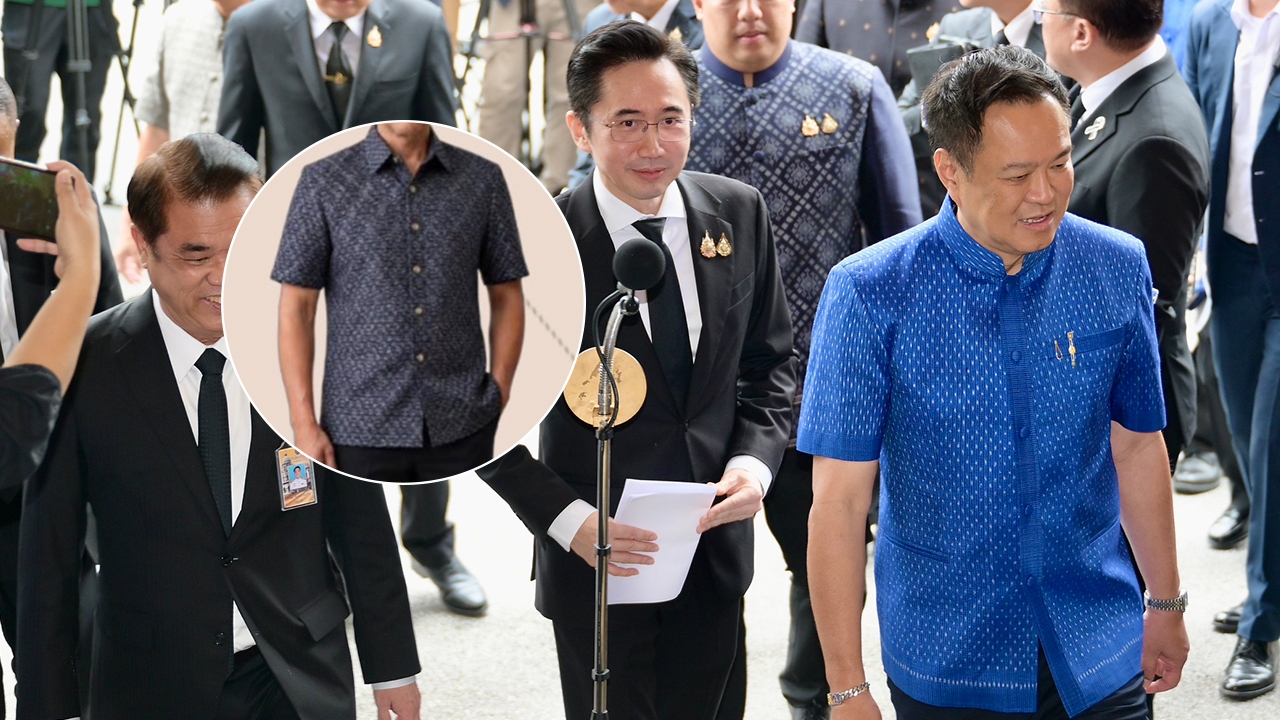
The government revealed that for the Cabinet meeting on tour in Songkhla from 31 August to 1 September, the province has prepared 'Ratchawat Pattern' woven fabric and 'Buppha Boromrajini-Nat' batik fabric for the Cabinet to wear, along with banana fiber bags from the 'Kortani Group,' an OTOP product from Hat Yai District, as souvenirs.
On 22 August 2026, Ms. Ploytale Laksameesangchan, Deputy Spokesperson for the Prime Minister's Office, announced the readiness for the 1/2026 official Cabinet meeting held outside Bangkok in Songkhla Province from 31 August to 1 September 2026. Songkhla has prepared comprehensively in all aspects, including venue, facilitation, security, exhibitions, provincial development proposals, and budget management to ensure efficient operations.
Ms. Ploytale stated that the organizing committee responsible for attire, souvenirs, and exhibitions in Songkhla has arranged for the Cabinet members to wear the handwoven 'Ratchawat Pattern' fabric. This fabric features small floral motifs known as 'Kan Yaeng' or 'Korn Kaew' pattern, named after the resemblance of its design to the neck feathers of the Javanese dove. When King Chulalongkorn (Rama V) visited Songkhla and the Malay Peninsula in 1900, Grandma Kam Phattrayon presented the finest handwoven fabric of the time, made on a four-shaft loom, to the King. He was very pleased and bestowed the name 'Ratchawat,' meaning daily duty or routine. Since then, the 'Korn Kaew' pattern has been known as the 'Ratchawat Pattern'.
Additionally, during the evening event on 31 August 2026, the committee has prepared the royal pattern fabric 'Buppha Boromrajini-Nat,' a batik type, for the Cabinet members to wear. Her Royal Highness Princess Sirivannavari Nariratana Rajakanya developed this royal floral pattern, inspired by the monogram flowers of Her Majesty Queen Sirikit, the Queen Mother. Each design carries deep meaning as an expression of reverence for Her Majesty's graciousness.
Furthermore, the committee has prepared banana fiber bags made by the 'Kortani Group,' an OTOP enterprise from Hat Yai District, as souvenirs for the Cabinet. These bags are crafted from banana stalk fibers, which are strong and suitable for handicrafts. Using local wisdom, the community learned to weave these fibers into products, gradually developing the craft and expanding their customer base. Currently, over 40 families are members of this group, producing fiber for weaving. They use community waste materials to generate primary and supplementary income, expanding networks across Songkhla Province and the three southern border provinces to increase trade partnerships and meet growing market demand.

