

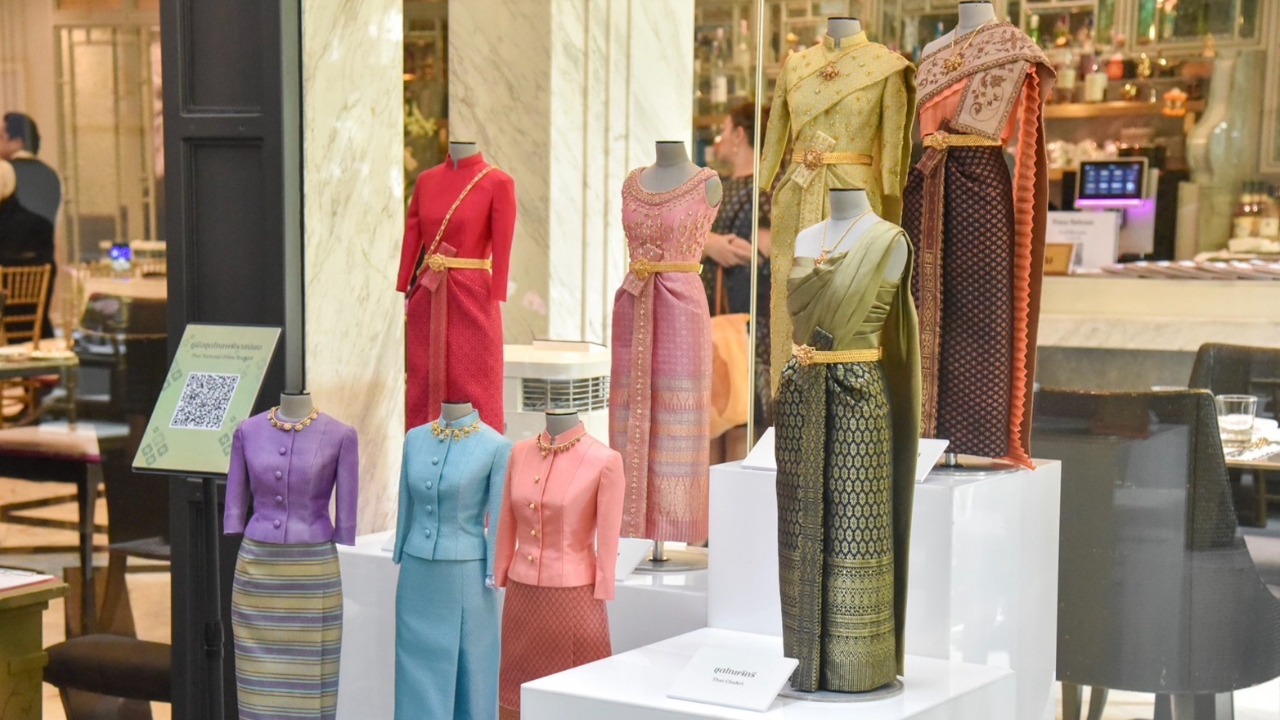
Minister Sabida has joined forces with leading designers and top fashion houses to advance the "Royal Thai Traditional Costume" onto the global stage, transforming Thai cultural heritage into a creative economic force with income distributed to weavers and entrepreneurs.
On 24 August 2026, reporters noted that on Sunday, 23 August at 2 p.m., Ms. Sabida Thaiset, Minister of Culture, held discussions and listened to ideas to unite efforts in promoting the Royal Thai Traditional Costume and the royal Thai costumes with leading Thai designers and fashion houses. Participants included National Artist in Visual Arts (Fashion Design) 2019 Mr. Theerapun Wannarat; fashion houses such as Theerapun, Theater, Atelier Pijitra, Pha, Petch Boutique, Glam Gold Label, Forgetmenot, Milan; stores Napatsorn Princess, Pahurat.com; brands Chai Gold Label, ASAVA, ISSUE, Surface, Finale Wedding Studio, Miss Saturday; Kamkoon Gallery, Akara Gallery, and Wisetaporn, among others. Also attending were Mrs. Chotika Akkajitsophakul, Director-General of the Department of Cultural Promotion, and advisors to the Royal Thai Traditional Costume and Thai fabric project, including Dr. Sarinda Jamraman, Mr. Thanarat Thanasetthakarn, Mr. Wichrawit Aksantisuk, Assoc. Prof. Dr. Anucha Teerakarnon, and Mr. Kulwit Laosuksri.

Ms. Sabida Thaiset, Minister of Culture, explained that the Thai traditional costume is a national attire with a unique identity, known for its intricate design and sewing, combined with creative patterns crafted by distinguished Thai artisans. The Royal Thai Traditional Costume refers to Thai women's attire initiated by Her Majesty Queen Sirikit, the Queen Mother, who studied and researched Thai women's costumes from various eras and designed them to wear during official visits by His Majesty King Bhumibol Adulyadej Rama IX to the United States and Europe in 1960. For men, His Majesty King Bhumibol Adulyadej granted the "Royal Shirt" in 1980 as official attire for civil servants, serving as an alternative to Western suits, suitable for Thailand's climate and becoming an iconic style. Since then, the eight styles of Royal Thai Traditional Costume and the men's royal attire have gained widespread popularity as national dress. Their forms and materials have evolved, along with knowledge of design, tailoring, and fabric pattern techniques across the country, broadly stimulating community economies.

Due to this value and significance, the Ministry of Culture, through the Department of Cultural Promotion, registered the "Royal Thai Traditional Costume" as national cultural heritage in 2023 under the category of social practices, rituals, traditions, and festivals. Subsequently, on 26 March 2024, the Cabinet approved the submission of "Chud Thai: The Knowledge, Craftsmanship and Practices of The Thai National Costume" for inscription on UNESCO's Representative List of the Intangible Cultural Heritage of Humanity. UNESCO has confirmed that the Thai costume will be reviewed at the 21st session of the Intergovernmental Committee for the Safeguarding of the Intangible Cultural Heritage, scheduled for December 2026.

Ms. Sabida added that today's meeting with designers, leading fashion houses, and top textile and fabric entrepreneurs in Thailand is a valuable opportunity to open a platform for dialogue, sharing ideas to unite efforts in promoting the Royal Thai Traditional Costume and royal Thai attire. It also included exchanging experiences on proper tailoring styles suitable for different body shapes.
"The charm of the Royal Thai Traditional Costume and royal Thai attire lies in their timeless beauty, which becomes even more elegant when tailored to fit the wearer's body and when the wearer selects appropriate occasions to don them. Moreover, wearing the 'Royal Thai Traditional Costume' can be adapted for modern aesthetics; for example, the initial Thai costume can be paired with various types of fabric skirts, whether cotton, silk, local signature patterns, or ethnic textiles. This opens opportunities for designers, fashion creators, and tailors to apply their creativity freely while preserving the costume's complete Thai identity."


Finally, Ms. Sabida emphasized that the Ministry of Culture continues to coordinate with all sectors to promote the "Royal Thai Traditional Costume" through the "CHUD THAI" campaign to showcase it gracefully to the world. This initiative follows the royal directive of Her Royal Highness Princess Sirivannavari Nariratana to preserve, continue, and disseminate Thai cultural heritage, rooted in the great royal duties of Her Majesty Queen Sirikit, the Queen Mother. In particular, efforts focus on publicizing and raising awareness of this national pride before UNESCO's review of "Chud Thai: The Knowledge, Craftsmanship and Practices of The Thai National Costume" for inscription as an intangible cultural heritage of humanity this December.
Therefore, the Minister invites all media, organizations, and citizens to participate in this national pride by supporting Thai identity—whether by choosing to wear Thai traditional costumes and handicrafts in daily life, sharing stories on social media, or promoting Thai craftsmanship to the world. These actions will expand market opportunities and enhance the sustainable image of Thai products and culture.
