

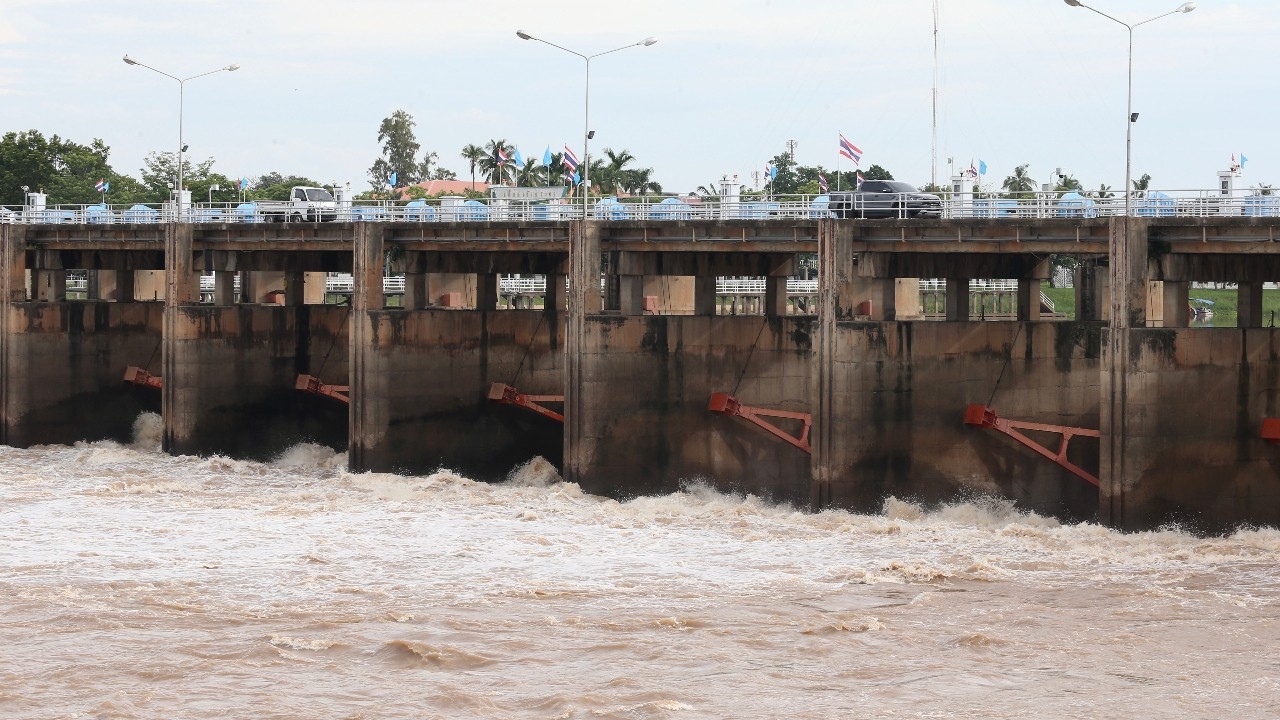
The government reports that the Chao Phraya basin still has water storage capacity in its four main reservoirs, able to hold an additional 9.999 billion cubic meters. The water level at Nakhon Sawan remains 6.62 meters below the riverbank, and officials confirm that eight central provinces have not experienced flooding.
On 24 August 2026, Ms. Lalida Pertvivatana, Deputy Spokesperson of the Prime Minister's Office, reported on the water situation in the Chao Phraya basin. The government is continuously monitoring the situation during the rainy season. As of 23 August 2026, data shows the Chao Phraya basin overall still has space to accommodate water. At station C.2 in Nakhon Sawan province, the water level remains 6.62 meters below the riverbank, although flow has increased to 798 cubic meters per second, up from 648 cubic meters per second the previous day.
The Deputy Spokesperson added that another important detail for residents in the Chao Phraya basin is the status of the four main reservoirs: Bhumibol Dam, Sirikit Dam, Kwae Noi Bamrung Dan Dam, and Pasak Cholasit Dam. Currently, they hold a combined total of 14.783 billion cubic meters, about 60% of capacity, and can still receive an additional 9.999 billion cubic meters of water.
Regarding the central region, the government continues to monitor conditions in eight provinces of the Chao Phraya basin—Sing Buri, Ang Thong, Phra Nakhon Si Ayutthaya, Lopburi, Saraburi, Pathum Thani, Nonthaburi, and Samut Prakan—as well as Bangkok. As of 23 August 2026, there have been no flood reports in these provinces. However, as the rainy season is ongoing, relevant agencies are closely tracking rainfall and water levels to manage the situation and provide timely information to the public.
Ms. Lalida noted that in the lower part of the Chao Phraya basin, at Sam Khok district in Pathum Thani province, water flow has increased to 268 cubic meters per second, up from 166 cubic meters per second the previous day. Meanwhile, water is being released into the Eastern Floodplain Irrigation System at 186 cubic meters per second and into the Western Floodplain Irrigation System at 211 cubic meters per second. These actions are part of water management efforts within the Chao Phraya basin system.
"The increases in water flow at certain points must be considered alongside water levels and the capacity of areas to accommodate water. The latest data from Nakhon Sawan shows water remains 6.62 meters below the riverbank, while the four main reservoirs still have capacity for 9.999 billion cubic meters. The government is thus monitoring rainfall, upstream water, river levels, and storage capacity together to manage the situation promptly should conditions change," she explained.
Regarding current weather, Thailand is experiencing thunderstorms and heavy rain in some areas due to the monsoon trough's influence. Tropical Storm Nara in the Gulf of Tonkin is expected to make landfall in Guangxi province, China, on 24–25 August 2026. It will not move directly into Thailand nor cause severe weather impacts nationwide. However, the public should continue to monitor weather forecasts, especially on days with heavy or accumulated rainfall in their areas.
Preparations in the Chao Phraya basin have been coordinated through the Subcommittee on Flood and Drought Prevention and Mitigation for the Chao Phraya basin, which met on 23 August. The meeting was chaired by Mr. Surasak Phanjaroenworakul, Minister of Tourism and Sports and Subcommittee Chairman, along with Mr. Pradorn Pritsanantakul, Minister attached to the Prime Minister's Office and Subcommittee Advisor, together with relevant agencies and local authorities. The focus is on advance preparedness and continuous situation monitoring.
"Residents in the Chao Phraya basin are urged to follow updates on weather and water conditions from official agencies regularly, especially those living along rivers, in low-lying areas, or in locations historically prone to repeated flooding. This will help them prepare appropriately if conditions change. Meanwhile, the government and local agencies will continue to monitor the situation throughout the rainy season," Ms. Lalida concluded.