

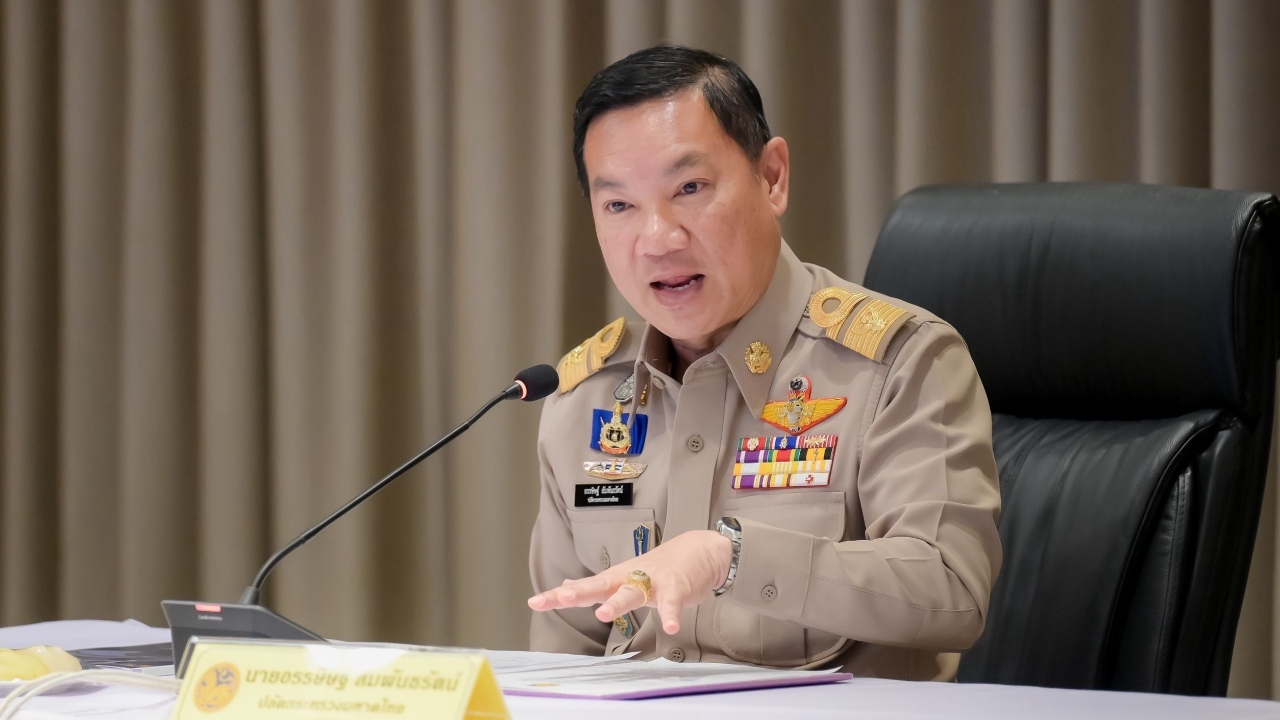
The Interior Ministry Secretary urgently ordered the five southern border governors to raise security measures to the highest level, strictly monitor risk areas, restore communication, electricity, and CCTV systems, intensify proactive intelligence efforts, and monitor the situation around the clock.
On 24 August 2026, Mr. Assisit Sampantharat, Secretary of the Interior Ministry, revealed that due to unrest occurring in several areas of the southern border provinces between 22-23 August 2026, which directly affected the safety of residents and important government offices crucial for security and administration, he has instructed the governors of the five provinces—Narathiwat, Pattani, Yala, Songkhla, and Satun—to raise surveillance to the highest level and enhance the readiness of local administrative mechanisms. They are to closely and rigorously coordinate with all relevant sectors to prevent escalation and assure the public of their safety through four key measures.
1. Strictly enhance security measures and prevent repeated incidents. Local administrative officials, including subdistrict heads, village chiefs, village security volunteers (VSVs), and territorial defense volunteers (TDVs), are to integrate forces with police, military, and security agencies to conduct patrols and set up checkpoints to monitor risk areas, key strategic points, main and secondary routes, government offices, public utilities, and previously targeted vulnerable spots. Security measures should be intensified especially at night and during times and locations assessed as high risk or where incidents may occur.
2. Comprehensive integration of intelligence work. Local administrative and security agencies must continuously monitor, inspect, and assess the situation hourly to swiftly protect civilians and personnel, focusing on vulnerable locations such as government offices, schools, child development centers, health facilities including Subdistrict Health Promoting Hospitals (SHPHs), and communities near incident sites. If suspicious objects, vehicles, or persons displaying unusual behavior are found, security measures must be immediately enacted, and Explosive Ordnance Disposal (EOD) units or authorized agencies promptly contacted to secure and investigate the area. Additionally, provinces and districts should intensify public communications to encourage caution during travel and daily life, avoid incident sites or hazardous areas, rely solely on official information sources, remain calm, and refrain from spreading fake news to prevent confusion and public fear.
3. Accelerate restoration and maintenance of infrastructure systems including communications, electricity distribution, and closed-circuit television (CCTV) systems. Provinces and districts are instructed to coordinate urgently with the Provincial Electricity Authority, telecommunications providers, and local administrative organizations to inspect, repair, and replace damaged equipment to restore normal operation as quickly as possible. They must also implement surveillance, protection, and security measures at critical points where public utilities or CCTV systems were previously damaged, ensuring these tools remain effective in maintaining security.
4. District chiefs, department heads, and relevant local agencies are to closely monitor developments 24 hours a day. Should any significant incidents or situations arise that could impact public order and safety, they must immediately report to the provincial governor. All intelligence information should be analyzed to assess trends and guide proactive measures to prevent similar violent events from recurring. Provinces are required to continuously report operational results, problems, obstacles, and situational progress to the Interior Ministry.
Mr. Assisit emphasized that the Interior Ministry deeply cares about the welfare and well-being of residents in the southern border provinces. He has instructed all levels of local administration—from provincial governors, district chiefs, subdistrict heads, village chiefs, to VSV and TDV officers—to perform their duties with strength, dedication, and readiness to serve as pillars of support for the community in all respects. Residents are urged to report any unusual sightings, suspicious objects, or intelligence about malicious groups to local leaders, administrative officers, police, military, or the Damrongdhama Center hotline at 1567, available 24 hours a day, so authorities can promptly intervene and prevent incidents, working together to ensure safety and peace in the area.