

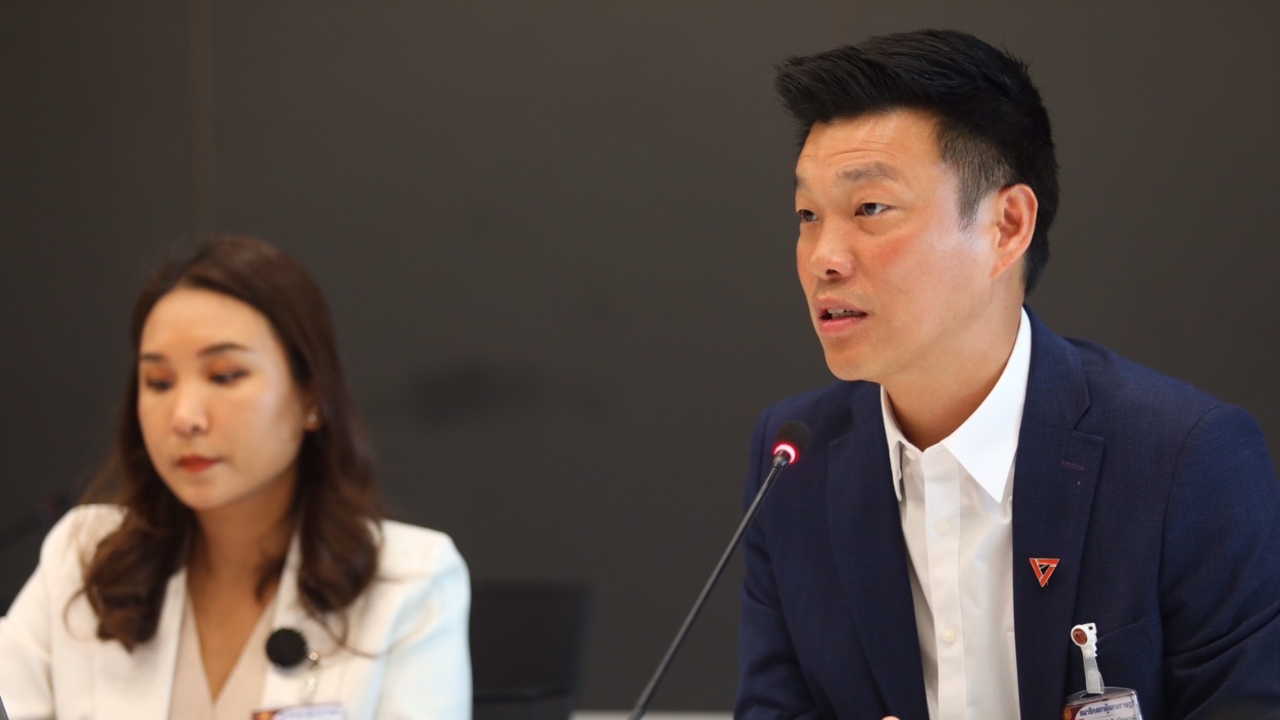
"Teng Nattapong" teaches the government five lessons to review southern security intelligence, addressing criticism of the People’s Party as BRN. He points out that MPs must present information comprehensively and does not want this to be seen as political attacks over group affiliations or allegiances to certain factions within politics.
On 25 Aug 2026 GMT+7 at the Parliament building, Nattapong Ruangpanyawut, party-list MP and leader of the People’s Party (PChon), spoke after a shadow cabinet meeting about violence in the southern border provinces. He and the PChon party condemned violence, especially incidents caused by insurgents. They offered five proposals for the government and security agencies to reconsider: 1. Intelligence systems should shift from reactive event awareness to proactive prevention; 2. Intelligence must build public trust by systematically working with community leaders, religious leaders, local administrative organizations, local politicians, civil society, and residents in the area; 3. Security agencies must exchange information efficiently among military, police, administration, intelligence, and related bodies rather than working separately; 4. Border intelligence should connect with cooperation with neighbors and foreign countries, especially exchanging intelligence on individuals, networks, movements, and routes possibly related to cross-border incidents; and 5. Peace talksmust be conducted in tandemwith maintaining security in the area. The government must ensure continuous dialogue channels with clear goals, able to address the political roots and conflicts frankly.
Clarifying criticism of the People’s Party as BRN
When asked if MPs in the party and the PChon Narathiwat page presenting information led to accusations that PChon is a BRN People’s Party,would this affect the party’s votes orpopularity, Nattapong said he wants everyone to consider that if names and faces are concealed first, and if unrest occurs in the area,regardless of the side, especially if causedby insurgents, it must be condemned. At the same time, solutions require building trust with the public. Therefore, state authorities must exercise their power correctly. Anyone raising questions about state power use that may unsettle the public should be allowed to raise observations. From another perspective, anyone should be able to question or raise concerns. As an MP representing the people, he believes it is their duty to present information fully. He does not want this to be seen as political attacks or factional disputes. He thinks the best problem-solvers who provide the most factual information to the public are security agencies and the government.
When asked about reports alleging helicopter gunfire targeting youths, whether this reflectsa distrust of officialsdue to conflicting information, Nattapong said this is an example he wants to highlight where misunderstandings may exist. He did not state whether the misunderstandings are right or wrong since facts have not been fully revealed. As long as misunderstandings remain, accusations will continue between citizens and officials or between official explanations and public distrust, causing ongoing problems. Thus, the government's important duty now is to provide the truth to the public.