

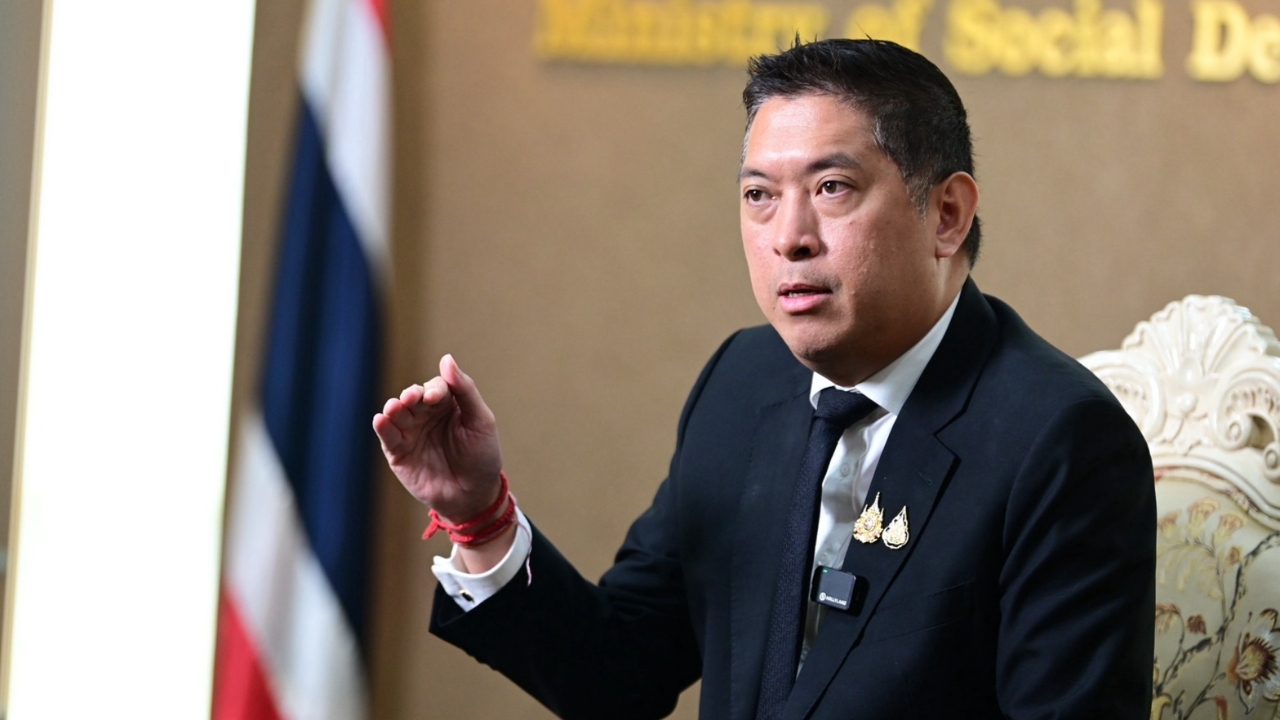
The Cabinet has approved a draft law to protect victims of family violence, specifying that assault within the household cannot be settled privately, and has increased penalties. Minister Nikorn is actively closing loopholes in the old law to ensure the safety of those at risk.
On 25 Aug 2026 GMT+7, Nikorn Somkalang, Minister of Social Development and Human Security, revealed that the Cabinet has approved a draft Family Violence Protection Act proposed by his ministry. This revision updates the original law enforced since 2007, which contains loopholes and ambiguities that hinder officials’ work amid societal changes over nearly two decades.
Nikorn stated that this legal overhaul aims to plug gaps, notably by upgrading offenses: family violence is explicitly defined as a non-compoundable crime to meet international standards, and the definitions of family violence and family members are broadened for greater coverage.
Furthermore, the Ministry has introduced preventive protection measures to safeguard potential victims and prevent escalation, alongside tougher penalties to strongly deter offenders. The law also enables relevant agencies to allocate budgets fully for its enforcement. Importantly, it provides for leniency when offenders are former victims who suffered prolonged abuse leading to psychological issues. The law’s ultimate goal is to protect victims, prevent violence, reduce recurrence, and establish a swift, fair support system to strengthen Thai families and society.
Nikorn added that the Cabinet hopes the draft law will soon be approved by the House of Representatives, enabling mechanisms and processes suited to modern times. Besides effectively addressing domestic violence, it will help curb related social problems such as crime, abandonment of children, and neglect of the disabled and elderly, which are roots of further societal issues.
Meanwhile, Major Phatdarasmi Thongsaluaykorn, Deputy Spokesperson of the Prime Minister’s Office, added that the draft Family Violence Protection Act updates the 2007 law to reflect evolving forms of family violence. It aims to close legal gaps, speed up victim protection mechanisms, and clarify and integrate officials’ roles across agencies, consistent with the necessity outlined in the Cabinet proposal documents.
A key change is broadening the definition of "violence" beyond physical harm to include acts that cause fear, threats, and economic deprivation. The definition of "family members" is expanded to cover former spouses and those living in the same household to align protection with current social relationships.
The draft also reclassifies family violence as a non-compoundable offense, prescribing imprisonment up to one year, fines up to 20,000 baht, or both. Penalties increase if committed against children under 18 or if repeated within three years.
Another important measure is "stopping violence quickly before escalation," empowering officials to issue temporary relief orders immediately to protect victims, such as prohibiting offenders from approaching victims or consuming intoxicants. These orders must be reviewed by the Juvenile and Family Court within 48 hours. Whistleblowers acting in good faith are legally protected.
Post-incident management shifts from "mediation and settlement" to creating a "family violence prevention and correction plan" collaboratively within six months. Successful compliance may lead the court to dismiss the case; violations result in immediate judicial proceedings.
This legal reform occurs amid ongoing domestic violence challenges. In 2025, over 2,000 cases were reported, with about 20% related to emotional outbursts leading to assault and another 20% linked to drug use. This indicates family violence is intertwined with broader social factors, not just internal household issues.
The Deputy Spokesperson noted that violence includes not only physical harm but also verbal and behavioral acts causing psychological distress, fear, threats, or insecurity, especially affecting children, youth, and women. Thus, all family members must cultivate maturity, understanding, and mutual respect.
The Ministry of Social Development and Human Security is responsible for caring for children, youth, women, families, and the elderly across all age groups, aiming to build "strong families." Such families require cooperation among members of all ages—children, youth, parents, and elders—living together with mutual understanding and respect. Happy families create opportunities for members to grow with potential and contribute to the country's future strength.
The draft law also establishes a long-term prevention system by requiring related agencies to create a centralized database linked electronically to monitor and prevent family violence. It mandates evaluation of the law’s effectiveness every five years to ensure it adapts to changing circumstances, making "home" a safe space for all family members.