

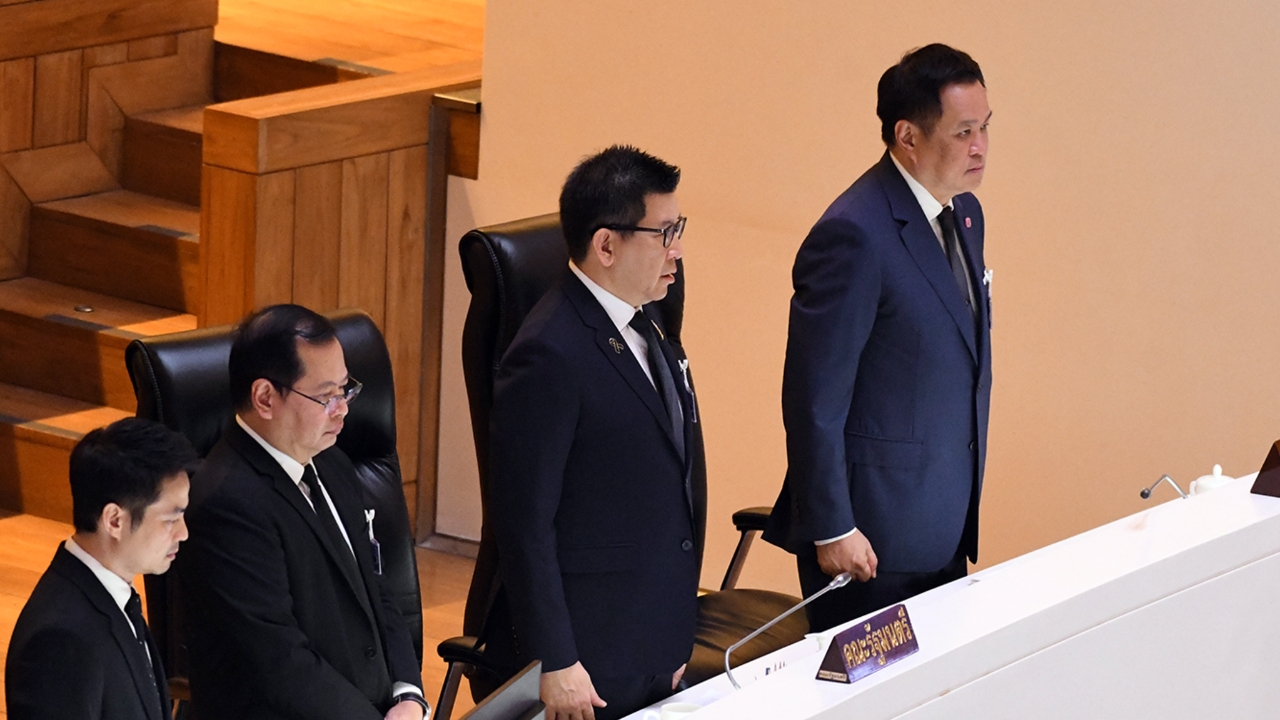
Aekniti insists that the 400 billion baht loan decree is necessary. He points to Q2 economic data showing a current account deficit of nearly 600 billion baht. If this continues unchecked, an economic crisis is inevitable. He emphasized that the spending approach is not to borrow excessively but to spend according to actual needs.
On 26 Aug 2026, Deputy Prime Minister and Finance Minister Aekniti Nitithanprapas explained that the 400 billion baht loan decree is truly about economic security. He understands that some MPs have raised opposition views in debates after the Constitutional Court’s ruling, which may seem unfair, but he respects differing opinions. Currently, Q2 economic figures show slowing growth, rising inflation, higher oil prices, and a current account deficit nearing 600 billion baht. These factors threaten economic security. He outlined multiple crisis waves Thailand faces: first, rising oil prices due to external factors; second, increased living costs with inflation near 3%; third, reduced purchasing power while prices rise. These crises are ongoing. If unchecked, rising prices could force layoffs and business failures, leading to an economic crisis. Global analysts note Thailand’s high energy import dependence on oil and natural gas, with unresolved Middle East conflicts increasing vulnerabilities. Therefore, the government must turn this crisis into an opportunity by issuing the loan decree.
Aekniti stated the loan decree has two main objectives: first, to assist citizens and farmers affected by the energy crisis through programs like 'Thai Help Thai Plus' that reduce living costs. This is designed not just to stabilize the economy but also to help merchants use AI to increase income and expand markets online beyond traditional sales channels. Second, to promote efficient energy use and support the transition from fossil fuels to alternative energy. Continued energy imports risk further economic crises. The decree’s principles are threefold: 1) support people and the economy; 2) turn crisis into an opportunity to accelerate energy transition—not instant but a faster pace triggered by the decree’s projects; 3) leverage global changes to attract private investment in clean energy, as Thailand’s strengths attract worldwide investors. This supports Thai adoption of solar power, creating sustainable income by selling electricity back to the grid.
Aekniti confirmed that the 400 billion baht loan decree follows similar past loan decrees but with clearer rationale addressing previous issues, making it more transparent and stringent. Project screening is rigorous, overseen by an expert committee both internal and external, ensuring alignment with objectives and plans, readiness, transparency, and value. Information will be publicly disclosed. Spending will be monitored and evaluated with reports to the cabinet. He stressed that borrowing will match necessary expenditures, not excessive borrowing. Public debt increases will be tracked carefully with fiscal discipline in mind. Credit rating agencies are not concerned about hitting debt ceilings but focus on how investments are made. The government asserts the loan decree is transparent, not a blank check, with proper procedures, similar to past urgent decrees aimed at clear objectives: helping citizens, transitioning energy, and using crisis to improve Thailand. Given ongoing war crises, this decree is necessary as a tool. Thailand is ready to transition energy and will emerge stronger once the crisis ends.