

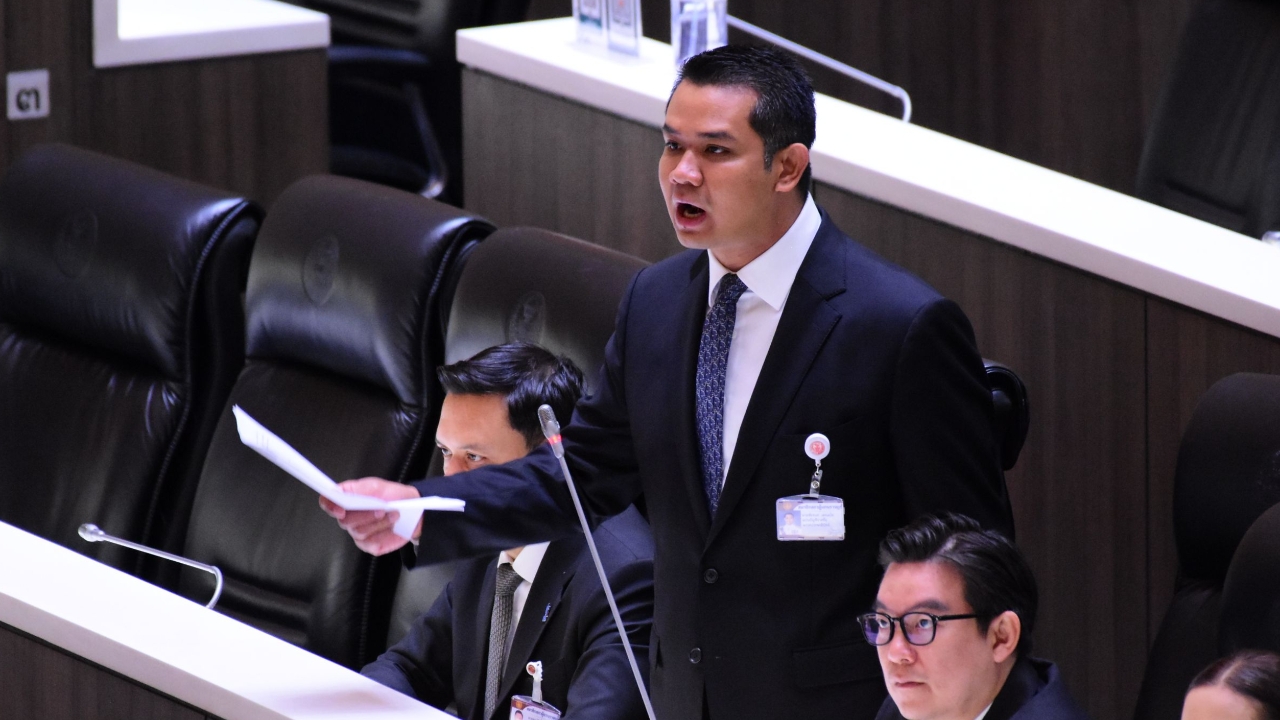
Chaiyachana fiercely debated the 400 billion baht loan decree, calling it an illusory plan leading the nation to ruin. He condemned attempts to deceive the public like boiled pork leg and demanded transparency on energy plans, fearing benefits for stockpiling solar panels.
26 August 2026 GMT+7 Chaiyachana Dechadecho, party-list Member of Parliament for the Democrat Party, raised concerns and expressed worries about budget management under the royal decree granting the Ministry of Finance authority to borrow money to address energy crisis impacts and drive the country's energy transition in 2026 ( the 400 billion baht loan decree ), in a parliamentary session where the government stated the loan is intended to help the people.
Chaiyachana said that after hearing explanations from Deputy Prime Minister and Finance Minister Akniti Nitithanprapas, who tried to portray the government as leading people toward a great dream, the reality is the country is being pushed toward disaster. Especially in promoting the “Thai Help Plus” program, as previously campaigned and announced, which offers 2,000–4,000 baht aid but cuts existing state welfare rights. The government fails to tell the truth that this 400 billion baht loan will become a burden that newborns must bear 5,970 baht each immediately, pushing total public debt to 13 trillion baht or 69 percent of GDP, nearing the 70 percent fiscal discipline ceiling.
“I have served in three parliaments and previously approved loan decrees during the COVID crisis to help people during lockdowns. Now the government claims we face an energy crisis requiring aid, but the Deputy Prime Minister has yet to clarify support details for 1 million rooftop solar households or subsidies for electric vehicles. Why not be clear? Don't deceive people repeatedly as if they were boiled pork leg, nor try to cast magical illusions with boastful words. No, that is not right.”
Chaiyachana also questioned the value and clarity of future energy restructuring plans, including support for installing rooftop solar panels for 1 million households and electric vehicle subsidies. He warned the government might overlook long-term hazardous waste issues that will burden local governments with disposal costs for solar panels after their 15-year lifespan, and that there is no concrete plan for EV battery recycling as seen abroad.
“If you proceed with solar panel installations, how can the government guarantee and assure society that private sellers of solar panels have no connections to cabinet members, preventing stockpiling like past fuel hoarding? Are you confident there will be no conflicts of interest? The funds involved are huge. I understand people need to earn a living, but don’t treat this country like a pit to endlessly dig and steal from, causing citizens to bear the debt burden.”
He concluded by posing three important questions to the administration: 1. Can the Prime Minister promise society there will be no policy-level corruption, stockpiling, or conflicts of interest linked to government officials and private solar panel sellers?
2. What clarity and real benefits does the second 200 billion baht loan plan offer the country?
3. How will the government manage and implement the remaining first 200 billion baht loan to ensure transparency and straightforwardness for society?