

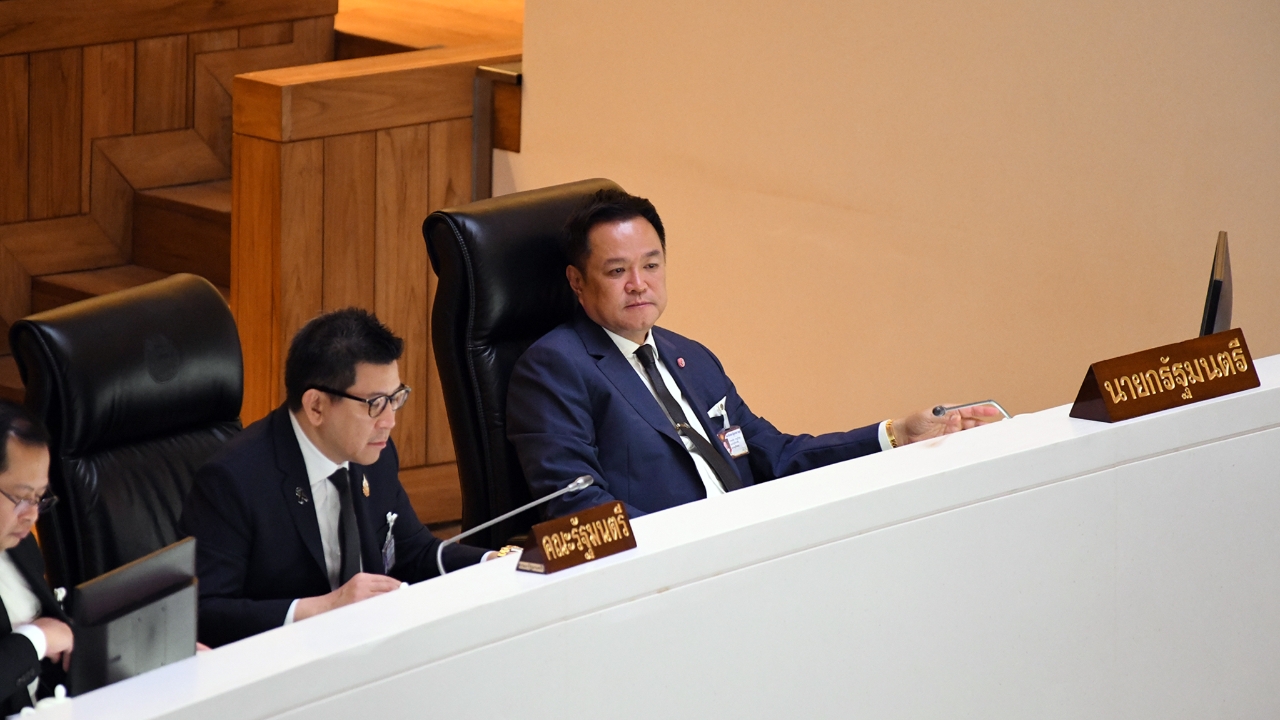
The parliamentary session approved the 400 billion baht loan decree with 285 votes in favor, 141 against, and 52 abstentions. Deputy Prime Minister and Finance Minister Ekniti emphasized the necessity of the loan for energy transition, stressing transparency and that funds must reach the people. Prime Minister Anutin expressed gratitude for the opportunity to serve as prime minister.
On 26 Aug 2026 at 20:00, during the 1st meeting of the House of Representatives (2nd ordinary session) to consider the urgent loan decree empowering the Ministry of Finance to borrow 400 billion baht to address the energy crisis and facilitate the country's energy transition, Permanent Secretary of Finance Lawaran Saengsanit explained to the session that concerns about the latter 200 billion baht loan lacking details and being outdated were noted. He assured that there would be careful screening with an additional oversight committee. Although many said project details were unavailable as projects had not yet been proposed, they could be verified. He confirmed there would be strict, transparent screening by an external, professional committee.
He added that even if the decree passes, it will not bypass parliamentary oversight, as reports must be submitted to parliament within 60 days. Regarding the independence of this committee, the only directive from Deputy Prime Minister and Finance Minister Ekniti Nitithanprapas was to ensure transparent work, cost-effectiveness, and that all projects comply with the decree and genuinely address the energy transition.
"What I want to see regarding this crisis is that Thailand must be better prepared than before, and the impact on the people must be reduced," said the Permanent Secretary of Finance.

At 20:05, Deputy Prime Minister and Finance Minister Ekniti Nitithanprapas summarized three points, stressing this is a crisis. The Middle East conflict causes crises in energy, cost of living, and high expenses, ultimately leading to reduced purchasing power. Second-quarter consumption declined compared to the first quarter. If left unchecked, this would cause unemployment and business closures. The latest data confirms that the decision to borrow was correct; otherwise, it would leave economic scars that are difficult to heal. The Constitutional Court's majority also agreed.
Some say the energy transition is a long-term issue to proceed gradually. However, Thailand imports a large amount of energy and natural gas, making the country vulnerable to global energy issues and causing a 600 billion baht trade deficit. Therefore, transitioning energy is necessary. It's like a leaking house that constantly needs buckets to catch water, but ultimately, loans are required to repair it. Thus, this decree is important to strengthen Thailand's "roof" so it no longer needs temporary fixes daily.
Ekniti also stressed the importance of transparency, with all projects presented needing to benefit the people transparently and cost-effectively. Some projects are delayed because clear objectives must be defined, focusing on transition and reducing energy dependence. Repeating past practices of patching projects together is dangerous. Delayed projects reflect transparency and ensure funds reach the people.
"When designing a house, if it’s not good, adjustments must be made. This is prudence, not rushing to present pre-existing projects. We want to stop relying on imported oil and use domestic bio-diesel and oil to benefit the people," he said.
Ekniti confirmed the decree is not about accumulating money but using it as needed. The debt ceiling at 70% remains lower than many countries, reflecting fiscal discipline and confidence. Claims that the government is simply borrowing large sums are misunderstandings. While disagreements remain, the decree under Prime Minister Anutin Charnvirakul’s government is to ensure the people are cared for and Thailand grows stronger. The economy today must transition to clean energy and invest in national strength.

At 20:20, Prime Minister and Interior Minister Anutin Charnvirakul closed the debate, stating that the Deputy Prime Minister had explained the matter. As a screening committee member, he will use the budget according to the people's objectives and reaffirm honest intent focusing solely on the country and its people with this loan decree. He promised no special benefits to any party and pledged to closely monitor budget use to prevent leakages. Aware that this is borrowed money with costs, he deemed the projects worth the 1.2% interest and requested government agencies submit proposals and suggestions. The day’s debate will be used to maximize benefits for the nation. He concluded by thanking the assembly for the opportunity to serve as prime minister and serve the people.
"Finally, I must say thank you, thank you, thank you again. Even if you may be tired of hearing it, I must sincerely thank you for giving me the chance to serve as prime minister, to serve the nation and its people," said Anutin.
At 20:25, Parliament Speaker Sophon Sarum called for a vote on approving the 400 billion baht loan decree for the energy transition. Among 478 members voting, 285 supported, 141 opposed, 52 abstained, and none abstained from voting. Speaker Sophon then adjourned the session at 20:28.


