

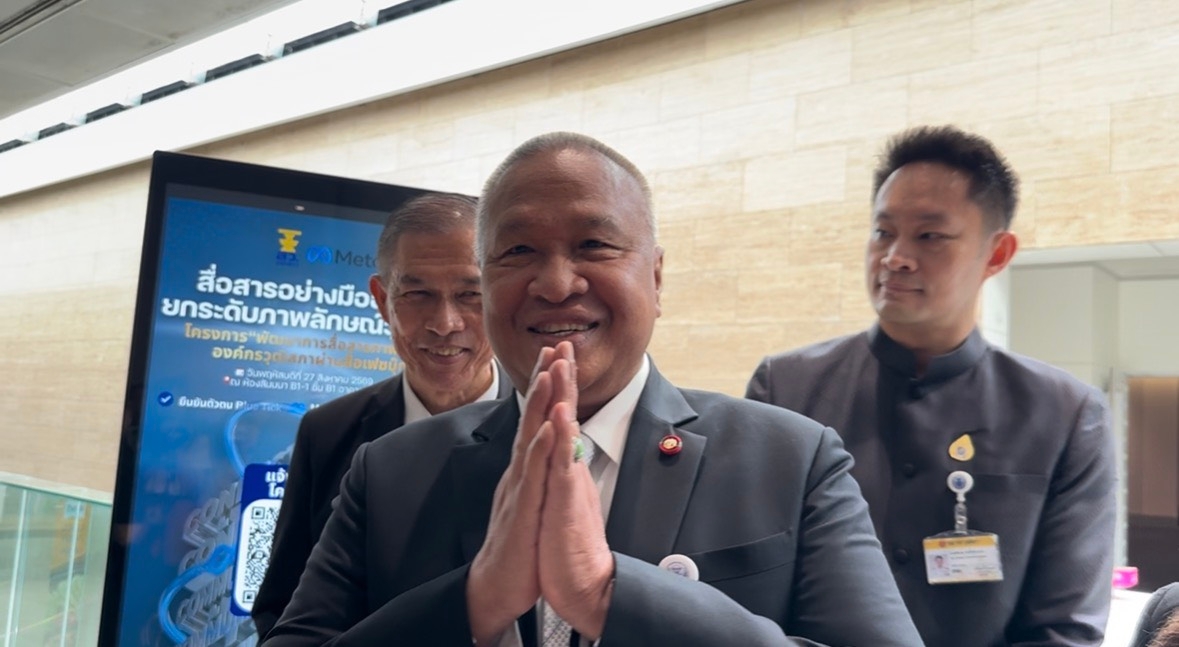
"Big Kriang" is confident that extinguishing the southern insurgency requires grassroots intelligence. He points out that preventing attacks means not giving opportunities, closing gaps, and making escape impossible to ensure perpetrators cannot flee.
At 10:15 a.m. on 27 Aug 2026 GMT+7 at the Parliament, General Kriangkrai Sirirak, Vice President of the Senate and former Fourth Army Commander, spoke about the unrest in the southern border provinces. He said the situation there is inherently complex. The key issue is intelligence work. The intelligence community in the south consists of several agencies, including the National Intelligence Agency, the Fourth Region Internal Security Operations Command, and other intelligence units, which must work together. The strategy focuses mainly on deterrence. However, gaps arise from area management. Perpetrators act only when targets are clear, opportunities exist, and escape routes are ready. When asked if local intelligence is weak, General Kriangkrai said he is not certain about the intelligence itself but emphasized that, from experience, intelligence is crucial. Accurate intelligence comes from the local population; if there is continuity, trust, and confidence in them, clear intelligence can be obtained, enabling operational planning that disrupts attacks and suppresses violence. It is essential not to give opportunities, to close gaps, and to make escape impossible.
When asked about Deputy Prime Minister and Foreign Minister Sihasak Puangketkaew's admission of having prior but imprecise intelligence, and how to address this, General Kriangkrai responded that accurate intelligence must come from the grassroots. During his time as Fourth Army Commander, he received abundant intelligence from devoted community work spanning nearly 20 years, with continuous reports.
General Kriangkrai stated regarding differing views on military operations—specifically allegations of helicopter gunfire on civilians in Jana District, Narathiwat Province—that he was unaware of such incidents. During his tenure, no helicopter operations were conducted, as they were unnecessary. When incidents occurred, the state was often blamed as the perpetrator. On whether changing the National Security Council Secretary-General would worsen the situation, he said this was a government and suitability matter, understanding it as personnel management aimed at improving agency efficiency. When asked if the appointed officials in the southern border areas after the government transition were appropriate, General Kriangkrai said the leadership likely saw a need for adjustments but declined to comment further.