

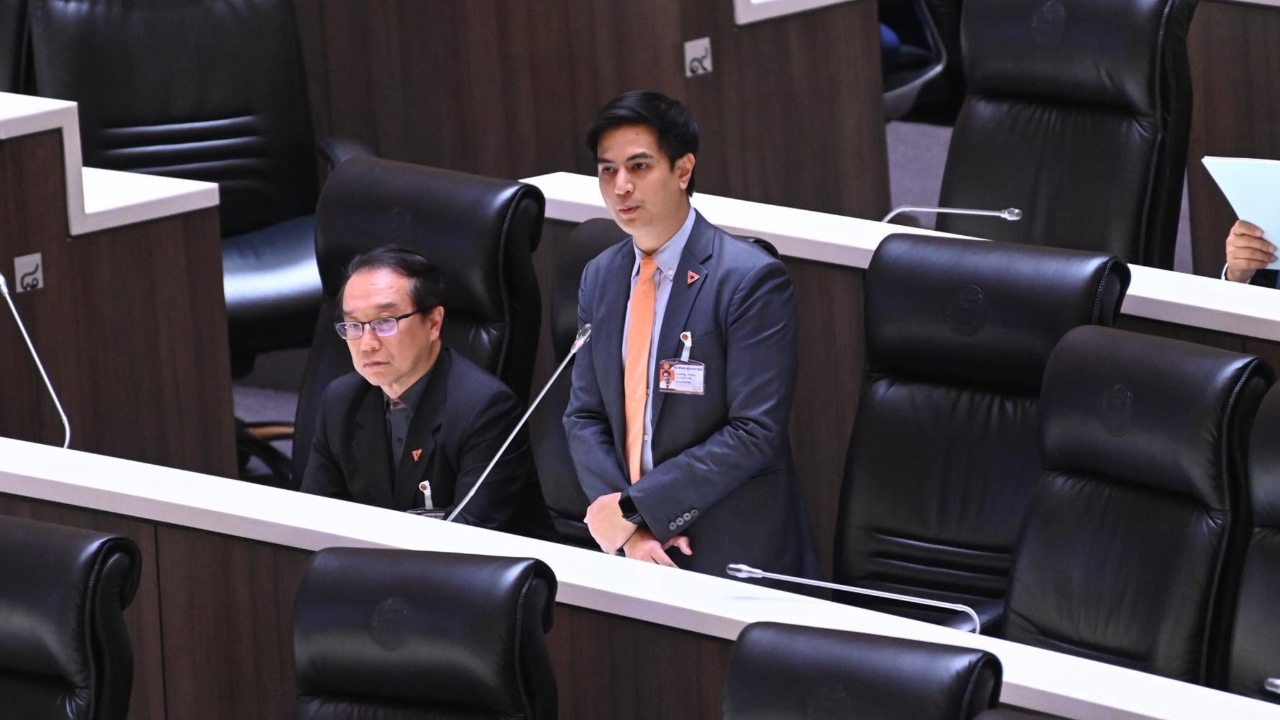
“Ice Cream” Prit used the parliamentary platform to press “Naphinthorn” over involvement in Senate election fraud, revealing that former Senate candidates were summoned to the Commerce Ministry office one day before the national election and pressured to sign resignation letters in advance.
At 11:30 a.m. on 27 August 2026 at the parliament, the House of Representatives convened with Mr. Sophon Sarum, Speaker of the House, presiding. The session considered a live question from Mr. Prit Wacharasindhu, a party-list MP from the People’s Party, directed at Mr. Naphinthorn Srisanpong, Minister attached to the Prime Minister’s Office, regarding allegations of Senate election fraud. Mr. Naphinthorn requested to postpone his response due to prior commitments. Mr. Prit stated that this was the first opposition question in the first week of the session, and already the minister had avoided answering. He expressed disappointment that Mr. Naphinthorn sent a letter explaining his absence, citing inspection duties in Ratchaburi Province, despite knowing the live question was scheduled Thursday morning and could have arranged to be in Bangkok. These excuses were unconvincing. Notification of the live question had been given to the government whip since Monday evening, 24 August, allowing time to manage his schedule. Sometimes ministers’ absences are less about coordination and more about conscience. The question concerned Mr. Naphinthorn’s possible involvement in Senate election fraud. He is one of 229 individuals accused, raising concerns over whether the Election Commission would impartially prosecute all. If the evidence is true, it indicates Mr. Naphinthorn’s involvement. Information reveals that before the national Senate election, a former candidate, called Mr. A, met Mr. Naphinthorn—then Deputy Commerce Minister—twice at his office. The first meeting was on 24 June 2024, when Mr. A was introduced by someone wanting to see him. Mr. Naphinthorn reportedly said that if elected senator, Mr. A should agree to two or three conditions. The second meeting was on 25 June 2024, one day before the national Senate election, when Mr. A was invited back to the office and presented with a resignation letter to sign in advance, implying control over Mr. A’s voting if elected senator.
Mr. Prit said he wanted to ask Mr. Naphinthorn whether these events were true: did he summon Senate candidates to his office on 24-25 June 2024? If Mr. Naphinthorn answered the question, he would likely not deny meeting Mr. A but claim it was a meeting to address the turkey market surplus issue, as per documents filed in complaints, unrelated to the Senate election. Mr. Prit questioned whether those documents were genuine, as official receipt numbers were missing from the Commerce Ministry’s system. He speculated the minister might claim others were present in the office—about ten people—as witnesses, but questioned their credibility since eight are implicated in the Senate election collusion case and two are Mr. Naphinthorn’s subordinates. Mr. Prit posed three requests: 1. That Mr. Naphinthorn clearly respond to the allegations; 2. That Ms. Suphajee Suthumpun, Commerce Minister, though not involved in the allegations, ensure no officials formerly working with Mr. Naphinthorn fabricate false documents to cover up these issues; 3. That the Election Commission perform its duties transparently and not dismiss complaints to protect anyone in the Blue Regime.