

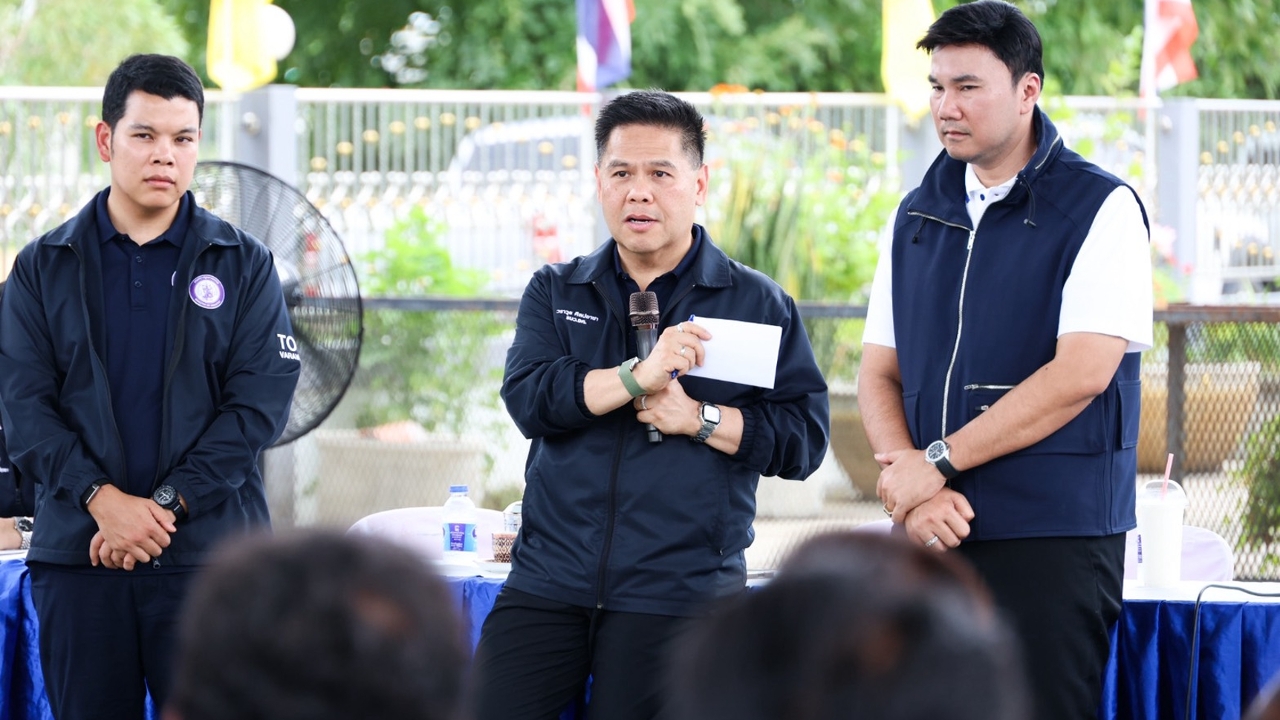
Warawut takes direct action in Ayutthaya, listening to residents of Lat Bua Luang who have suffered from foul odors emitted by a factory for over 15 years. He orders the Department of Industrial Works to send mobile units to monitor pollution and crack down on repeat offenders by revoking their licenses. The crackdown targets those repeatedly violating regulations.
On 27 August 2026, Warawut Sinlapacha, Minister of Industry, accompanied by senior officials from the Ministry of Industry and related agencies, visited the area to follow up on public grievances. Residents had complained for over 15 years about nuisance odors from operations at C.F. Industry Co., Ltd., a metal and copper smelting factory located in Lat Bua Luang Subdistrict, Lat Bua Luang District, Phra Nakhon Si Ayutthaya Province.
Minister Warawut said the Ministry of Industry prioritizes the well-being of the people. Upon receiving complaints, he and the ministry team, along with the local Member of Parliament, Mr. Padit Sangkajai of Phumjaithai Party representing Ayutthaya's 5th district, promptly visited to hear directly from affected residents to accelerate problem-solving. The ministry has coordinated efforts between the Department of Industrial Works, the Ayutthaya Provincial Industry Office, and provincial authorities to address the issue concretely within the legal framework and resolve the matter swiftly to alleviate residents' suffering.
Warawut stressed to the factory operators that factories and communities must coexist sustainably, starting with "effectively managing issues within the factory premises" as the first priority. Then, factories should communicate closely and accessibly with the community to build understanding and good relationships, enabling targeted problem-solving. If any factory operations might impact the community, the factory must promptly inform residents in advance. Corporate social responsibility (CSR) activities should also be undertaken to improve community quality of life, such as promoting occupations, generating income, and environmental care, to ensure sustainable coexistence.
The Minister of Industry said that Mr. Pornyos Klankrong, Director-General of the Department of Industrial Works, reported that officials have been continuously monitoring the factory's corrective measures to ensure strict compliance with factory and related laws. Recently, two mobile air quality monitoring units were deployed at two key locations: one in front of C.F. Industry Co., Ltd. (Village No. 2, Lat Bua Luang Subdistrict) and another in the residential area of Village No. 10, Khu Salod Subdistrict, both in Lat Bua Luang District. Preliminary air quality results remain within standards. The mobile units will continue monitoring on-site until September 2026 to reassure the community.
Warawut remarked that for over 15 years, local residents have suffered discomfort and health impacts from these odors, which he deeply sympathizes with. He visited the area and instructed the Department of Industrial Works to send teams to inspect the factory. Initially, some conditions, especially odor control, have not been resolved as ordered by the department. He emphasized that repeated violations demonstrate intentional misconduct, not accidents or negligence, so he has ordered the department to urgently amend the Factory Act B.E. 2535 (1992) to allow license revocation for habitual offenders.
From now on, the Factory Act will be stricter. Later today, he will follow up by phone with the provincial industry office to verify the department's inspection results. If the results are unsatisfactory, he will request the Director-General of the Department of Industrial Works to take action under Section 39 of the Factory Act immediately.
Currently, the situation is under review. According to the Factory Act, the authority to order a factory to open or close lies with the Permanent Secretary of the Ministry of Industry or their delegate, in this case, the Director-General of the Department of Industrial Works. After the department's inspection today, the Director-General will issue administrative orders under Section 39 or other applicable provisions. Warawut emphasized strict enforcement and requested the provincial industry office to inform local leaders and residents about developments.
Warawut said the Factory Act amendments will include provisions for license revocation and change the public hearing process. Previously, public hearings were announced at central offices, but going forward, the focus will be on gathering opinions from residents within the factory’s vicinity. The ministry plans to expedite submitting these amendments to the Cabinet for approval.