

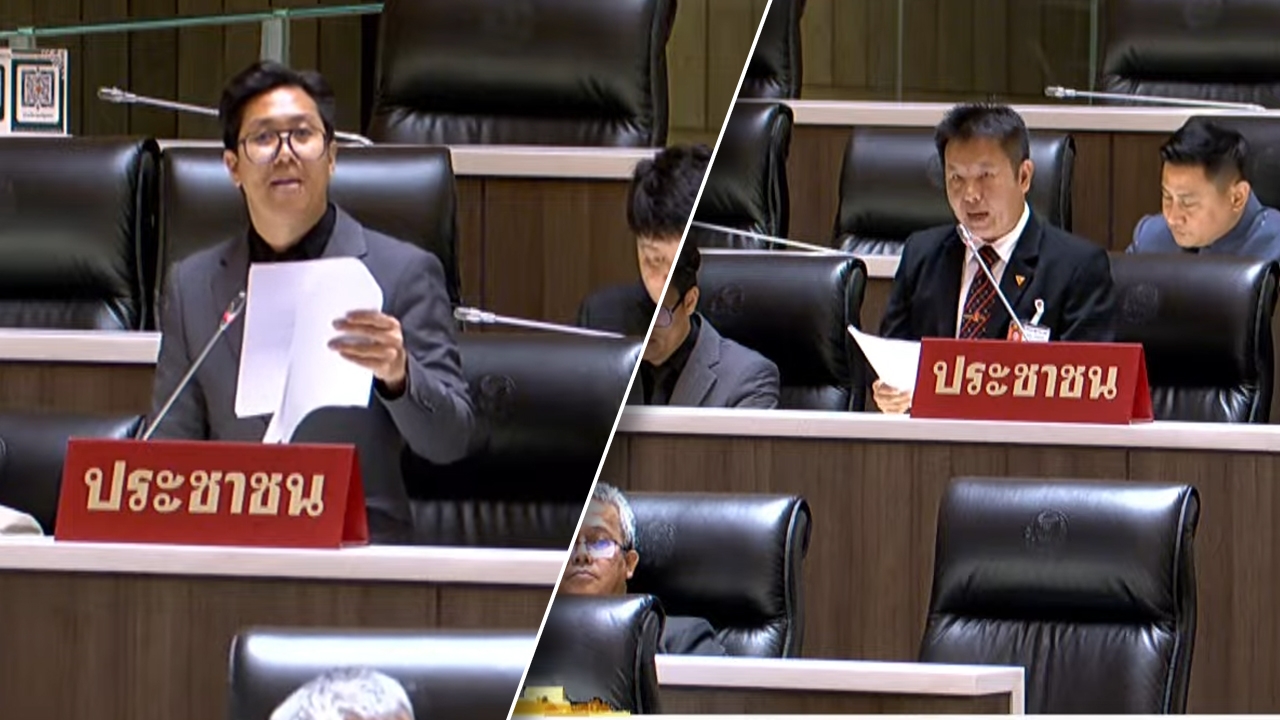
Nan MPs from the Orange Camp urge the government to accelerate recovery and compensation efforts, establish a new water system, and emphasize the principle of "Know First, Warn First, Prevent First." They stress proactive disaster management.
On 27 Aug 2026 GMT+7, during a House of Representatives meeting, the People's Party presented an urgent verbal motion requesting the House to study comprehensive water management methods, crisis flood response, and urgent recovery measures for affected areas. Nan MPs Mr. Charoen Apiphatkosol (District 3) and Mr. Chaowichit Innoy (District 1) participated in the debate urging the government to assist Nan residents promptly.
Mr. Charoen revealed that on 19 Aug, nearly 400 millimeters of heavy rain fell within just 3-4 hours, causing flash floods that inundated homes and agricultural land, especially in Pua District where 9 subdistricts, over 4,000 households, and more than 10,000 people were affected. Highland communities experienced landslides cutting off public utilities. Nan's basin-like geography combined with increasingly intense rainfall over the past three years (nearly 200 mm in 2024, 300 mm in 2025, and 400 mm in 2026) has severely damaged the economy and infrastructure.
He therefore proposed urgent government action to mobilize personnel and machinery to clear mud and debris, restore electricity and water systems, deploy medical units to support vulnerable groups' physical and mental health, and expedite initial compensation payments of 9,000 baht plus home repair funds by simplifying paperwork. Medium-term plans include reviving Pua's tourism economy before the high season in one month. Long-term goals involve upgrading early warning systems, unifying rescue plans, and reducing redundant work.
Mr. Chaowichit stated that after floodwaters recede, residents still face severe losses, with some homes swept away leaving only toilets behind. He proposed restructuring Nan's water management in three phases: short-term (fast detection, warning, and response) by improving accurate water forecasts and issuing alerts through all channels—Cell Broadcast, sirens, apps, and loudspeakers—so people can prepare; medium-term (survey and remove bottlenecks) by assessing water routes system-wide, prioritizing solutions for sediment buildup and obstructions without shifting water burdens elsewhere; and long-term (comprehensive water management) by moving from reactive fixes to projects expanding storage, diversion channels, and city bypass drainage, addressing both flooding and drought.
He concluded that water management should not begin only when floods arrive nor end when waters recede. The government must shift its mindset from waiting to respond after floods to managing water comprehensively with the principle "Know First, Warn First, Prevent First," so citizens can prepare ahead and avoid losses before the state intervenes.