

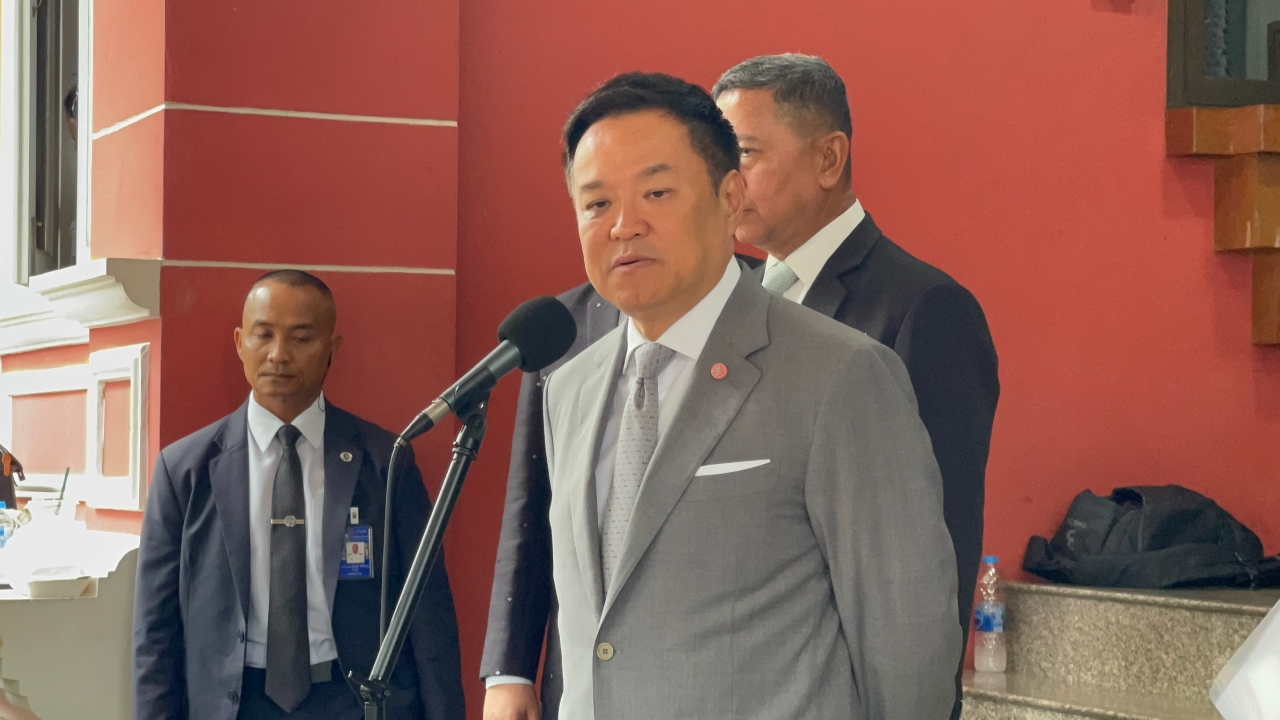
The Prime Minister is still unaware of the details after CP requested to terminate contracts for three airports and the Airport Rail Link. He noted that such actions are not easily done; private firms cannot unilaterally cancel contracts and may be blacklisted. He plans to invite the EEC Secretary for discussions next week.
On 28 August 2026, Prime Minister and Interior Minister Anutin Charnvirakul spoke about CP Group’s request to end contracts for the high-speed rail project linking three airports and to cancel the management and operation agreement for the Airport Rail Link (ARL), whose contract ends on 30 September. He said he is not yet aware of the details but will invite Chula Sukmanop, Secretary of the Eastern Economic Corridor (EEC) Policy Committee, to meet next week because there are many matters to proceed with, including regulations issued by the committee that need to be presented as laws. He emphasized that contracts with the government are not easily terminated.
Asked whether contracts could be terminated if there were sufficient reasons, the Prime Minister said he has only seen government-initiated cancellations, never a private firm requesting termination. Terminating government contracts has many consequences, including blacklisting and various liabilities. He expressed concern that if a project contract is terminated, a new tender would be required, potentially increasing costs. Therefore, Prime Minister's Office regulations state that contractors terminating contracts must cover the price difference and will be blacklisted for abandoning work. There are also many other conditions. He personally believes such cancellations are not easily done. He wants to meet with the EEC Secretary first because the actual contracting party is likely the State Railway of Thailand, under the Ministry of Transport, which must comply with the Prime Minister's Office procurement regulations.