

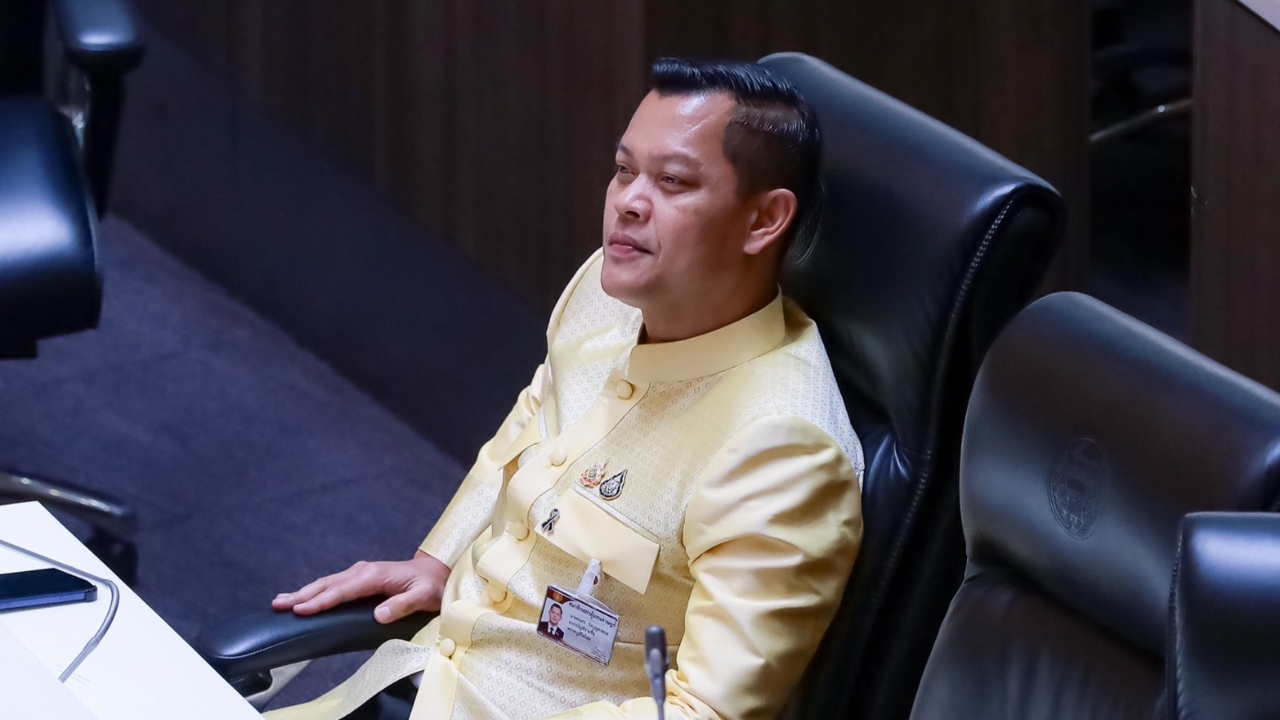
Thanakorn supports the Prime Minister's efforts to help citizens reduce their electricity bills. He points out that the rooftop solar installation project for the public creates long-term energy security and environmental benefits for the country. He also criticizes the opposition for only talking without ever considering taking action.
28 Aug 2026 GMT+7 Mr. Thanakorn Wangboonkongchana, party-list MP of the Bhumjaithai Party, and former Minister of Industry, gave an interview regarding the House of Representatives’ approval of the Royal Decree authorizing the Ministry of Finance to borrow funds to address the impacts of the energy crisis and support the country's energy transition in 2026, or the 400 billion baht loan decree, particularly the second plan with a 200 billion baht budget framework to restructure and transform the nation's energy system.
Thanakorn affirmed that the government, led by Prime Minister and Minister of Interior Anutin Charnvirakul, will proceed according to the legal framework. Every baht spent will have clear goals, be cost-effective, transparent, and fully auditable. This loan approval aims to reform the country’s energy structure, especially the rooftop solar installation project for citizens. The government plans to subsidize up to 50,000 baht per household for residential systems of about 5 kW, with a net metering system allowing homes to sell surplus electricity back to the grid at 2.20 baht per unit.
For the rooftop solar installation project for citizens, this government policy allows the general public to install solar power systems on their home roofs for self-use, reducing household electricity bills. If there is excess electricity, it can be sold back to the electricity authority under specified conditions and purchase rates. The electricity authority will verify participants’ readiness regarding electrical systems, safety, and connection suitability to ensure citizen power production meets standards and does not affect grid stability.
“The Prime Minister aims to help citizens reduce electricity costs long-term, with direct public participation and benefits. This also helps build the country’s long-term energy security and environmental sustainability. Therefore, I urge the opposition to be more open-minded and listen. If they disagree, they should propose plans or approaches to the government rather than just using rhetoric to win politically without ever taking action. Especially since some parties previously led the government, but the public saw no benefits.”