

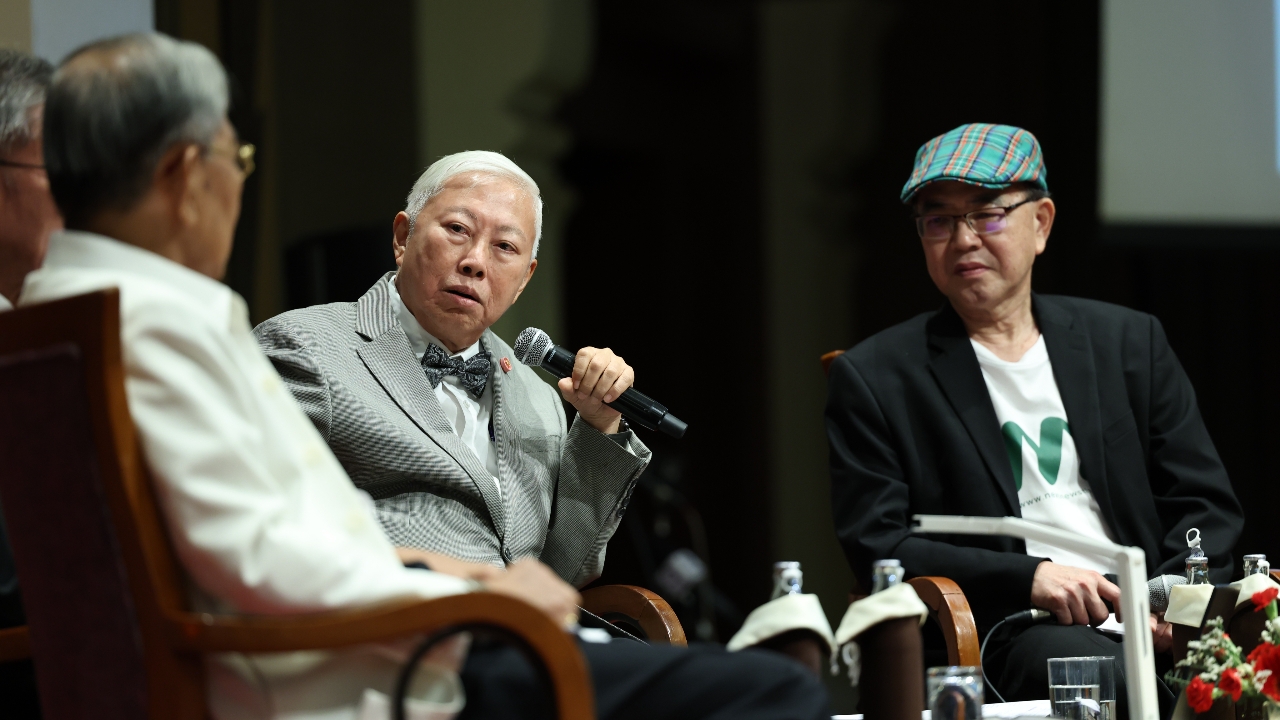
"Bawornsak" proposes reforming independent organizations through the "Five-Point Revolution," removing election authority from the Election Commission and restoring the people's power to impeach the Prime Minister and Cabinet members.
On 28 Aug 2026 GMT+7 at the Rama Gardens Hotel, the Parliamentary Committee on Courts, Independent Organizations, and the Attorney General's Office, together with the King Prajadhipok's Institute, held an academic seminar titled "The Crisis of Trust in Independent Organizations: Origins and Solutions," featuring intense discussions with former national experts.
Mr. Bawornsak Uwanno, former Deputy Prime Minister, acknowledged declining confidence in independent organizations, the government, and senators. He proposed solutions through the "Five-Point Revolution," including revolutionizing the timeline for forming the Cabinet: elections within 30 days after parliament dissolution (or 15 days if term ends), confirming MPs within 30 days, and selecting the Prime Minister within 30 days to prevent vote-buying. He also proposed reforming the selection of independent organizations by appointing selection committee members from the Supreme Court, the Administrative Court, the government, the opposition, and heads of independent organizations, with parliamentary approval requiring a two-thirds majority in three groups—government MPs, opposition MPs, and senators.
The revolution also includes restoring the people's right to directly vote to impeach the Prime Minister and ministers nationwide; transferring election management authority from the Election Commission to meetings of ministry heads and local government organizations to oversee operations, while the Election Commission would only set rules, supervise, and prosecute corruption; and accepting political groups that need not be major parties to enter the system.
Meanwhile, Mr. Wicha Mahakun, former member of the National Anti-Corruption Commission, said the crisis in independent organizations results from yielding to those in power and concealing information. He emphasized that independent organizations must serve the people, not the state power. Regarding local election fraud cases, he believes prosecutions will ultimately stop at civil servants and not reach politicians. He also pointed out that internal senator election fraud is a severe national crisis requiring urgent constitutional reform concerning senators' origins.
At the same time, Mr. Was Tingsamit, former Chairman of the National Human Rights Commission and former Supreme Court judge, criticized the senator selection law as fundamentally flawed. He said that without collusion or arrangements, it would be impossible to become a senator. He added that if the Election Commission prosecutes over 120 senators suspected of collusion, it would be acceptable, as the top six vote-getters in each occupational group clearly reflect orchestrated arrangements from the start.