

Focusing on tackling PM2.5 pollution at its source, Yotsanan monitors progress of the “Quit Burning, Full Wallet” model in Chiang Rai, engaging private companies to purchase agricultural waste. In four months, open burning has been reduced by 330,000 kilograms, with plans to expand across Northern Thailand within five years.
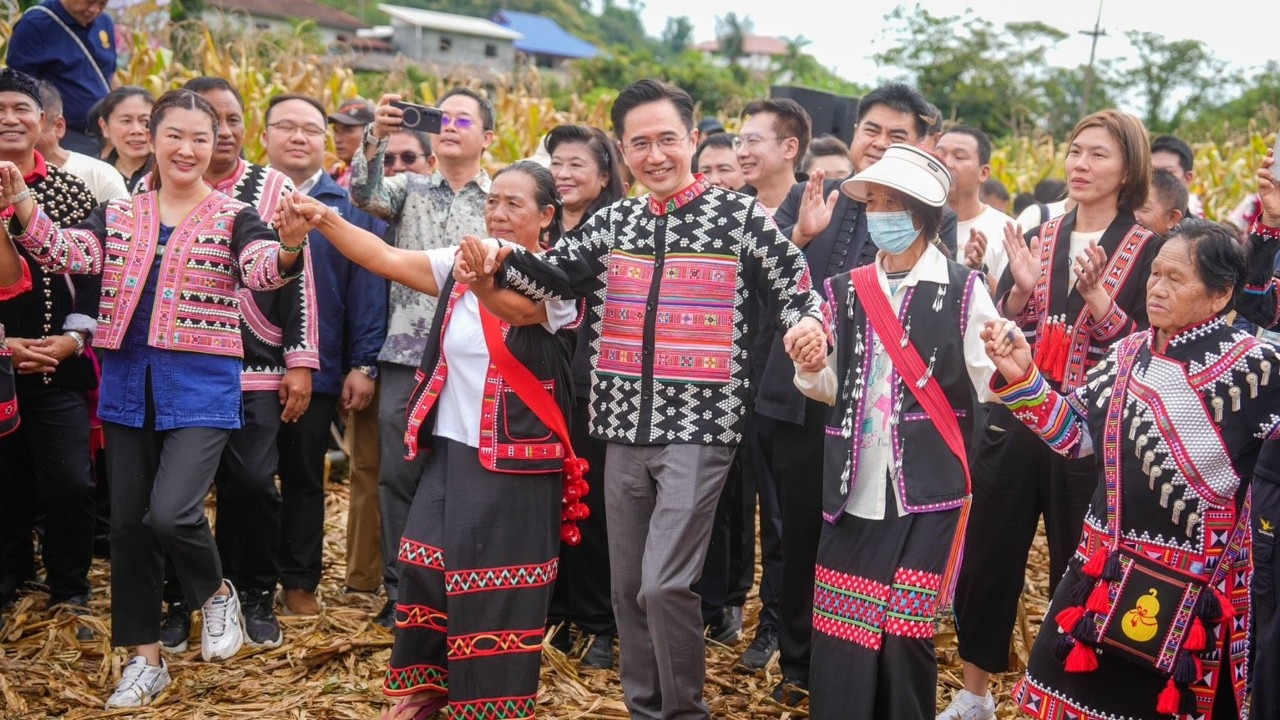
29 Aug 2026 GMT+7 Mr. Yotsanan Wongsawat, Deputy Prime Minister and Minister of Higher Education, Science, Research and Innovation (HESRI) Together with Ms. Piyaratch Tiyapairat, Deputy Minister of Agriculture and Cooperatives visited Lae Fu Chinese School in Mae Chan District, Chiang Rai Province, to follow up on progress of the “Quit Burning, Full Wallet” project. The initiative aims to transform agricultural waste from a pollution burden into sustainable income sources, while expanding the PMUC Zero Burn to Earn policy fully throughout Northern Thailand.
Mr. Yotsanan outlined the approach, saying “Regarding the PM2.5 issue, we strive to address it at the root cause. Each area has different contexts and causes, so solutions must be specific. Although Northern Thailand’s air quality remains good in August, we must begin action now — through August, September, and October — to ensure results by December. We want people to see that quitting burning can truly generate income. If our pilot areas succeed, other communities will be ready to cooperate and expand the effort nationwide.”


This visit was part of a comprehensive follow-up on PM2.5 mitigation using economic mechanisms, building on a project initiated in Chiang Mai two months ago and adapted to Chiang Rai’s context. The goal is to develop a concrete pilot model before extending collaboration to other Northern areas.
A key success factor is establishing a reliable market for agricultural waste. Recently, the Ministry of HESRI integrated a one-year cooperation with five leading private companies, signing agreements to purchase 40,000 tons of agricultural waste annually, valued at over 30 million baht. The waste will be processed into biomass energy pellets, Chemithermomechanical Pulp (CTMP) for packaging, biochar, and fiber insulation—demonstrating that previously worthless waste can generate real value and income for farmers.
Meanwhile, the “PMUC Zero Burn to Earn: Quit Burning, Full Wallet” project showed results from eight pilot routes over the first four months, processing 330,000 kilograms of waste and reducing PM2.5 emissions by 270 kilograms. Additionally, the project aims to scale up across Northern Thailand within five years, targeting 200,000 tons of agricultural waste to be processed into clean energy and eco-friendly products. This is expected to create economic value exceeding 3 billion baht and sustainably reduce accumulated PM2.5 by up to 1.6 million kilograms.


