

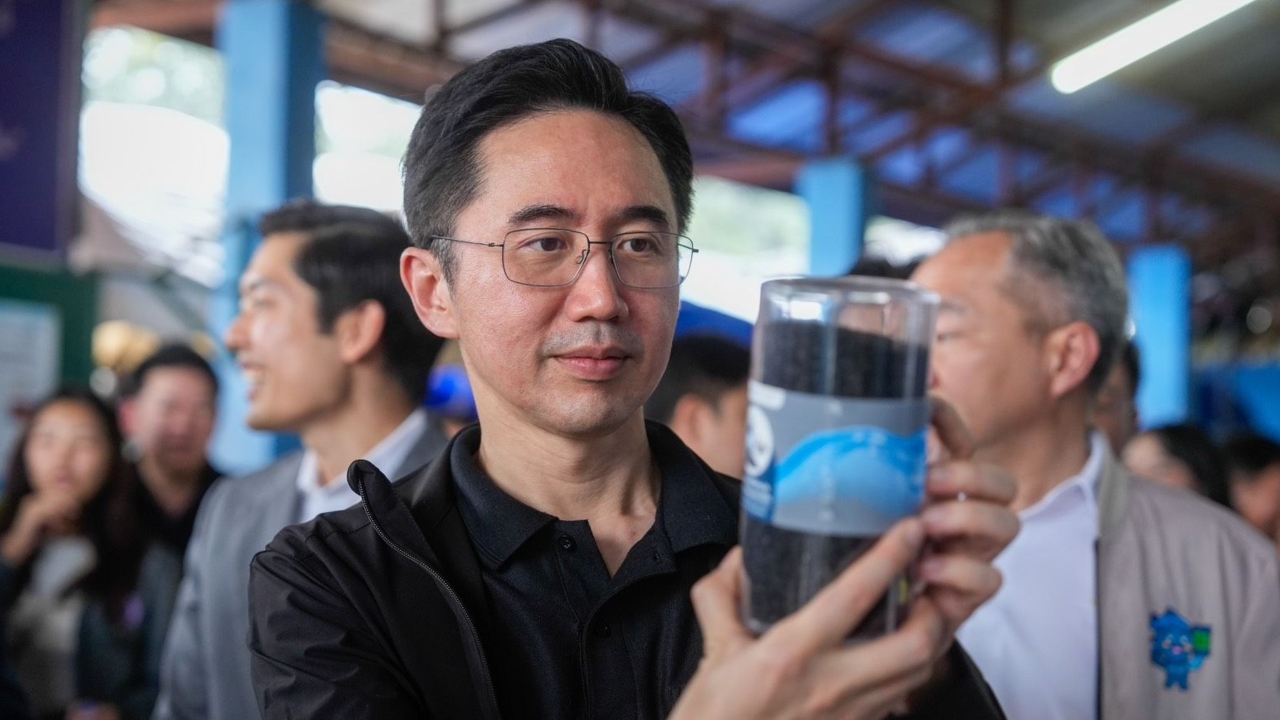
Yotsanan has presented a Thai research innovation to resolve the arsenic crisis in the Kok River, featuring the 'Synchrotron-Nanotech-AquaNano' technology that removes toxins 100%, restoring clean tap water to communities. He emphasized that, in the long term, the root cause—the polluters—must be addressed.
On 29 Aug 2026 at the City Community Hall in Jim, Rim Kok Subdistrict, Mueang District, Chiang Rai Province, Mr. Yotsanan Wongsawat, Deputy Prime Minister and Minister of Higher Education, Science, Research and Innovation (MHESI), along with Mr. Thanarat Chongsutthanamanee, Chiang Rai MP from the Pheu Thai Party, visited to monitor efforts to resolve arsenic contamination in the Kok River—a chronic issue affecting the health, trust, and lifestyles of Chiang Rai residents for a long time.
The MHESI has introduced synchrotron light and nanotechnology to accelerate research and successfully develop a water filtration and treatment system to remove arsenic contamination. This system can convert raw Kok River water into safe, clean tap and drinking water with 100% toxin removal. Its key advantages are low cost and suitability for local application, allowing community water supplies nationwide to use it immediately.


Mr. Yotsanan emphasized that arsenic contamination in the Kok River in Chiang Rai is a serious concern. While the most sustainable solution is preventing contamination at the river’s source, until that can be managed, people need clean water daily. Therefore, the MHESI policy is to use science, research, and technology to directly address community hardships by developing accessible, affordable filtration systems that village waterworks can implement. This enables all areas and local agencies to immediately apply solutions.
He added, "Water is life for our people; it is the foundation of agriculture and trust in all things. I want every MHESI sector to collaborate. We have many knowledge areas to improve water quality, especially arsenic issues. MHESI alone cannot do much; we depend on local strength. But we all share the goal to help fellow Thais, so let's work together. MHESI offers various models to enhance the quality of life for our people."


Importantly, all these technologies are developed and produced by Thai researchers using mainly domestic materials. Besides reducing costs and self-reliance, this also creates opportunities to transform the arsenic crisis into a chance to strengthen Thailand's water technology industry, creating innovations that solve water quality problems and can be exported worldwide in the future.
Regarding the arsenic water treatment innovations, MHESI has delivered two main systems.
1. A system to treat and reduce arsenic and heavy metal contamination in water for consumption, using synchrotron light and nanotechnology with a three-layer filtration (sand-anthracite, activated carbon, and HAIX-Fe resin). It can capture 100% of arsenic, and the resin can be cleaned, restored, and reused for 4–5 years, significantly lowering long-term costs.
2. AquaNano, a nanotechnology-level water production and filtration device equipped with a water quality monitoring system, designed to produce safe, clean drinking water for communities.


Additionally, MHESI held a handover ceremony for the filtration systems to community leaders in the area: Ban Farm Samphanthakit, Village No. 6, Rim Kok Subdistrict, Mueang District, received the arsenic and contamination reduction system and AquaNano device, accepted by village headman Mr. Suphan Tha-oui; Ban Muang Ngim, Rim Kok Subdistrict, received the village water production model system for arsenic removal, accepted by Kamnan Mr. Amnat Asawawong; and Ban Rim Kok, Rim Kok Subdistrict, received the same village water production model system, accepted by village headman Mr. Thawatchai Montrikul, to be installed and used to address the problem and provide sustainable reassurance to residents.

