

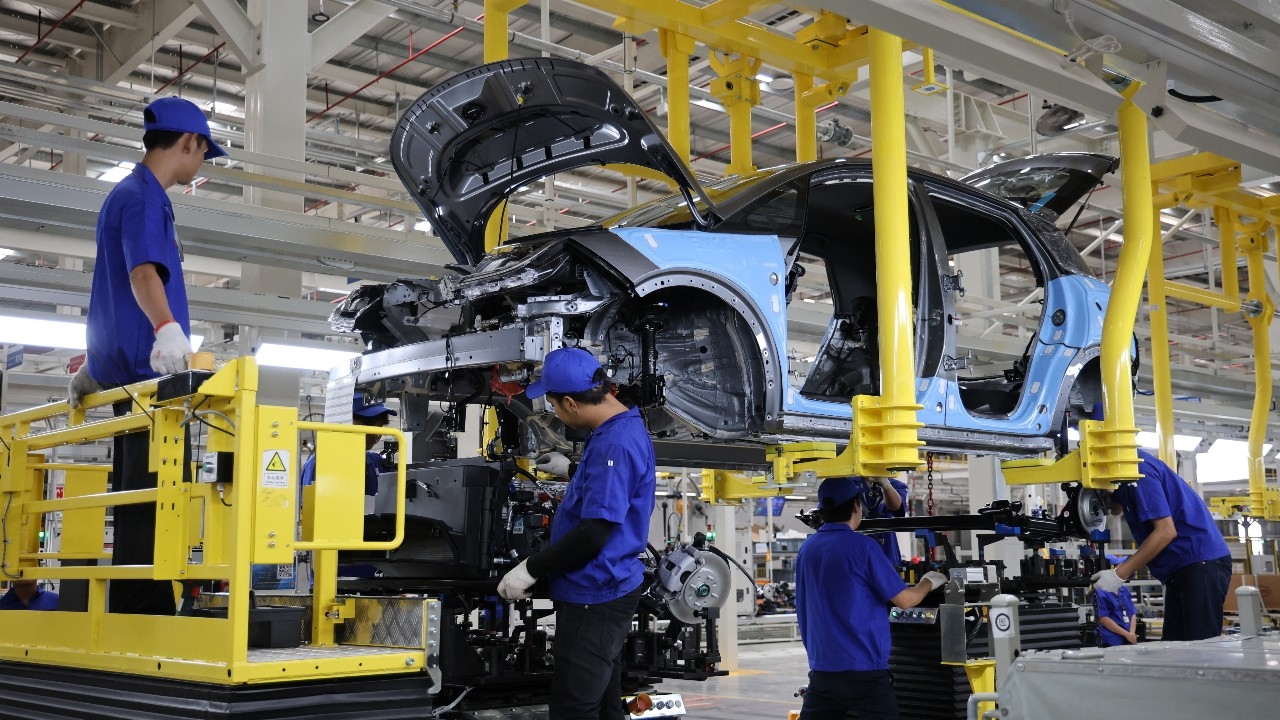
Ratchada revealed that the government is accelerating a comprehensive restructuring of vehicle taxes, covering electric vehicles (EVs), hybrids, and combustion engines, to create fair competition and support operators who invest, manufacture, use parts, and generate employment in Thailand.
On 30 August 2026, Ms. Ratchada Thanadirek, spokesperson for the Prime Minister's Office, disclosed that the government is urgently revising the excise tax structure on vehicles to align with the rapidly changing automotive industry. Deputy Prime Minister and Minister of Finance, Mr. Anek Niti Nitithanprapas, has assigned the Excise Department to review tax rates and related criteria to ensure fair competition and support operators investing, manufacturing, using parts, and creating jobs in Thailand.
This review covers the entire vehicle system, including electric vehicles (EVs), hybrids, and combustion engine vehicles. Particularly as the EV market grows rapidly, some free trade agreements (FTAs) grant imported fully built vehicles tariff exemptions, making it necessary to also consider excise tax structures to balance market promotion, investment, and domestic production.
At the same time, the tax restructuring is not simply about increasing or decreasing rates but forms part of steering the automotive industry's future direction. The Deputy Prime Minister and Minister of Finance has set three key objectives for the Excise Department.
1) Investment-Driven Import: Importing new vehicle technologies must connect to long-term investment by allowing new models and advanced technologies to be brought in for study, market testing, and learning before advancing to actual investment and production in Thailand.
2) Production for Export, Aiming to Become a Regional EV Hub: Building on Thailand's strength as a major vehicle production and export base, known as the “Detroit of Asia,” the goal is to become a regional center for producing and exporting electric and environmentally friendly vehicles by expanding domestic production alongside export markets.
3) Upgrading Local Content to High Value-Added Parts: Supporting Thai parts manufacturers and supply chains to move from basic parts production and assembly to key parts and technologies for modern vehicles through collaboration with foreign investors, enabling technology transfer, skill enhancement, and increased value addition in Thailand.
“Previously, EV promotion measures played a crucial role in developing the market and attracting investment to Thailand. As the industry moves to the next phase, state measures must adapt to the situation to ensure automotive industry growth benefits Thai people more, including preserving and creating manufacturing jobs, increasing opportunities for Thai operators and parts manufacturers to enter higher-value supply chains, and offering consumers diverse technology choices,” Ms. Ratchada said.
Meanwhile, the Ministry of Finance and the Excise Department are preparing detailed tax structures and related criteria to align with market conditions and the country’s automotive industry development direction in the future.