

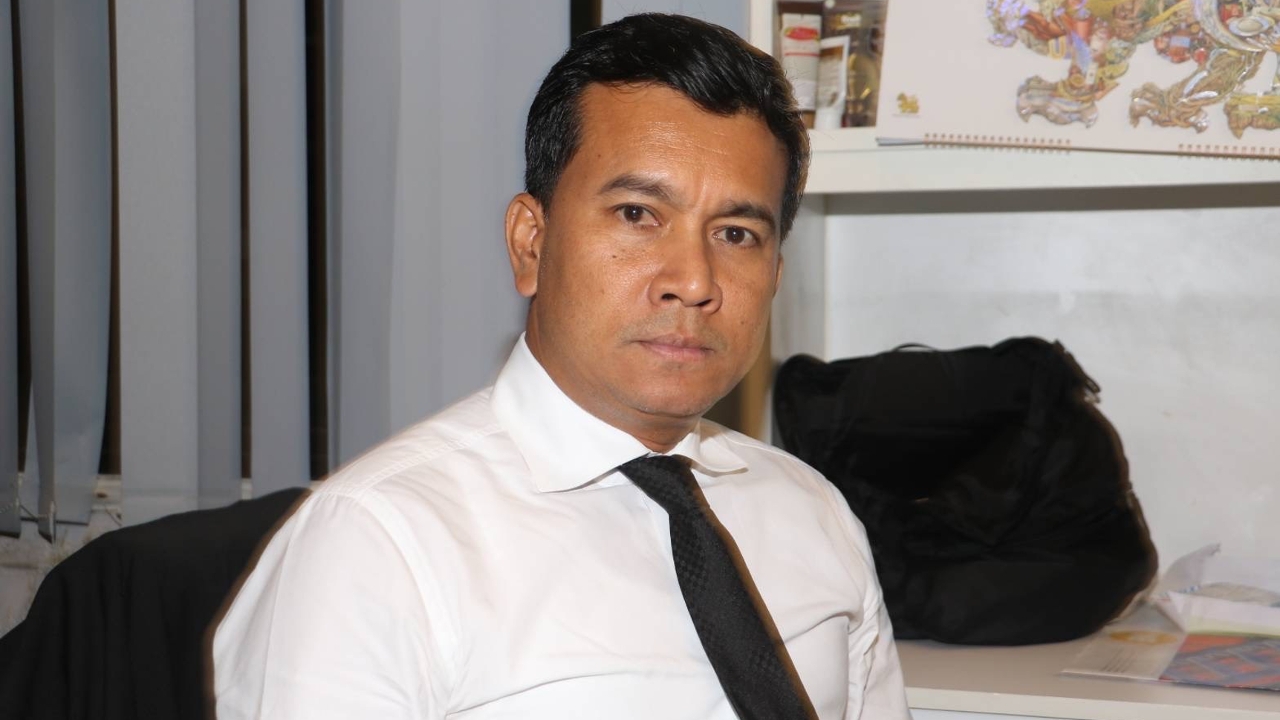
Chao fiercely counters Supachai, stressing that Apisit never mentioned any party name, and strongly criticizes the 'ill-timed bull' remark, expressing confusion over the Democrat Party's election boycott history being brought up.
On 30 Aug 2026, Chao Meekhuad, former deputy spokesperson of the Democrat Party, posted on Facebook responding to Supachai Jaisamut, list MP and legal advisor of the Bhumjaithai Party. Supachai had implied Apisit Vejjajiva, Democrat Party leader, during an academic seminar titled 'Crisis of Trust in Independent Organizations: Origins and Solutions' at Rama Gardens Hotel, Bangkok. In his special lecture, 'Lessons from 30 Years of Independent Agencies,' Apisit raised concerns about the risk of political parties influencing the Senate and placing individuals in independent agencies, potentially affecting the system of checks and balances in the parliamentary democracy.
Chao stated that before revisiting the coup history, one must first ask who is hollowing out democracy today. He read Supachai's response, which cited the Democrat Party's election boycotts in 2006 and 2014, and found many points needing clarification. First, he asked where Apisit accused Bhumjaithai Party directly. Apisit said, 'If political parties dominate the Senate,' without naming Bhumjaithai once. Yet Bhumjaithai's legal team interpreted and responded by saying, 'Before accusing Bhumjaithai of dominating the Senate...' This, Chao said, is called an 'ill-timed bull.' Apisit's question wasn't whether courts have ruled anyone guilty but whether the system allowing the Senate to select members of independent agencies has adequate safeguards against political influence. This is the question Supachai should answer but avoided, instead deflecting to 2006 and 2014. Democracy is not just about elections ending; elected governments must be scrutinized. The Senate must remain independent of political power, independent agencies must be truly independent, and those who check others must themselves be accountable.
Chao further stated that Supachai citing the Democrat Party's non-participation in the 2006 and 2014 elections and the resulting coups as evidence is a "distorted logic." Although Supachai claimed he did not mean the boycott caused the coups, he deliberately misled people to think so. If one revisits history properly, it must include the context: before those decisions, the country faced crises of trust in government power, allegations of corruption, and serious questions about oversight mechanisms. Focusing only on outcomes without considering the systemic problems leading to crises is an incomplete historical reading. Apisit's point is, 'If political parties can influence the Senate, which appoints members to independent agencies charged with overseeing the executive or the Senate connected to those appointees, can we still truly call that a system of checks and balances? This is the real question.'
"The constitution prohibits anyone from using their rights or freedoms to overthrow the government, and 'overthrow' is a serious charge requiring legal proof. No one should rush to judge any individual or party. However, this does not mean society cannot question actions eroding democratic principles, because democracy is more than just casting ballots. It includes rule of law, separation of powers, checks and balances, and accountability of power holders. I think Apisit was right: we cannot remain passive. If we wait until oversight mechanisms are completely captured, it may be too late to ask who destroyed democracy." Chao concluded his remarks.