

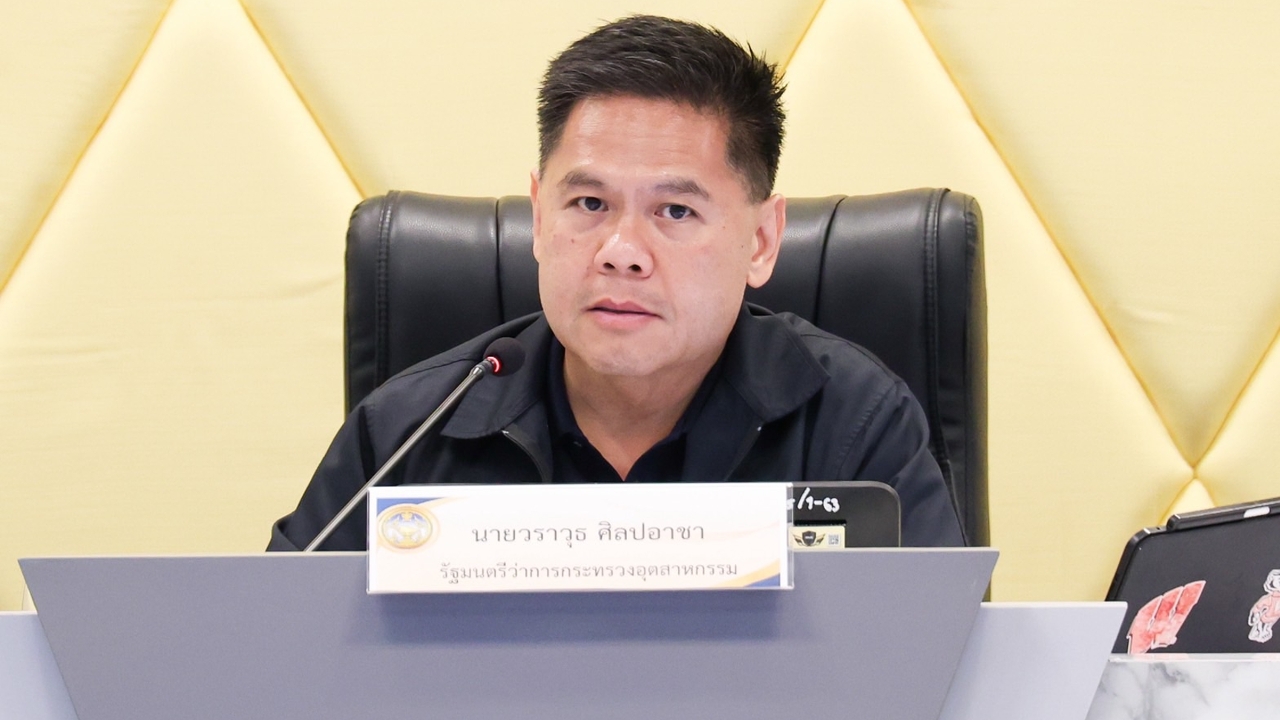
Warawut set a focus on five southern provinces to accelerate a comprehensive economic development, promoting rubber, halal, and food sectors to create value, connecting trade with Malaysia and ASEAN, and generating income for local people.
On 30 Aug 2026 GMT+7, Warawut Sinlapacha, Minister of Industry and chair of Subgroup 1 on Economic Affairs before the cabinet meeting at Rajamangala University of Technology Srivijaya, Songkhla campus, revealed he held a workshop to gather opinions on problems, obstacles, and development plans for five southern provinces: Songkhla, Satun, Yala, Pattani, and Narathiwat. The goal was to turn local proposals into actionable measures that bring income back to the people.
Warawut stated that developing the five provinces must be area-based, using each province's strengths to build an interconnected economic chain rather than isolated efforts. This includes supporting upstream farmers and small producers through processing, branding, standardization, and marketing so that local raw materials generate more added value and income within the communities.
Data from the Office of Industrial Economics shows a high disparity in the region's industrial economy. In the first half of 2026, Satun's industrial index grew by 26.5%, while Songkhla grew by 0.3%, Yala by 0.5%, Narathiwat contracted by 1.1%, and Pattani shrank by 15.2%. Overall, southern Thailand contracted by 2.4%. This indicates solutions must be tailored to each area's potential and limitations.
Therefore, the Ministry of Industry will promote industries already supported by raw materials and communities, especially rubber, seafood, palm oil, bioproducts, and halal sectors. The focus is shifting from raw material sales to high-value downstream products such as rubber products, processed foods, and bioproducts, while connecting markets in Malaysia, ASEAN, and Muslim consumers.
“The key is how to help local products sell at better prices and keep income within the area. Development must link large businesses with SMEs, community enterprises, and farmers across standard development, technology, processing, and market channels, so local people directly benefit,” Warawut said.
At the same time, the government will quickly remove investment and business barriers such as licensing steps, regulations, technology access, and labor shortages by using Single Window and e-License systems to reduce approval steps. It will also promote automation and digital systems to increase productivity, cut costs, and help local businesses compete.
Warawut added that proposals from this workshop will be selected based on necessity, urgency, and readiness, including those requiring multi-agency integration. This approach ensures government resources and budgets address the real problems faced by citizens.
“Local proposals must not end at meetings but translate into actions that truly benefit the people. The goal is to use Songkhla as a trade and logistics hub linking Malaysia and ASEAN, connecting raw materials and businesses from Satun, Yala, Pattani, and Narathiwat into a unified production chain. This will help upgrade community products, increase output value, create new markets, and ensure money circulates back into the local economy concretely.” .
